

We Remove Acid Etched Graffiti From Window Glass In LondonAll Day. Every Day. Same Day.
Don’t waste £5,000 on New Glass & Extortionate "Glazier Fees". Restore It for less than 90% of the Cost.
Why replace when you can restore? We provide expert acid-etched graffiti removal with zero disruption to your business and zero hidden fees. Get a flawless finish in less than 3 hours.- Save up to 90% vs. replacement costs.- Rapid onsite repair, no boarding up required.
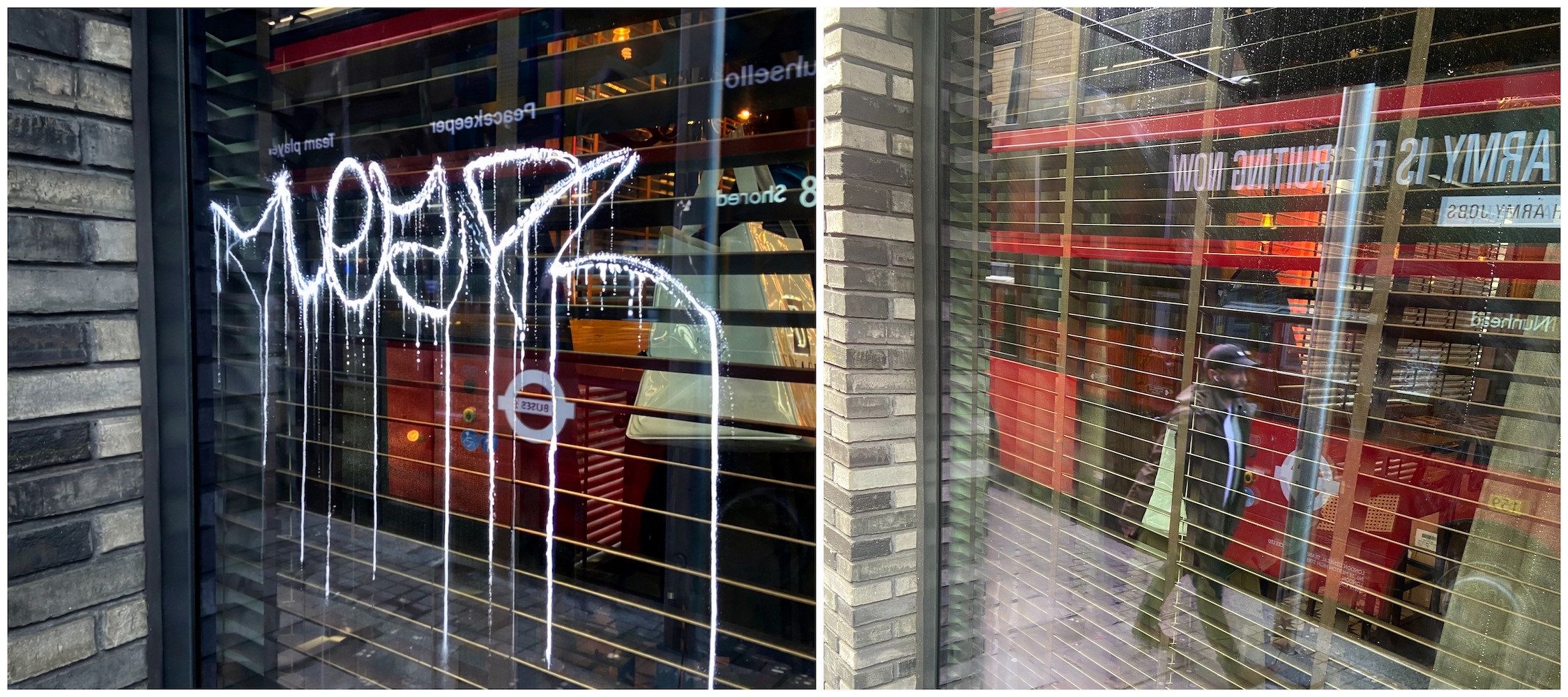
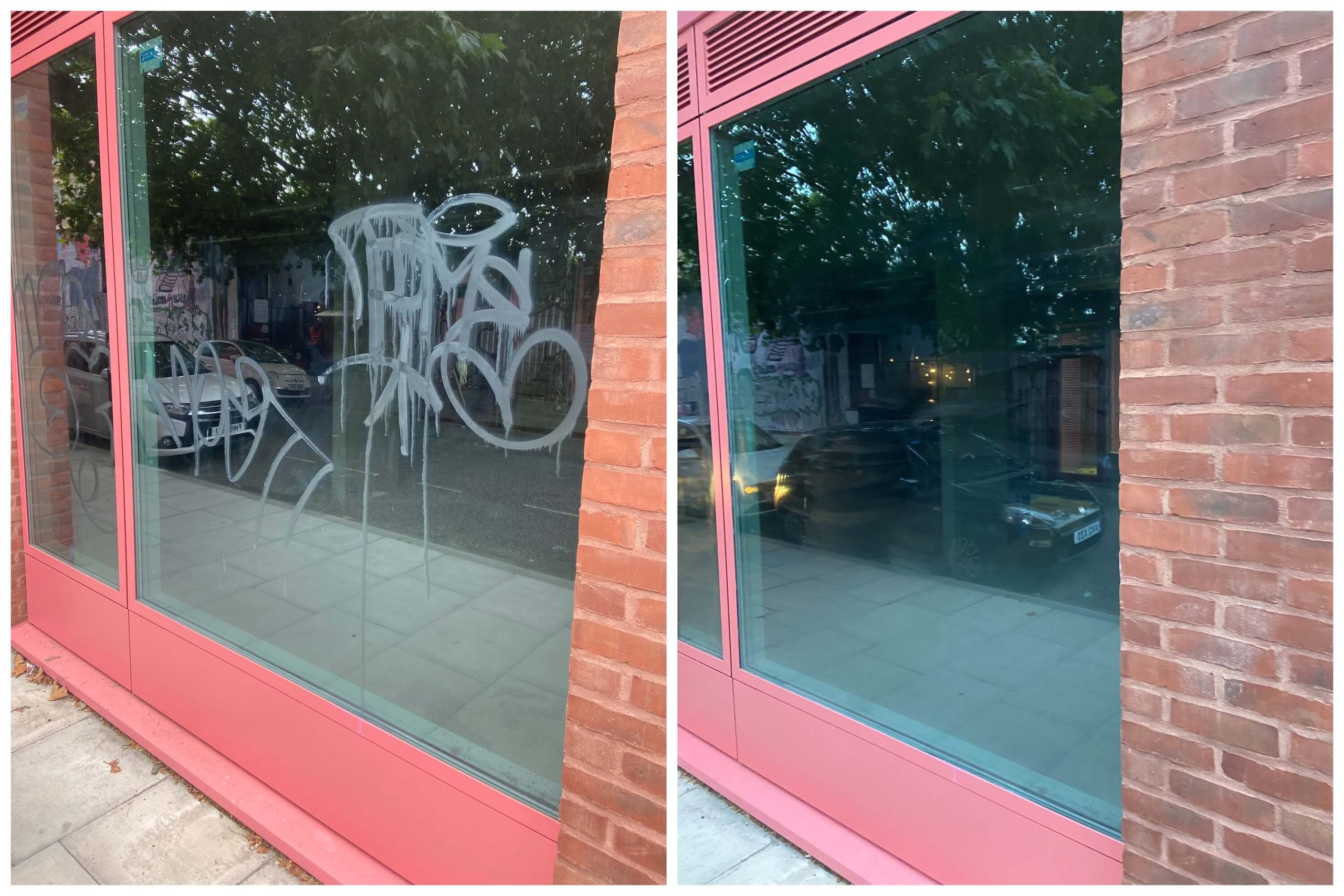
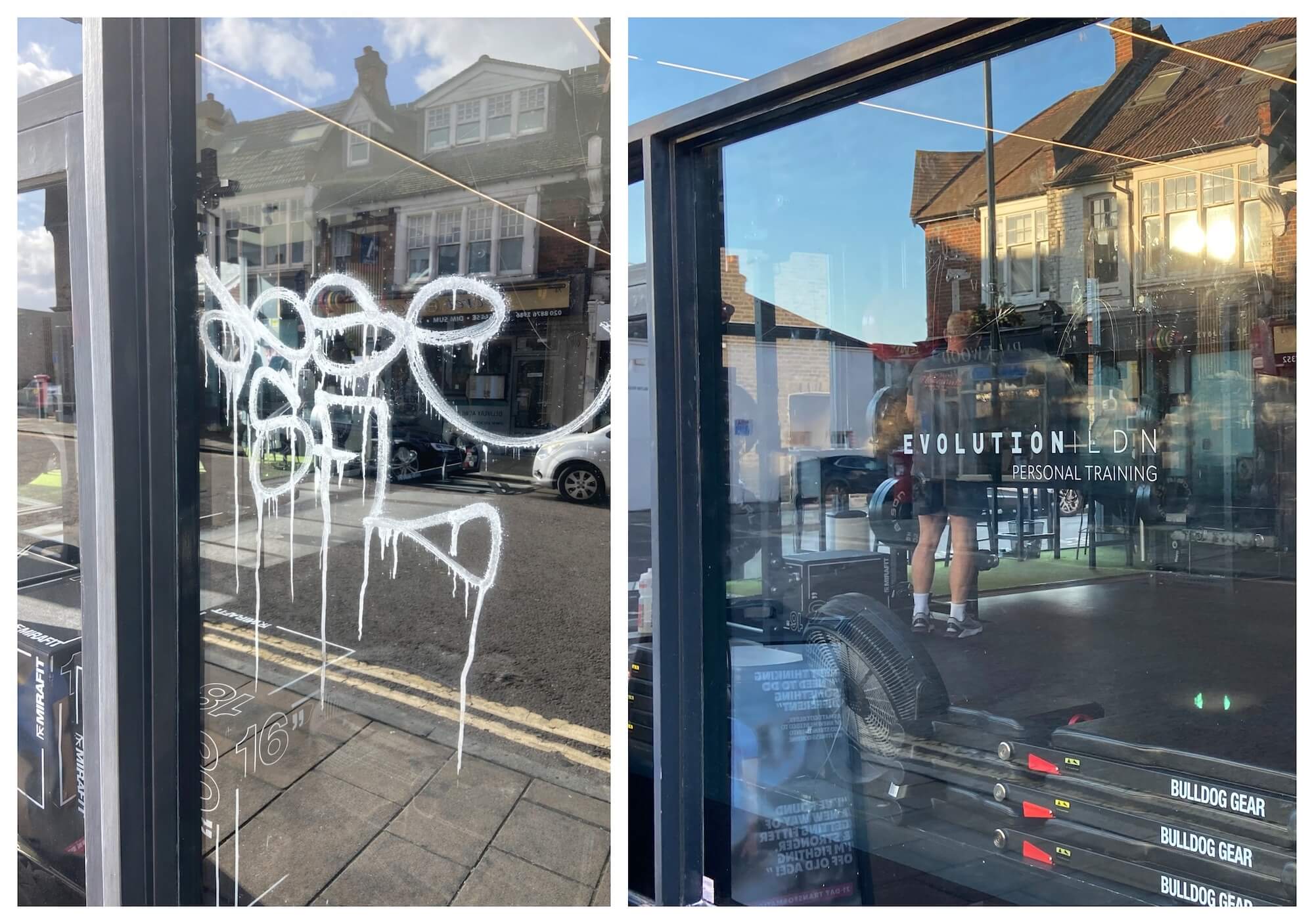
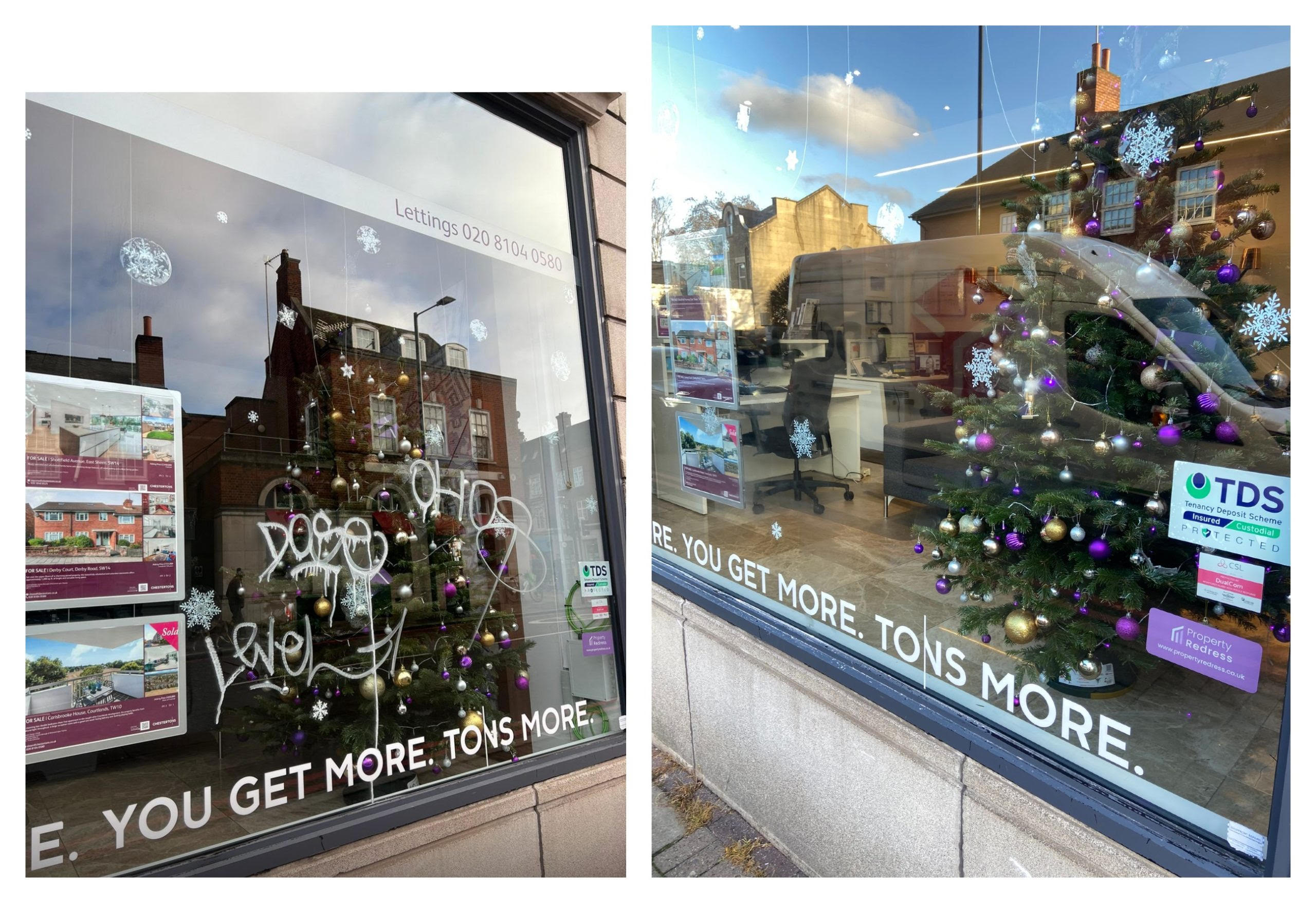
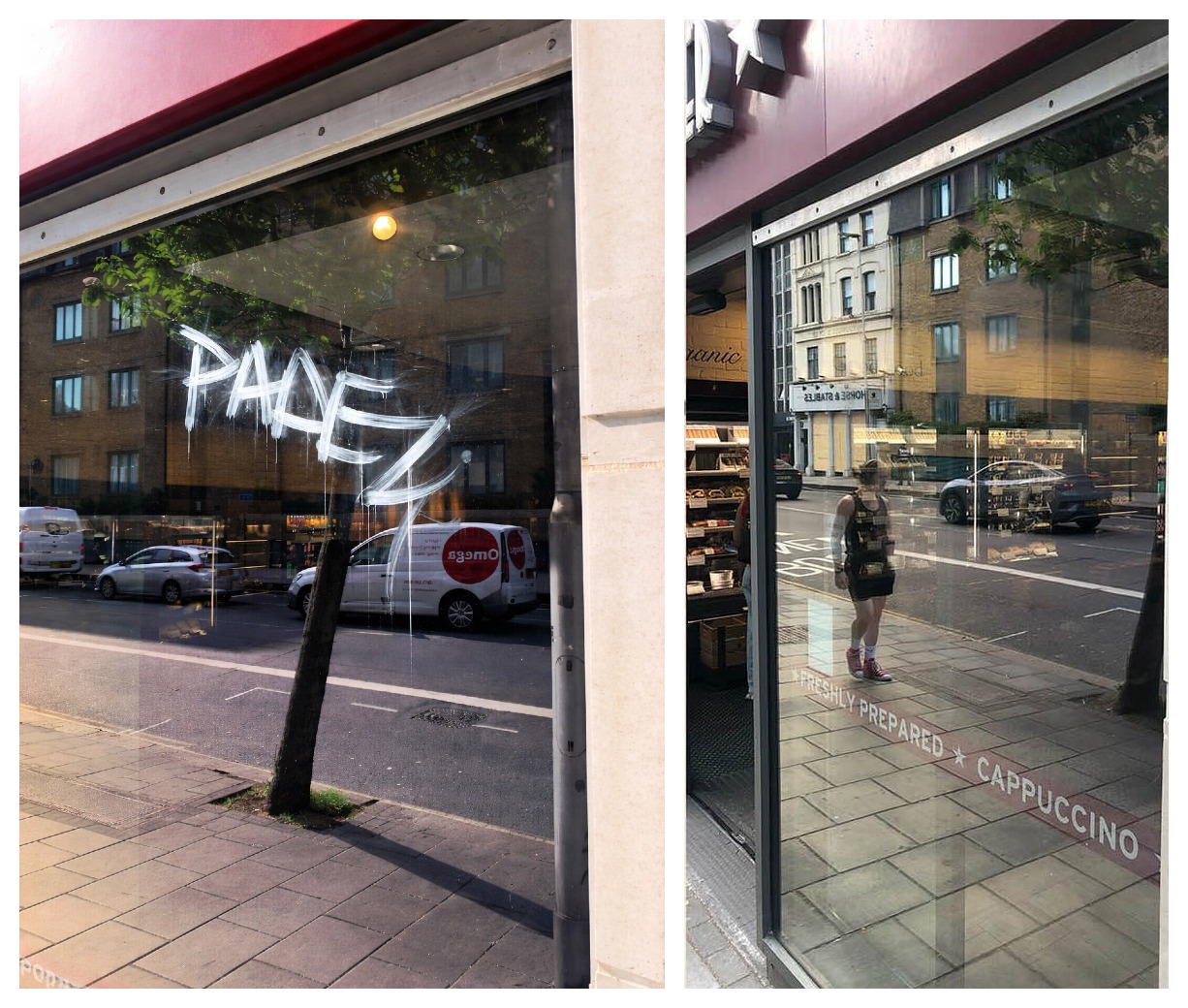
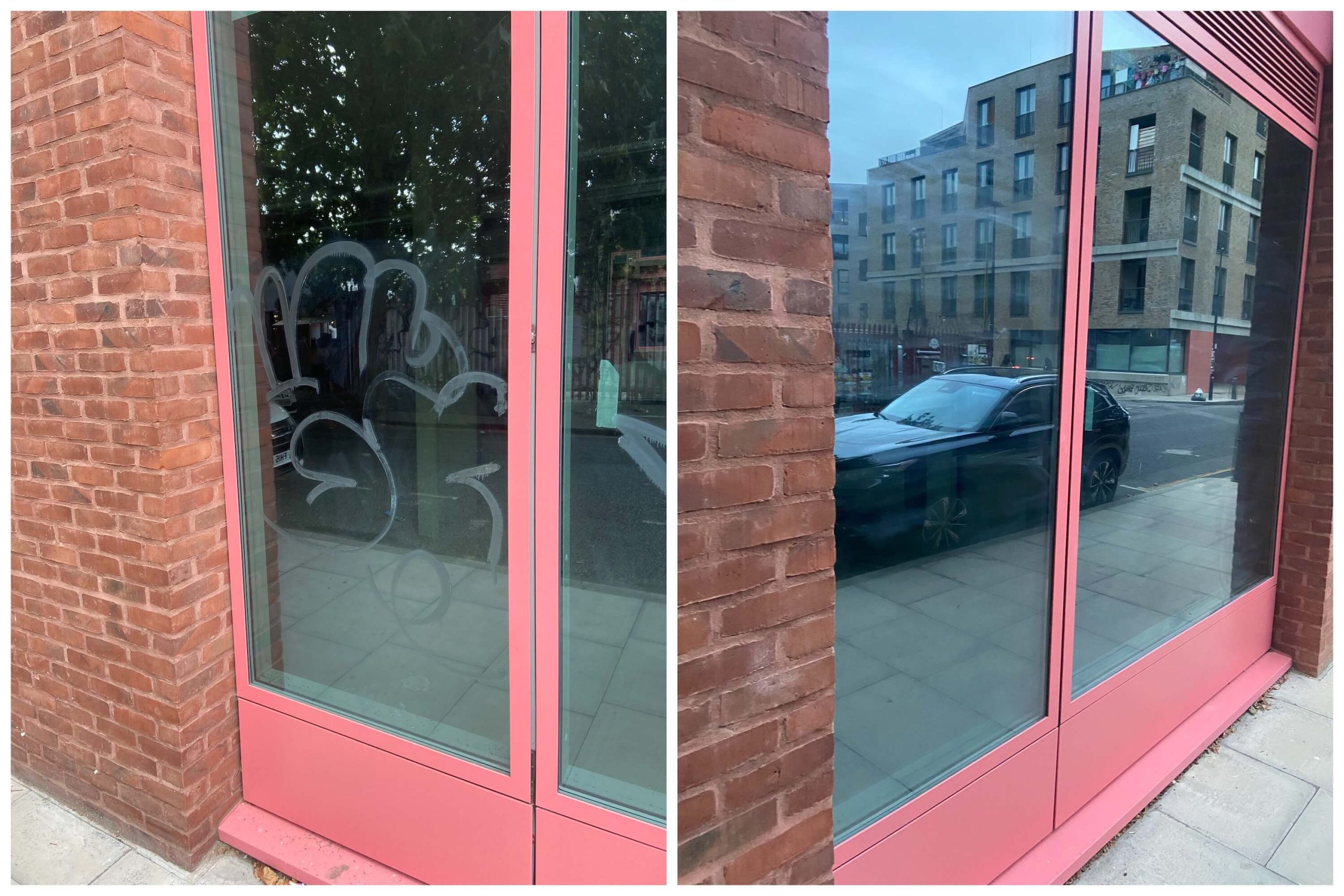
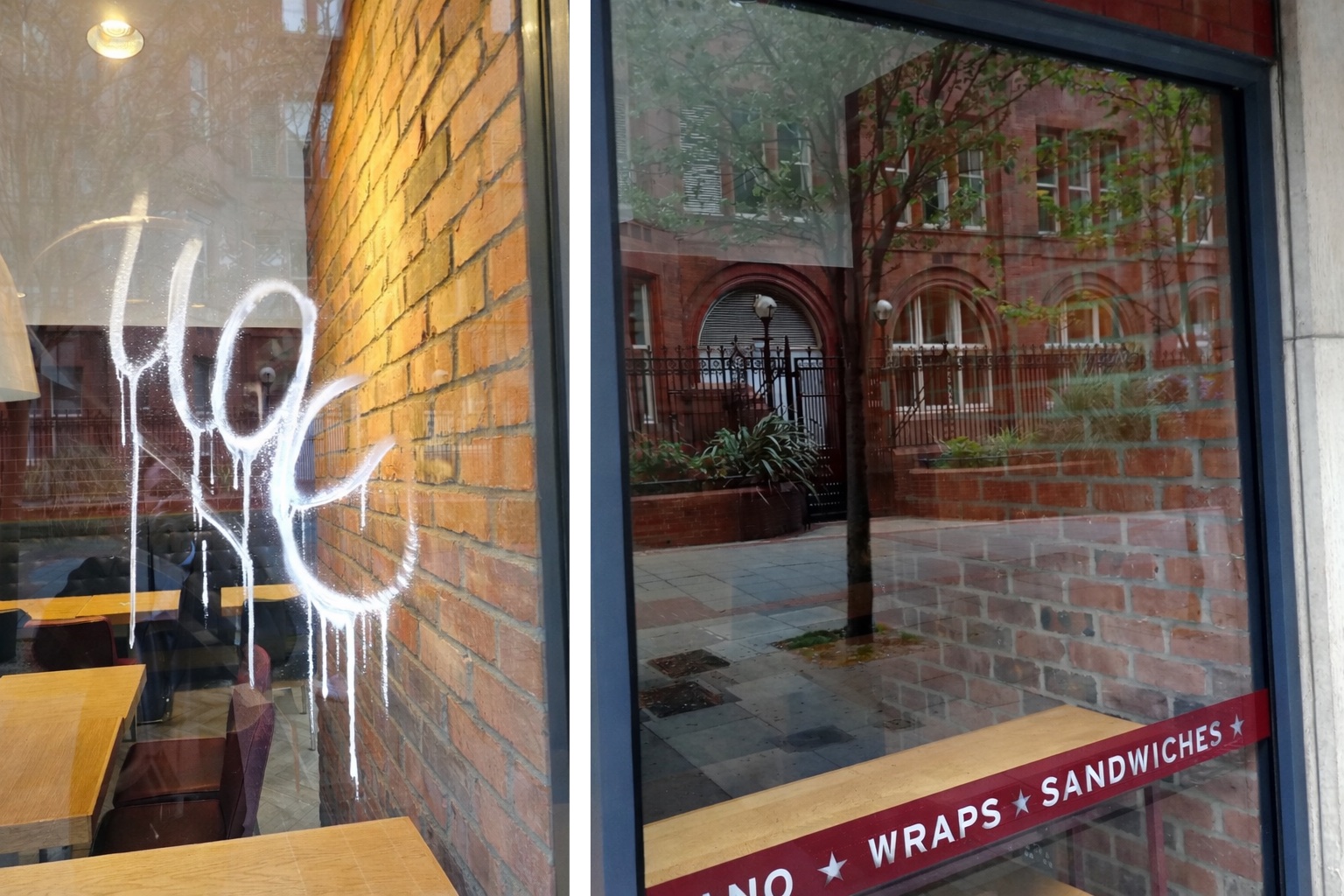
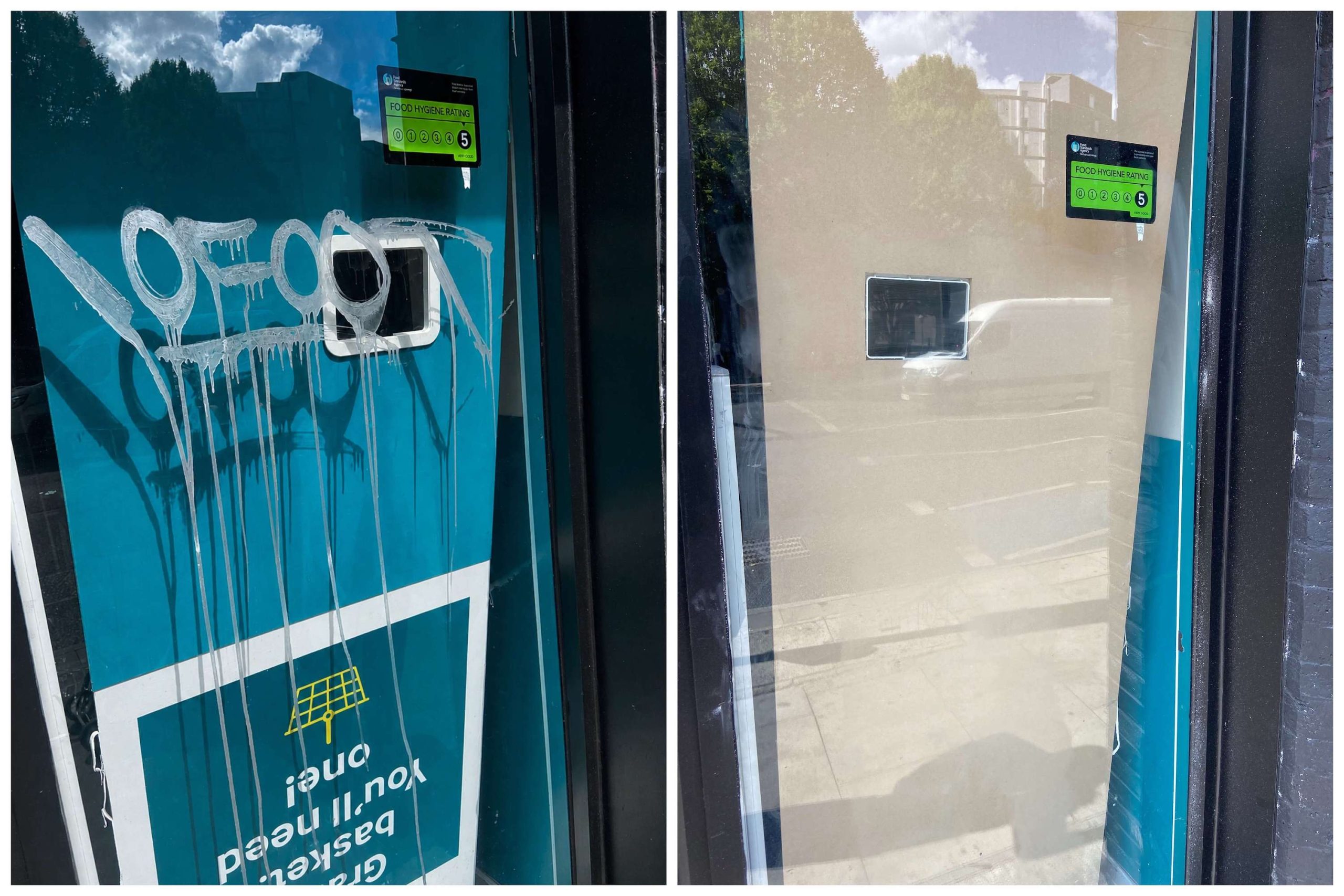
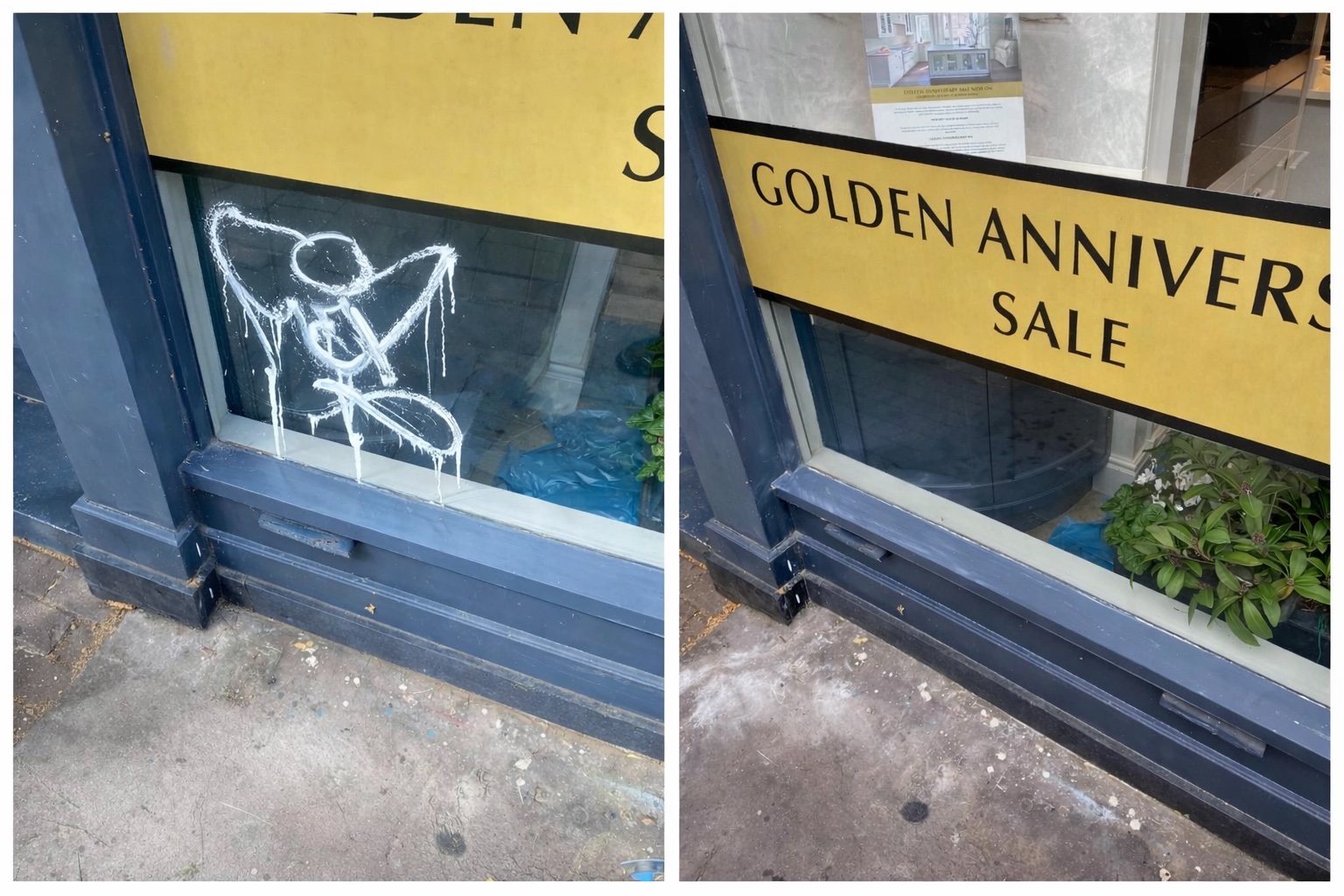
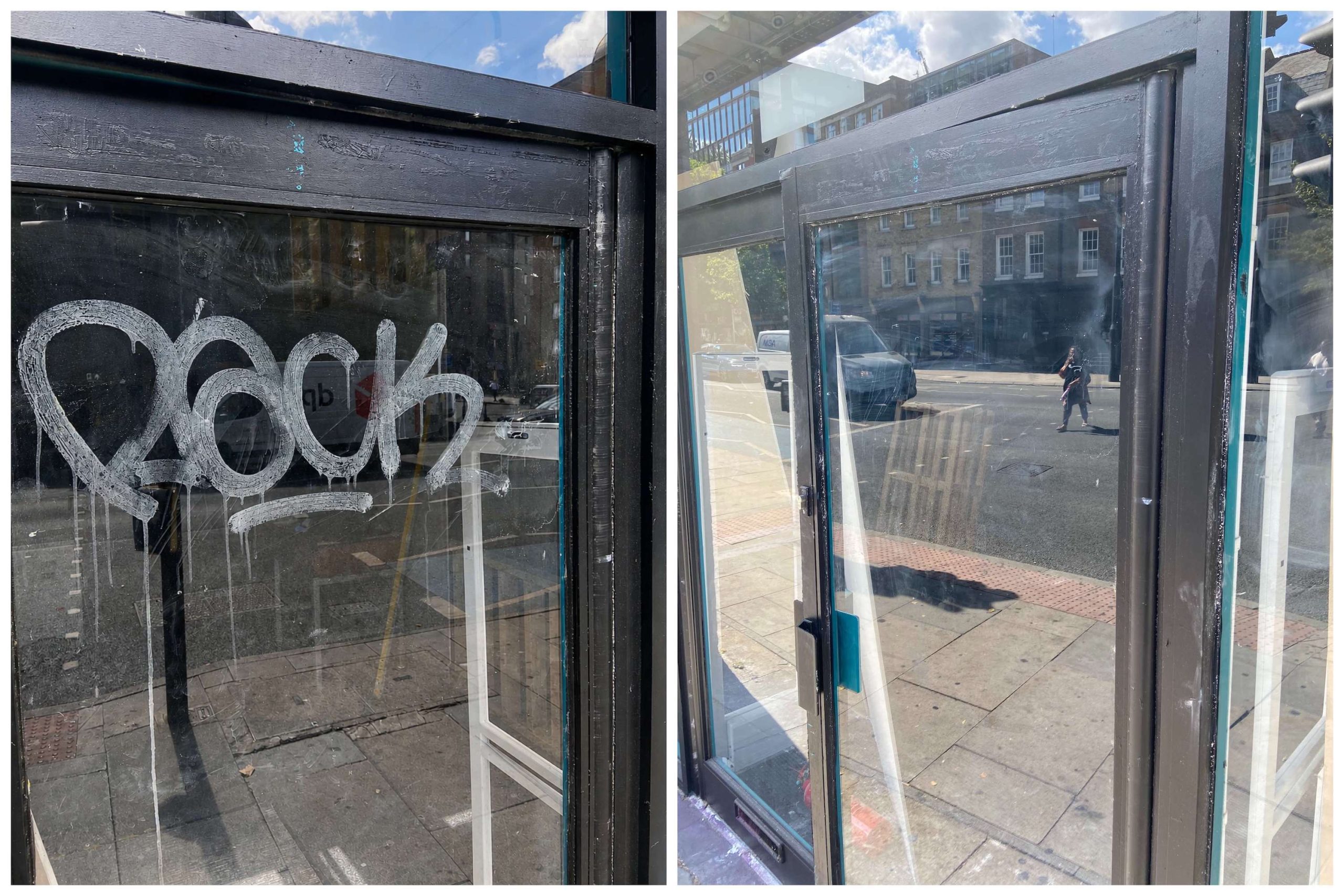
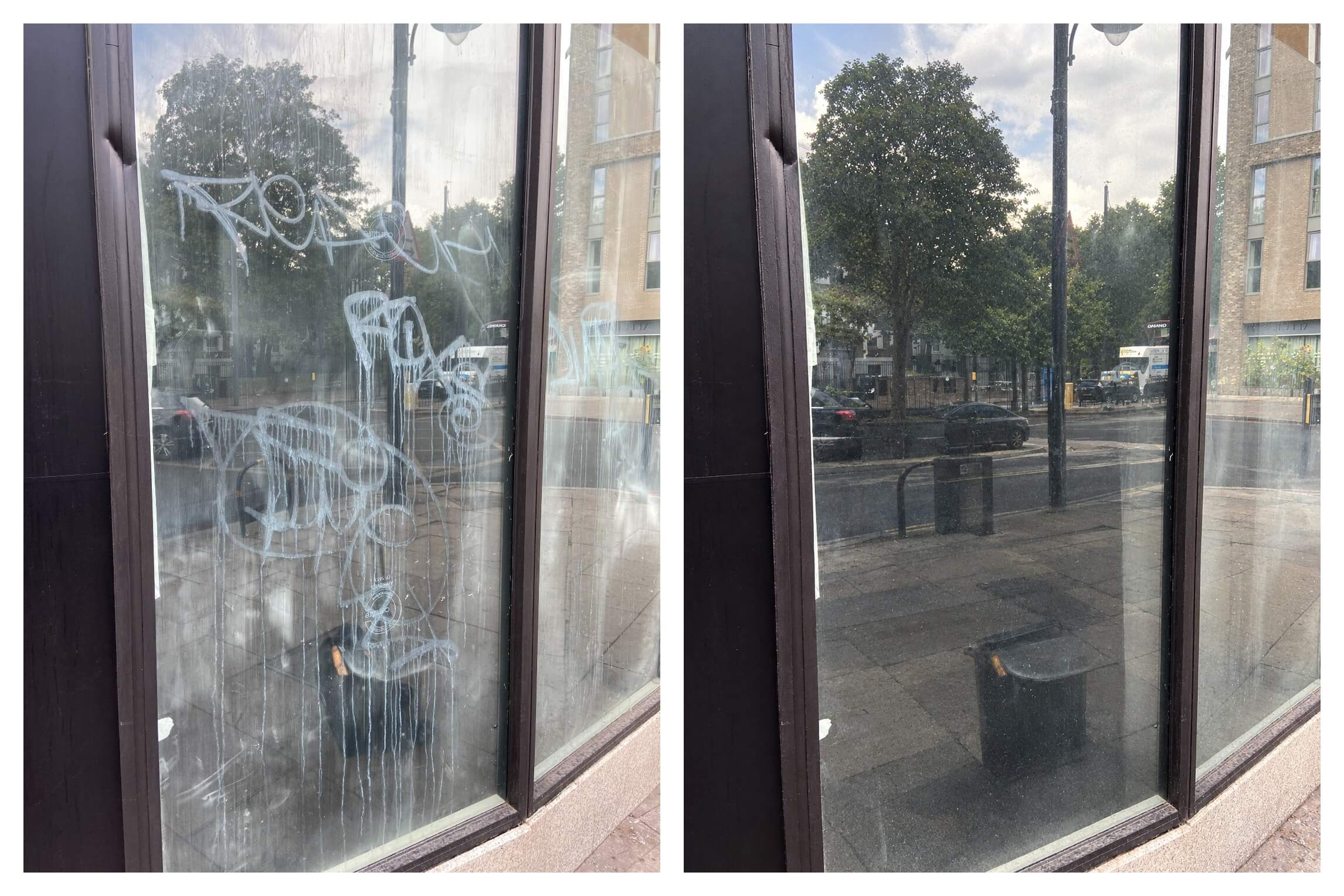
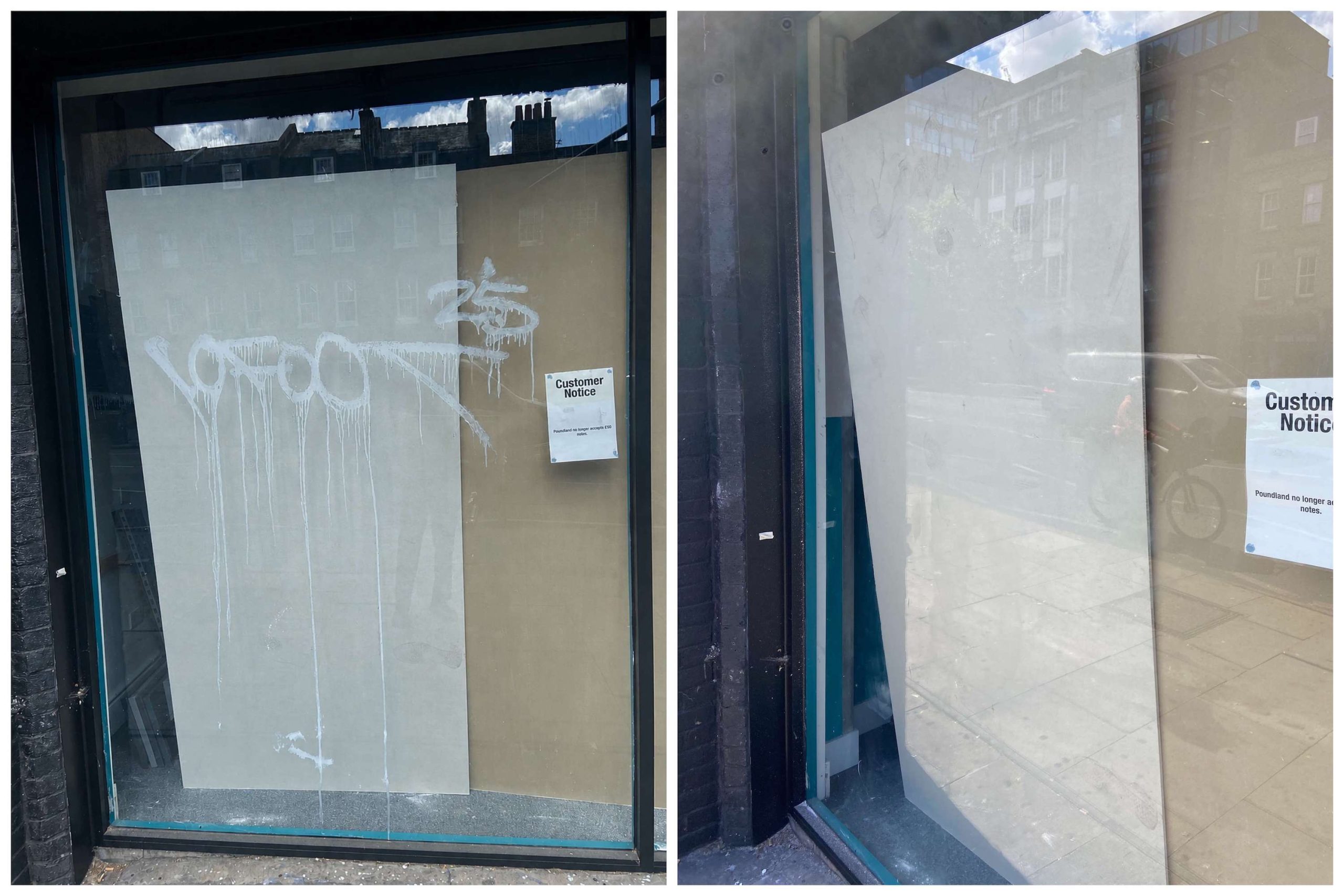
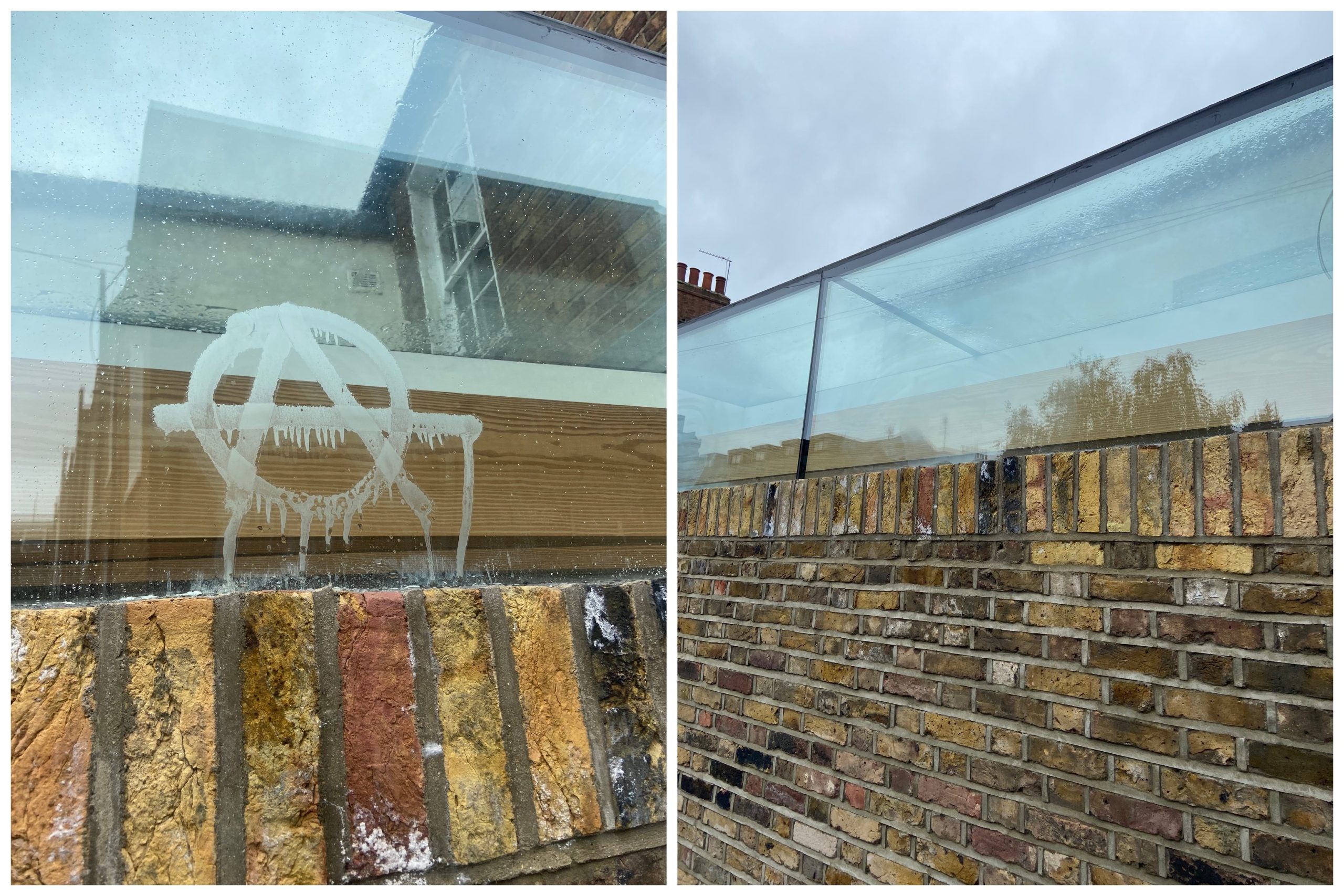
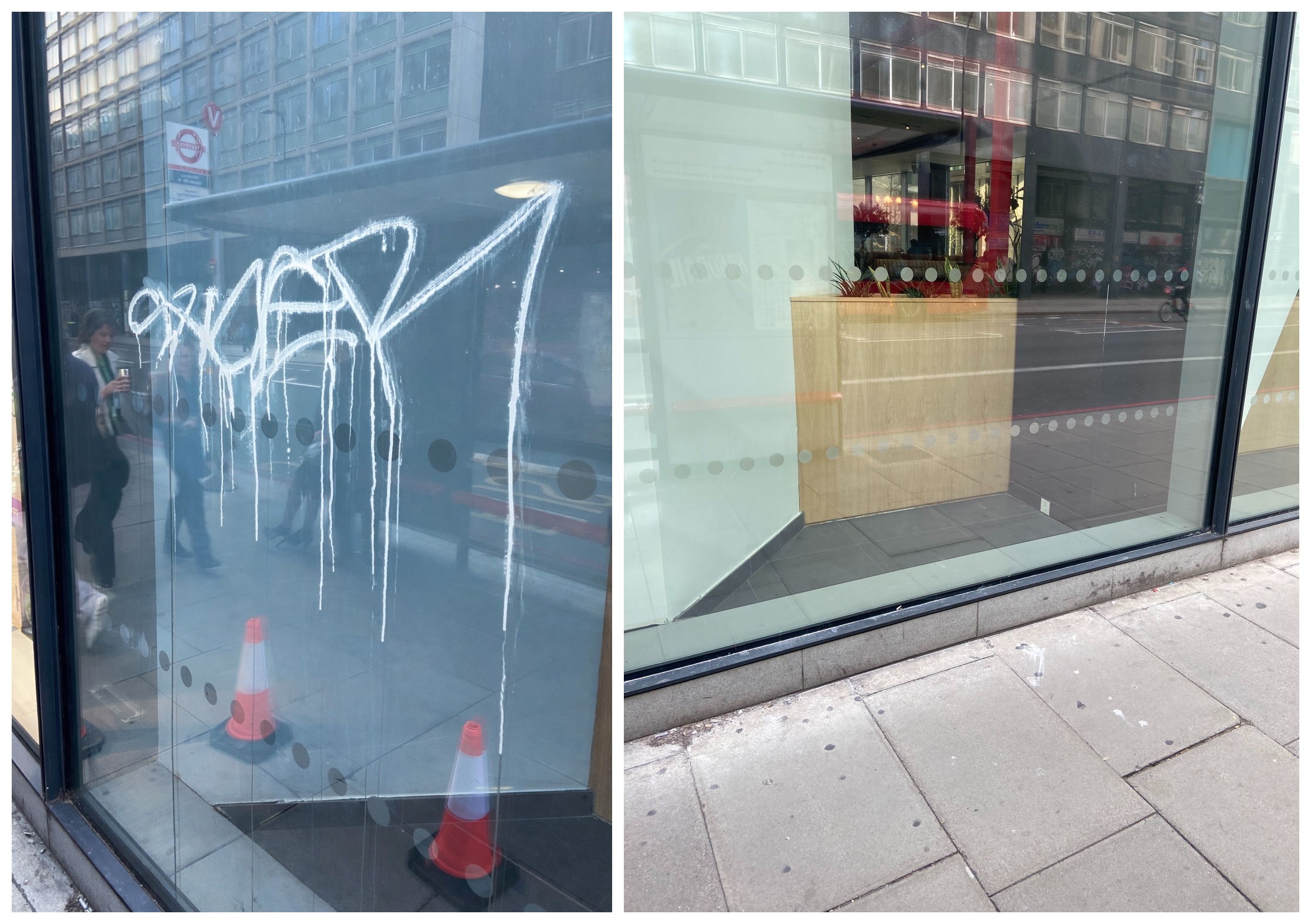




Graffiti On Your Glass That Won't Come Off? This Is Why
You have scrubbed it. Your cleaners have scrubbed it. Someone has been at it with a blade and it is still there. A milky, frosted, semi-transparent tag sitting in your shopfront that catches the light every time the sun moves round.
That is not paint sitting on top of the glass. That is acid etched graffiti, and no amount of cleaning will shift it, because the vandal has not marked your window. They have eaten into it.
Most people never hear the term acid etched graffiti until it happens to them. They search for graffiti removal from glass, or graffiti on glass, or they type in something close to what they are actually thinking: can't remove graffiti from glass. If that is how you found this page, you are in the right place, and the good news is that the problem is almost always fixable without buying a single new pane.
Do you need graffiti removed from your property? Get a fast, hassle-free quote today! Click here to get a professional graffiti removal quote or call us today on: 020 8050 5997
What Acid Etched Graffiti Actually Is
Acid etch vandalism has risen sharply across London in recent years, and we cover why in the rise of acid-etch vandalism in London and why acid etching graffiti happens.
Acid etching is vandalism done with a corrosive paste or liquid rather than a can of paint. The common products are hydrofluoric acid based glass etching creams sold openly for craft and signage work, and ammonium bifluoride pastes. A vandal smears it on, leaves it for a few minutes, and walks away. The acid keeps working after they have gone.
What the acid does is dissolve the silica at the surface of the glass, creating a field of microscopic pits. Those pits scatter light instead of letting it pass through cleanly. That is why the damage looks white, cloudy or frosted rather than coloured. There is nothing on the surface to remove. The surface itself has been changed.
This is also why it defeats every standard graffiti removal method. Solvents have nothing to dissolve. Pressure washing has nothing to lift. Blades and scrapers have nothing to catch, and they will usually add scratches to a pane that already has a problem. The only thing that works is controlled removal of a microscopically thin layer of glass until the pitted zone is gone and optical clarity is restored.
That is a precision restoration job. It is not a cleaning job, and it is the reason most general graffiti contractors and window cleaners will tell you the pane has to come out.
Is It Acid Etching, Scratching Or Paint? How To Tell In Thirty Seconds
Three kinds of damage look similar from across a pavement and need completely different treatment. Here is how to identify what you are dealing with before you call anyone.
Paint or marker. Run a fingernail across it. If you can feel the mark standing proud of the glass, it is sitting on the surface. Coloured, opaque, sharp edged. This is ordinary graffiti and it comes off with the correct solvent and technique.
Acid etching. The mark is white, grey or milky, semi-transparent, and you can see daylight through it. Run a fingernail across it and the glass feels slightly rough or chalky, but the mark is level with the surface, not raised. Edges are often soft, blurred or feathered where the paste ran or was wiped. It is far more visible from inside looking out, or when the light is behind it.
Scratching, sometimes called scratchiti. Sharp, linear, bright cuts made with a blade, a stone or a key. Your fingernail catches in the groove. Often deeper than etching and treated in a similar way, though depth determines whether it can be polished out.
Etching and scratching frequently appear together on the same pane, because the same person often uses both. We assess and treat both in the same visit.
If you want to be certain before you call anyone, we have a full photographic comparison in our glass scratching vs acid etching identification guide, and an explanation of that specific milky, frosted appearance in white frosty window graffiti explained.
Why Your Glazier Says Replace, And Why They Are Usually Wrong
A glazier sells and fits glass. When they look at a damaged pane, replacement is the answer they have. It is not dishonesty, it is the limit of the trade.
For a large commercial shopfront, replacement means a survey, a bespoke pane manufactured to size, a lift or access equipment, a road or pavement licence in some boroughs, a crew to remove and refit, disposal of the old unit, and days or weeks of lead time. During that time your frontage is boarded, your business looks closed or derelict, and the boarding itself attracts more vandalism. On a toughened or laminated unit, or anything with manifestation, film, heating elements or a sealed double glazed cavity, the cost climbs steeply.
Restoration removes the damage from the pane you already have. No pane to manufacture, no lead time, no boarding, no disposal, no road closure. We work on the glass in situ, usually while your business stays open, and in most cases we are done the same day.
| Replacing the glass | Restoring the glass | |
|---|---|---|
| Lead time | Days to weeks for a bespoke pane | Same day in most cases |
| Boarding up | Required while you wait | Never required |
| Trading disruption | Closed or obscured frontage | Usually open throughout |
| Access equipment | Lift or crew to remove and refit | Worked in situ |
| Pavement or road licence | Often required | Rarely required |
| Waste | Old unit disposed of | None |
| Typical cost | Full replacement cost of the unit | Up to 90 per cent less |
| When it is the right answer | Deep etching, blown seals, cracked or structurally damaged units | Surface and medium depth etching and scratching |
We set the full cost comparison out in glass replacement vs protection: the true cost, and walk through the decision itself in should I replace or restore etched graffiti glass.
There is a genuine limit and we will be straight with you about it. Etching that has gone deep enough to compromise the pane, damage that crosses a toughening stress pattern badly, or a unit with a blown seal, will sometimes be a replacement job. We tell you that on assessment rather than after taking your money. If restoration is not the right answer, we say so.
You Have Just Found It. What To Do In The First Hour
What you do in the first hour changes how easy the repair is and how safe your staff are. Etching paste that has not been fully rinsed off is still active, and the products used are corrosive to skin and eyes.
Do not touch it with bare hands. If there is any visible residue, paste or gel still sitting on the glass, treat it as a live chemical and keep staff and customers away from it.
Do not scrape it, blade it or scrub it. Blades add scratches to a pane that already needs restoring, and scrubbing drags any remaining paste across clean glass, enlarging the damaged area.
Do not apply solvents or graffiti removers. They do nothing to etching, and mixing an unknown product with a residual acid is a risk with no upside.
Do rinse with plenty of cold water if residue is visible and it is safe to do so, wearing gloves and eye protection, flooding the area rather than wiping so nothing is dragged across the pane.
Do photograph it before anything else. Dated photographs from inside and outside are what your insurer, landlord or managing agent will ask for, and they are what lets us quote accurately without a wasted site visit.
Do report it. Criminal damage is reportable to the police, and a crime reference number is normally required for any insurance claim.
Our full first response guidance is in what to do when your shop window is vandalised.
Watch Us Do It
This is a real acid etched graffiti removal carried out by our team in London. No time lapse tricks, no staging. This is the process from damaged glass to optical clarity.
Our Acid Etched Graffiti Removal Process
We do not have a single method that we apply to everything. Glass varies, the depth of etch varies, and the wrong approach on the wrong pane creates distortion that is worse than the graffiti. Here is how we work.
Assessment and depth reading. We establish what the glass is, float, toughened, laminated, coated, mirrored or double glazed, and how deep the etch has gone. Depth determines everything that follows, including whether restoration is viable at all.
Test area. On anything unusual, we work a small, discreet area first and check the result before committing to the full pane. Coated and low emissivity glass in particular has a surface layer that has to be understood before work starts.
Containment and protection. Frames, gaskets, seals, signage, film, manifestation and the surrounding fabric get masked and protected. Slurry is contained rather than run down your frontage or across the pavement.
Staged abrasion. We work through progressively finer abrasive stages, removing a controlled and microscopically thin layer of glass across a feathered area wide enough that no visible transition remains. This is the stage that separates a proper job from a botched one. Working only on the tag itself leaves a dished, lensed patch that distorts everything seen through it. The eye picks that up immediately.
Cerium oxide polishing. Final optical clarity is brought back with cerium oxide polishing, worked wet and checked repeatedly against transmitted light rather than reflected light.
Inspection from both sides. We check the pane from inside and outside, in daylight, at an angle, because that is how your customers and your tenants will see it. A repair that looks perfect head on and shows a shadow at forty five degrees is not finished.
Clean down and handover. The glass is cleaned, protection removed, the area left as we found it, and we photograph before and after for your records.
Most single pane jobs are completed in under three hours. Larger frontages and multi pane damage are quoted on site.
If you want the technical detail behind those stages, we document the methods in acid etched graffiti techniques and removal methods, the equipment in acid etched graffiti removal equipment and materials, and the final polishing stage in how to polish shopfront glass to optical clarity and how to use cerium oxide glass polish.
We are also candid about where the line sits between a job you could attempt yourself and one you should not, in DIY vs professional acid etched graffiti removal.
Do you need graffiti removed from your property? Get a fast, hassle-free quote today! Click here to get a professional graffiti removal quote or call us today on: 020 8050 5997
What It Costs, And What Drives The Price
Restoration typically saves up to 90% against the cost of replacing the same glass. A large bespoke shopfront pane that runs to several thousand pounds to replace, once you have added access, labour, disposal and the trading days lost behind boarding, is restored for a fraction of that.
The factors that move the price are straightforward and we will talk you through all of them before you commit:
- The size of the affected area and the number of panes involved.
- How deep the etch has gone. Surface etching is quick. Deep etching takes longer and occasionally cannot be polished out.
- The type of glass. Toughened, laminated, coated, mirrored and double glazed units each need a different approach.
- Access. Ground floor frontage is straightforward. Height, atria and internal glazing need equipment.
- Timing. Out of hours and overnight work to avoid disrupting trading is available and priced accordingly.
- Whether you want protective film fitted afterwards to stop it happening again.
We quote before we start, in writing, with no hidden fees. No lazy contractors. No hidden fees. Just expert graffiti removal every single time.
Surfaces We Restore
Acid etching is a glass problem most of the time, but not only a glass problem. The same corrosive products damage anything with a polished or reactive surface. We restore:
- Laminated storefront glazing, including large format bespoke panes.
- Float glass and standard windows.
- Toughened glass, including bus shelters, station glazing and platform screens.
- Double glazed and sealed units, treated externally without breaking the seal.
- Office atria, curtain walling, internal partitions and meeting room glazing.
- Mirrors and mirrored panels.
- Frosted, etched and textured decorative glass, where the original finish has to be matched rather than polished away.
- Glass block.
- Polished stone, including polished granite and polished marble cladding and entrance surrounds.
- Polished and brushed metal, including stainless steel shopfronts, lift doors and balustrade fittings.
If the damage covers several surfaces, which it usually does when someone has worked their way along a frontage, we deal with all of it in one visit rather than sending you to three contractors.
Recent Acid Etched Glass Restorations Across London
These are real jobs, on real frontages, with the before and after photography from site. If you want to see what the finished work looks like before you commit to anything, start here.
- Acid etched graffiti removal from glass in Shoreditch
- Acid etched glass graffiti removal in Victoria
- Acid etched graffiti removal on Bond Street
- Acid etched graffiti removal in Waterloo
- Acid etched graffiti removal in Farringdon
- Emergency acid etched graffiti removal in Dalston
- Graffiti and acid etched graffiti removal in Soho
- Acid etched graffiti removal in Hackney
- Acid etched graffiti removal in Richmond
- Acid etched graffiti removal in Mortlake
Who We Work For
Retail and Hospitality
Your frontage is your first impression. Etched glass tells every passer by that nobody is paying attention, and it stays telling them that for as long as it is there. We work around trading hours and restore without boarding.
Property and Facilities Managers
We handle multi site portfolios, respond to reactive tickets, and provide photographic before and after evidence suitable for insurers, landlords and service charge records. One point of contact, one invoice, clear reporting.
Offices and Corporate Premises
Reception glazing, atria and internal partitions restored out of hours so your staff and visitors arrive to finished work rather than a work site.
Transport and Public Realm
Shelters, station glazing and interchange panels, where etched glass is both a presentation problem and a repeat target. We work to the access and safety requirements of the environment.
Managing Agents and Landlords
Rapid response protects the value and the letting appeal of the asset, and prompt removal is consistently the most effective deterrent against the same location being hit again.
Who Pays? Leases, Insurance And Service Charges
On a commercial property the question of who pays is rarely as simple as the person who found the damage. The answer usually sits in three places.
The lease. Most commercial leases put the repairing obligation for the demised shopfront on the tenant, and the structure and common parts on the landlord. Glazing to a demised unit is normally the tenant's responsibility, glazing to a common entrance or atrium normally the landlord's, recovered through the service charge. Check the repairing covenant and the definition of the demise before assuming.
Insurance. Malicious damage is covered under many commercial policies, but excesses vary and a restoration cost is often close to or below the excess. A number of our clients choose to absorb the cost rather than register a claim that affects renewal terms. That calculation is easier to make with a firm restoration quote in front of you, which is one reason we quote in writing before starting.
Evidence. Whoever ends up paying, someone will want proof. Every job we complete comes with dated before and after photography and a written description of works, in a form you can hand to an insurer, a landlord, a managing agent or a service charge auditor without having to chase us for it.
If you manage a portfolio, prompt removal is also a defensible position in itself. Graffiti left in place attracts repeat attacks and drags on letting appeal, and being able to show a consistent, documented removal standard across your sites is worth more than any single repair.
How Fast We Respond
We remove graffiti all day, every day, and we offer same day attendance across London. For acid etching specifically, speed matters more than most people realise. Etching paste that has not been fully neutralised carries on working, and a tag that has been sitting through a winter of rain and grit is harder to bring back than one reported the morning it appeared.
If you have just found it, call us today and we will get someone to you. If it has been there two years, we can still almost always restore it. It just takes longer.
Stopping It Happening Again
Restoration puts your glass back. It does not stop the next person. If your frontage has been hit once it is statistically likely to be hit again, because taggers return to locations that worked.
The answer is a sacrificial anti-graffiti film applied to the outside face of the glass. The next acid attack damages the film, not the pane. The film is peeled off and replaced in minutes at a fraction of the cost of another restoration, and it is optically clear so it does not blur your window or dull your display.
We cover this in full on our anti-acid etched graffiti protection page. If you want the detail first: how anti-graffiti window film works, how long the film lasts, what the film costs, whether it blurs a shop window, and our installation process.
Sector specific protection guidance is available for retail displays, corporate offices and public transport glazing. If you want restoration and protection in the same visit, we do both.
Popular Areas We Cover
We cover the whole of London. These are the areas where we are called out for acid etched glass most often, and each has its own page:
- Shoreditch
- Brick Lane
- Camden Town
- Soho
- Brixton
- Hackney Wick
- Peckham
- Whitechapel
- Upper Street (Islington)
- Bethnal Green
- Dalston
- Marylebone High Street
- Bond Street
- Conduit Street
- Sloane Street
- Brompton Road
- Elephant & Castle
- Tottenham
- Lewisham
- Stratford
Do you need graffiti removed from your property? Get a fast, hassle-free quote today! Click here to get a professional graffiti removal quote or call us today on: 020 8050 5997
Frequently Asked Questions
1. Can acid etched graffiti actually be removed from glass, or do I have to replace the pane?
In the large majority of cases it can be removed. The etch sits in a microscopically thin layer at the surface, and restoration removes that layer and polishes the glass back to optical clarity. Replacement is only necessary where the etching is unusually deep or the unit is damaged in some other way. We tell you which situation you are in at assessment, before any work or payment.
2. Why can't my cleaners get it off?
Because there is nothing to get off. Acid etching is not a substance sitting on the glass, it is damage to the glass itself. Cleaning products, solvents, pressure washing and scrapers have nothing to act on, and blades usually add scratches on top of the original problem.
3. How much does it cost compared with replacing the glass?
Restoration typically saves up to 90% against replacement once you account for the bespoke pane, access equipment, labour, disposal and the trading time lost behind boarding. We give you a written quote before we start.
4. How long does it take?
Most single pane jobs are finished in under three hours. Larger frontages, multiple panes or deep damage take longer, and we give you a realistic time estimate with the quote rather than an optimistic one.
5. Do you have to remove the glass or board up my shop?
No. All work is carried out in situ, on the glass where it sits. There is no boarding, no hole in your frontage and in most cases no need to close.
6. Can you work while we are trading?
Usually yes. The work is contained and relatively quiet. Where a location or a client needs it, we work evenings, nights and weekends so the job is finished before you open.
7. Will the repaired area look different from the rest of the pane?
Not when it is done properly. The removal is feathered across an area much wider than the graffiti so there is no visible edge or transition. The common failure in this trade is polishing only the tag, which leaves a dished patch that distorts anything seen through it. We check the finish from both sides and at an angle before we call it done.
8. Does it weaken the glass?
The amount of material removed is microscopic relative to the thickness of the pane and does not compromise its structural performance. Where etching is deep enough that removal would take too much material, we tell you the pane needs replacing instead of restoring it unsafely.
9. Can you treat toughened and laminated glass?
Yes. Both are common on commercial frontages and both are routine for us. They need a different approach from ordinary float glass, which is one of the reasons the glass type is established before any work starts.
10. What about double glazed or sealed units?
Yes. Etching is almost always on the external face, and we treat that face without breaking the seal or disturbing the cavity. If the unit already has a failed seal, that is a separate problem and we will point it out.
11. Can you fix scratched glass as well as etched glass?
Yes. Scratching and etching are frequently found together on the same pane and both are treated with the same staged abrasion and polishing process. Depth decides what is possible, and deep gouges are occasionally beyond restoration.
12. What about mirrors, frosted glass and manifestation?
Mirrors and polished glass are restored in the same way. Frosted, etched and textured decorative glass is more involved, because the original finish has to be matched rather than polished away, and we assess those individually. Applied manifestation and film are protected during the work or replaced afterwards.
13. Can acid etching be removed from stone or metal?
Yes. The same products damage polished granite and marble cladding, entrance surrounds, stainless steel shopfronts and lift doors. The methods differ by material but the principle is the same, and we handle multi surface damage in a single visit.
14. How quickly should I get it dealt with?
As soon as you can. Residual paste that has not been neutralised keeps working, and a fresh etch is faster and cheaper to restore than one that has weathered through a winter. Prompt removal is also the single most effective deterrent against the same frontage being targeted again.
15. Will it just happen again?
It can, because vandals return to locations that worked. The practical defence is a sacrificial anti-graffiti film on the outer face of the glass. The next attack damages the film instead of the pane, and the film is peeled and replaced quickly and cheaply.
16. Will anti-graffiti film blur my shop window or dull my display?
No. The film is optically clear and is used on retail frontages precisely because it does not interfere with visibility or product display.
17. Does my insurance cover this?
Many commercial policies cover malicious damage, though excesses and terms vary and some clients choose to absorb a restoration cost rather than make a claim that affects their premium. We provide dated before and after photographs and a written description of works suitable for a claim or for your landlord and service charge records.
18. Can you handle multiple sites across London?
Yes. We work with property managers, facilities teams and managing agents across multi site portfolios, with one point of contact, consistent reporting and consolidated invoicing.
19. Are your technicians insured and trained?
Yes. All of our technicians are fully trained, certified and insured, and we work to the access and safety requirements of the site, including retail, corporate and public transport environments.
20. What happens when I call you?
We ask what the damage looks like, what the glass is and where it is. In most cases a photograph is enough for us to tell you whether it is etching, scratching or paint and to give you an indication of cost. We then attend, assess on site, confirm the price in writing and carry out the work. No lazy contractors. No hidden fees. Just expert graffiti removal every single time.
Do you need graffiti removed from your property? Get a fast, hassle-free quote today! Click here to get a professional graffiti removal quote or call us today on: 020 8050 5997