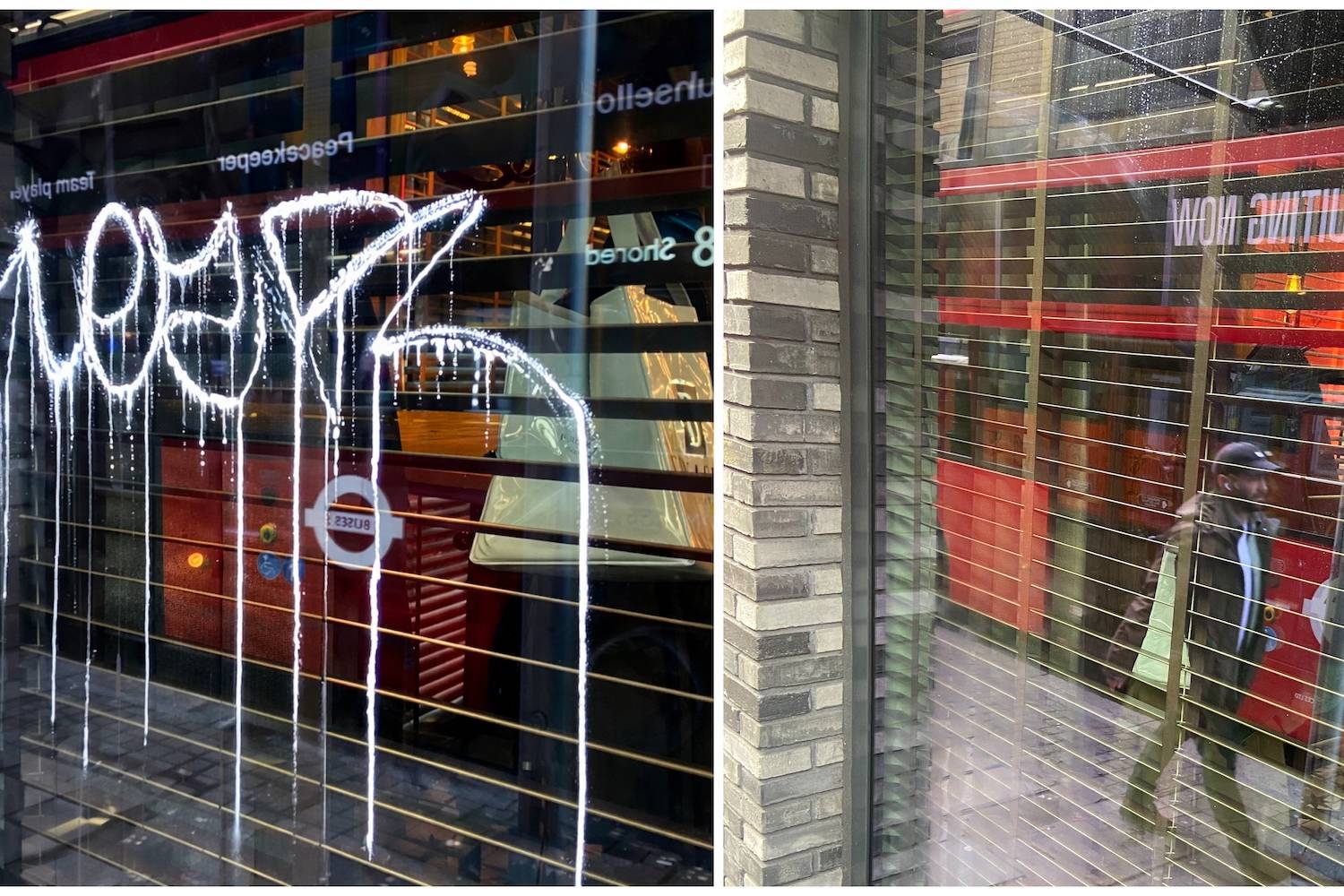
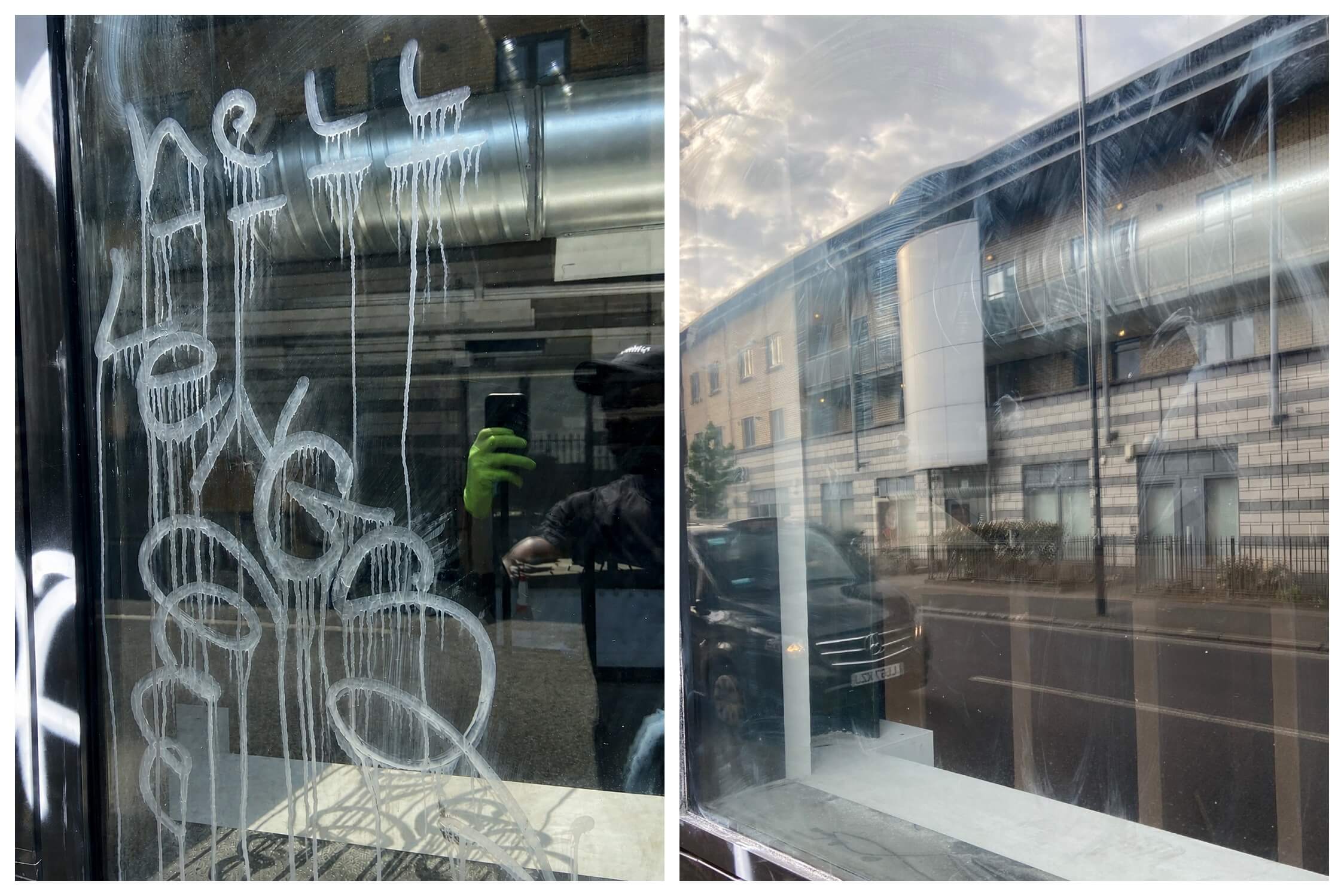
Walk the length of Bond Street on a Tuesday morning at half past seven and the picture is consistent. Cleaning teams are out. Window dressers are adjusting displays. Brass fittings catch the early sun. The collective effort that keeps a premium retail corridor looking like a premium retail corridor is significant, sustained, and largely invisible to the customers who arrive a few hours later expecting glass that is invisible, displays that are perfect, and brands that look like they have always looked. The corridors that work hardest at this, Mayfair, Knightsbridge, Soho, Covent Garden, Sloane Street, Marylebone High Street, parts of Shoreditch, parts of Hampstead, are also the corridors where one bottle of acid paste at three in the morning can disrupt the picture entirely.
Table of Contents
- Why London Storefronts Face a Distinctive Threat Profile
- Where Acid-Etch Vandalism Concentrates Across London
- What Visible Vandalism Actually Costs a London Retailer
- The Specific Threats London Shopfronts Face Day to Day
- How Film Protection Fits the Operational Reality of London Retail
- Borough Considerations: Premium vs High-Street vs Mixed-Use
- Specifying Protection That Does Not Disrupt Trading
- Stop the Threat Before the Frontage Pays for It
- Frequently Asked Questions
Do you need acid etched graffiti removed from your property? Get a fast, hassle-free quote today! Click here to get a professional graffiti removal quote or call us today on: 020 8050 5997
This is the practical context for window graffiti protection in London commercial retail. The threat is geographically specific, operationally disruptive, and economically significant, and it is increasingly the kind of risk that prudent retail operations now pre-empt rather than absorb. This guide sets out why London storefronts face a distinctive threat profile, where the pressure concentrates across the capital, what visible vandalism actually costs in trading terms, and how sacrificial film fits the operational realities of working retail. For wider context across the entire silo, our pillar resource on anti-acid etched graffiti protection in London covers the full landscape.
Why London Storefronts Face a Distinctive Threat Profile
Most British high streets are broadly similar in their exposure to opportunistic vandalism. London commercial corridors are not. The combination of footfall density, prestige brand concentration, late-night economy zones, transport interchange traffic, tourist visibility and 24-hour activity creates a vandalism risk profile that has more in common with a small handful of global capital cities than it does with the rest of the UK. Acid-etch attacks, in particular, cluster around precisely the streets where the cost of visible damage is highest.
The contributing dynamics are structural and not going away. London commercial property, especially at ground floor, is overwhelmingly glass-fronted. The glass is overwhelmingly bespoke and expensive to replace. The brands behind the glass have outsized reputational sensitivity. The corridors are open 24 hours a day to whoever passes through them. The same characteristics that make Bond Street, Sloane Street, Mount Street and Conduit Street commercially valuable, visibility, foot traffic, prestige, also make them attractive to vandals who understand that visible damage produces outsized impact.
Where Acid-Etch Vandalism Concentrates Across London
From years of attending sites across Greater London, the geographical pattern of acid-etch and deep-scratch attacks is reasonably consistent. The pressure clusters in five broad zones:
- Premium retail corridors. Bond Street, Mount Street, Conduit Street, Sloane Street, Brompton Road, Beauchamp Place, Marylebone High Street. High-prestige brands, high-visibility frontages, high impact when damage occurs.
- High-volume retail and hospitality. Oxford Street, Regent Street, Carnaby Street, Covent Garden, Camden High Street, Westfield environs. Mass footfall, mixed brand exposure, opportunistic targeting.
- Night-time economy zones. Soho, Shoreditch, parts of Camden, parts of Hackney, Old Compton Street, Brick Lane. Late-night foot traffic, alcohol-influenced incidents, sustained pressure on accessible glass.
- Transport interchange perimeters. Stratford, King's Cross, London Bridge, Waterloo, Victoria, Liverpool Street. High through-traffic, accessible glazing on retail and signage units, rapid turnover of unfamiliar pedestrians.
- Corporate frontages with retail at street level. Canary Wharf, the City of London, Paddington Square, parts of South Bank. Mixed-use vulnerability, with corporate-managed glass exposed to street-level pedestrian risk.
If your premises sits in any of these zones, proactive window protection is no longer a discretionary specification, it is a baseline asset-protection measure that retail and hospitality operations are increasingly defaulting to. Our analysis of the rise of acid-etch vandalism across London sets out the longer-term picture.
What Visible Vandalism Actually Costs a London Retailer
The headline number on a replacement invoice is rarely the most damaging part of an acid-etch event for a London retailer. The trading impact, brand impact, and recurrence risk frequently exceed it.
Trading impact. A boarded shopfront during the 7–14 working day fabrication lead time for a replacement bespoke pane has measurable consequences for footfall, conversion and average transaction value. Comparable-week year-on-year data from clients regularly shows footfall declines in the low double digits during boarded periods. For premium retail, where dwell time at the display window often drives the conversion decision, the impact compounds further.
Brand impact. Customers, journalists, social media observers and competitors read the condition of a frontage as a proxy for the state of the brand. A Bond Street boutique with a boarded centre window in late spring sends a signal, about the business, about the brand, about the location, that no marketing budget can fully recover. For premium positioning specifically, the brand cost is asymmetric and frequently underestimated by procurement.
Recurrence risk. A property that has been successfully attacked once, with the original tag remaining visible for any meaningful period, is statistically more likely to be revisited. The first event signals impunity; the second event arrives faster than the first. For more on the financial picture, our detailed comparison of the true cost of glass replacement against proactive window protection walks through every line item.
The Specific Threats London Shopfronts Face Day to Day
Generic discussion of "vandalism" does not help facility managers think clearly about specification. The threats London retail glazing faces are specific, recognisable, and distinct from each other.
- Acid-etch attacks. Hydrofluoric acid pastes or fluoride-bearing etching creams applied directly to the pane, producing permanent frosted graffiti that cannot be cleaned off. Concentrated in premium and high-traffic corridors.
- Mechanical scratching. Key tips, scribers, spark plug ceramic shards or carbide tools dragged across the glass, producing permanent linear gouges. Distributed broadly across night-time economy zones.
- Sticker and slap-tag accumulation. While not substrate-damaging in itself, repeated sticker tagging on the same property attracts further attention and increases the probability of acid or scratch attacks.
- Aerosol paint. Visually disruptive but generally remediable through professional pigment extraction. Less common on glass than on stonework or rendered façades.
- Deliberate impact. Less frequent but occasionally seen, typically aimed at causing pane fracture for theft or harassment purposes. Sacrificial film helps with shatter retention but is not specifically engineered for impact resistance.
The combination of these threats is what drives the case for protection on prominent London frontages. Our deeper guide on distinguishing glass scratching from acid etching covers the diagnostic differences in detail.
How Film Protection Fits the Operational Reality of London Retail
Retail operations have specific characteristics that make sacrificial film an unusually good fit. Three matter most.
Trading hours sensitivity. Retail cannot afford disruption during opening hours. Film installation can be completed outside trading hours, overnight, pre-opening, weekend morning, and rapid-response replacement after damage is typically a single-visit, often single-hour event. The shop never has to close.
Brand-aesthetic sensitivity. Retail cannot afford anything visible that interferes with merchandising. Premium-grade hard-coat film is engineered for high optical clarity and is effectively invisible to customers in normal viewing conditions. We address this concern more fully in our piece on whether anti-graffiti film blurs shop windows.
Predictable cost sensitivity. Retail finance functions favour predictable scheduled spend over unpredictable capex shocks. Film protection produces exactly that profile, installation at Year 0, scheduled replacement on a multi-year cycle, rapid film replacement after attacks at a fraction of pane replacement cost. Our companion piece on specifying glass graffiti protection covers the procurement framework.
Borough Considerations: Premium vs High-Street vs Mixed-Use
Not all London retail boroughs face the same threat profile, and one-size-fits-all specifications are rarely the right answer. The pragmatic specification varies meaningfully by location.
For premium retail districts, Mayfair, Knightsbridge, Belgravia, parts of Marylebone, the priority is protection that is invisible to customers, with rapid-response service that ensures the frontage never appears damaged. Premium hard-coat film, internal application where access permits, and a documented response commitment are all standard.
For high-volume retail corridors, Oxford Street, Regent Street, Camden High Street, the priority is robustness across high pedestrian contact and frequent low-grade damage. Hard-coat film with strong scratch resistance, scheduled replacement cycles, and proactive maintenance windows are typical.
For mixed-use commercial premises, corporate buildings with retail at street level, or office buildings with ground-floor cafes and concession spaces, the priority is consistent specification across the building's vulnerable glazing, with coordinated installation and response across all units. Our piece on corporate office glass protection covers this dimension specifically.
For night-time economy environments, Soho, Shoreditch, parts of Camden, the priority is sheer durability under sustained pressure, with rapid-response replacement that handles repeat events efficiently. Premium film, weekend-and-overnight installation availability, and proactive scheduled maintenance are all material.
Specifying Protection That Does Not Disrupt Trading
The single most frequent concern we hear from retail managers commissioning film for the first time is operational rather than financial. They have heard horror stories of installation disrupting trading days, of contractors who could not work outside opening hours, of bond cure times that prevented the shop from reopening on schedule. None of these need to be features of a well-managed install.
Our standard approach for retail clients is to schedule installation entirely outside trading hours, typically overnight, or in the pre-opening window before the first customer arrives. Bond cure for premium films is fast enough that the shop is fully operational by opening time. Window dressers can return to displays without any operational interference. Customers arrive to a frontage that looks identical to the day before and continues to look identical for the years that follow. The protection is doing its job; the trading floor never knows it is there.
Stop the Threat Before the Frontage Pays for It
For any London retailer in any of the prominent commercial corridors, the protection question is not whether to act but when. The cost of acting before the first event is consistently lower than the cost of acting after it. The brand cost of a boarded shopfront in Mayfair, Knightsbridge or Soho during peak trading season is one most retailers prefer to think about in advance. To begin a no-obligation site assessment for any London commercial premises, request an instant quote through our online form, or call our team directly on 020 8050 5997. All day. Every day. Within three hours.
Frequently Asked Questions
Which London retail districts see the highest concentration of acid-etch vandalism?
Premium retail corridors (Bond Street, Mount Street, Sloane Street, Brompton Road), high-volume retail (Oxford Street, Regent Street, Camden), and night-time economy zones (Soho, Shoreditch, Camden) consistently see the highest pressure. Transport interchange perimeters at Stratford, King's Cross and London Bridge also see sustained activity.
How long does installation take for a typical London shopfront?
For a typical 18–25 square metre retail shopfront across three to four panes, full installation usually completes within a single visit. Where scheduling around trading is sensitive, we work overnight or pre-opening. The shop opens the next day looking identical to the day before.
Can installation be completed entirely outside trading hours?
Yes. For retail clients, scheduling installation entirely outside trading hours is the standard, not the exception. Overnight, pre-opening, weekend morning, whatever fits your operational pattern. Bond cure times for premium films allow the shop to be fully operational by next opening.
Will the film affect my window displays or visual merchandising?
No. Premium-grade hard-coat film is optically clear, with light transmission losses typically in the low single digits. Customers will not notice the film. Visual merchandising performs identically to the day before installation.
What happens if my shopfront is attacked after the film is installed?
Our Rapid Response Team is dispatched within three hours, all day, every day. The damaged film is stripped, the substrate inspected, and a fresh layer applied, typically within a single visit, often within ninety minutes once on site. The shop remains open throughout.
How frequently are protected London shopfronts actually attacked?
Variable by location, brand, and corridor pressure. In higher-risk premium corridors, expected event frequency over a five-year horizon often exceeds two events. In lower-risk locations, multi-year periods without attack are common. Both scenarios are covered by the same service model.
Does film protection affect commercial property insurance for retail?
Some retail-focused insurers recognise sacrificial film as a risk-reduction measure and adjust premium pricing. The effect varies by insurer and policy. We recommend confirming with your broker; many of our retail clients have negotiated meaningful adjustments after installation.
Can the film be applied around existing window vinyls and signage?
Yes, in most cases. Existing vinyl signage is reviewed at survey, and the film is either applied around it or, where preferable, the vinyl is reapplied over the new film. The right sequencing is confirmed in advance.
Is film protection viable for listed building shopfronts in conservation areas?
Almost always, yes. The film is internal in most cases, optically clear, and produces no visible alteration to the listed frontage. We work routinely on listed and conservation-area properties across central London. Specific consents are confirmed where required.
What about flagship stores with very large bespoke glazing units?
Large-format glazing is a regular installation type for our team. The installation requires more technicians, more time on site, and more careful surface preparation, but the technique is well-established. We have completed installations on flagship units up to and beyond 6 metres tall.
Do you provide service contracts for retail estate portfolios?
Yes. For multi-property retail operations, coordinated service contracts cover all locations under a single response framework, with consistent specification, billing and reporting. We work with several premium retail estates across London on this basis.
How quickly can DUA London attend a flagship Bond Street or Mayfair location after attack?
Same response standard as everywhere else in Greater London, within three hours, all day, every day. Central London locations are typically attended faster, with 60–90 minute on-site arrivals being routine for premium retail clients with active service contracts.
Does the film affect the appearance of branded glass or printed treatments?
Premium-grade film is optically clear, so existing branded glass treatments remain visible exactly as before. Where new branded vinyl is applied over installed film, the visual result is identical to vinyl applied directly to glass.
Can protection be installed before an event has occurred, proactively?
Yes, and proactive installation is the most economical approach overall. Acting before the first event avoids the cost of one or more replacement cycles in the meantime, plus the trading and brand impact of boarded periods. We recommend proactive specification in any premium or high-volume London retail location.
How do I begin a site survey for my London storefront?
You can request an instant quote through our online form, or call our team directly on 020 8050 5997. We attend across all London boroughs and provide a no-obligation site assessment with a transparent itemised quotation.
Toby Doherty
Toby Doherty is a seasoned graffiti removal expert with over 20 years of experience in the industry. Throughout his career, Toby has helped countless businesses and property owners in London maintain clean, graffiti-free spaces. His extensive knowledge of graffiti removal techniques, from eco-friendly solutions to advanced technologies like laser cleaning, makes him a trusted authority in the field. Passionate about restoring urban environments, Toby combines his hands-on expertise with a commitment to staying up-to-date on the latest industry trends and innovations. When he’s not out in the field, Toby shares his insights through detailed articles, offering practical advice on everything from graffiti prevention to legal considerations.