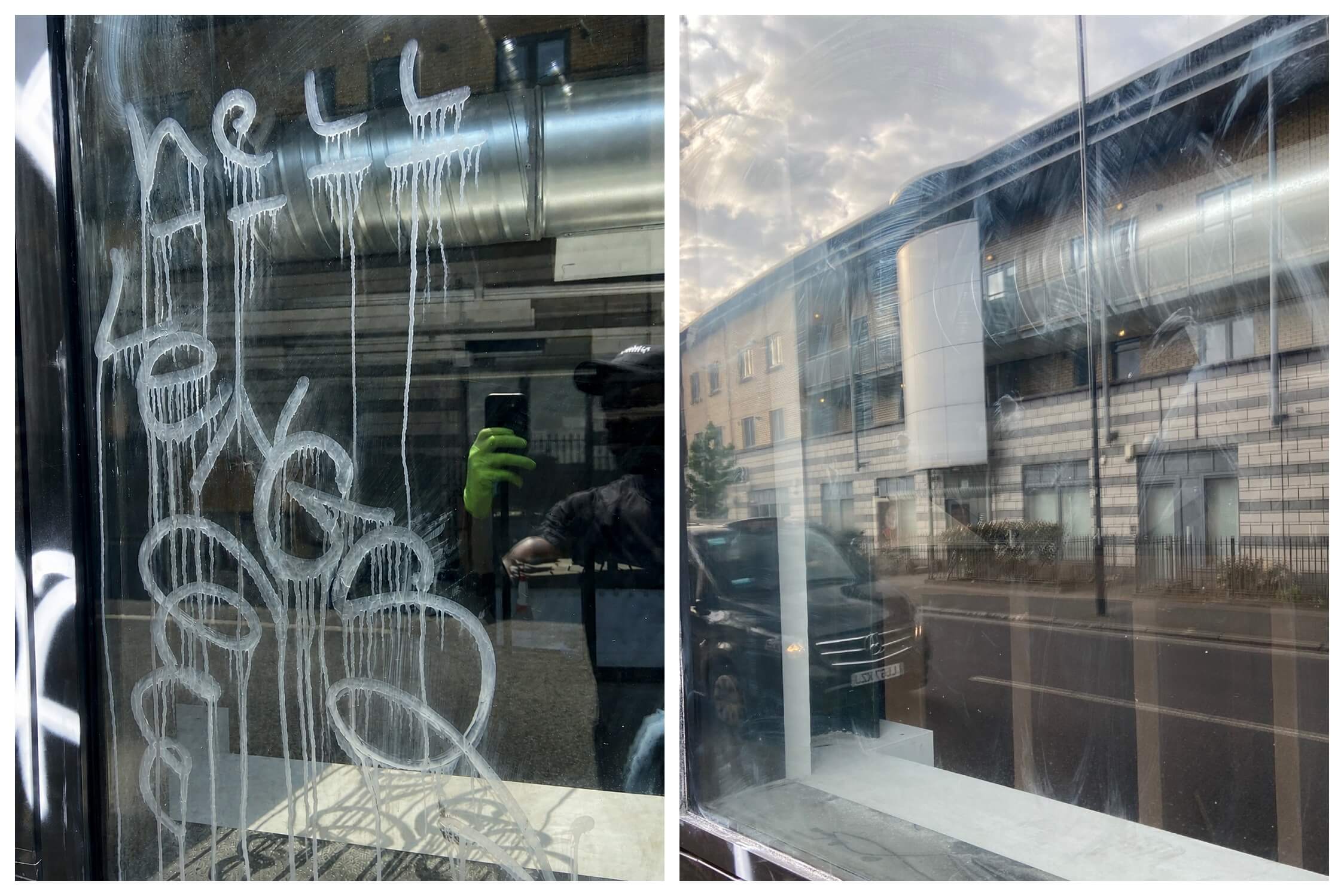
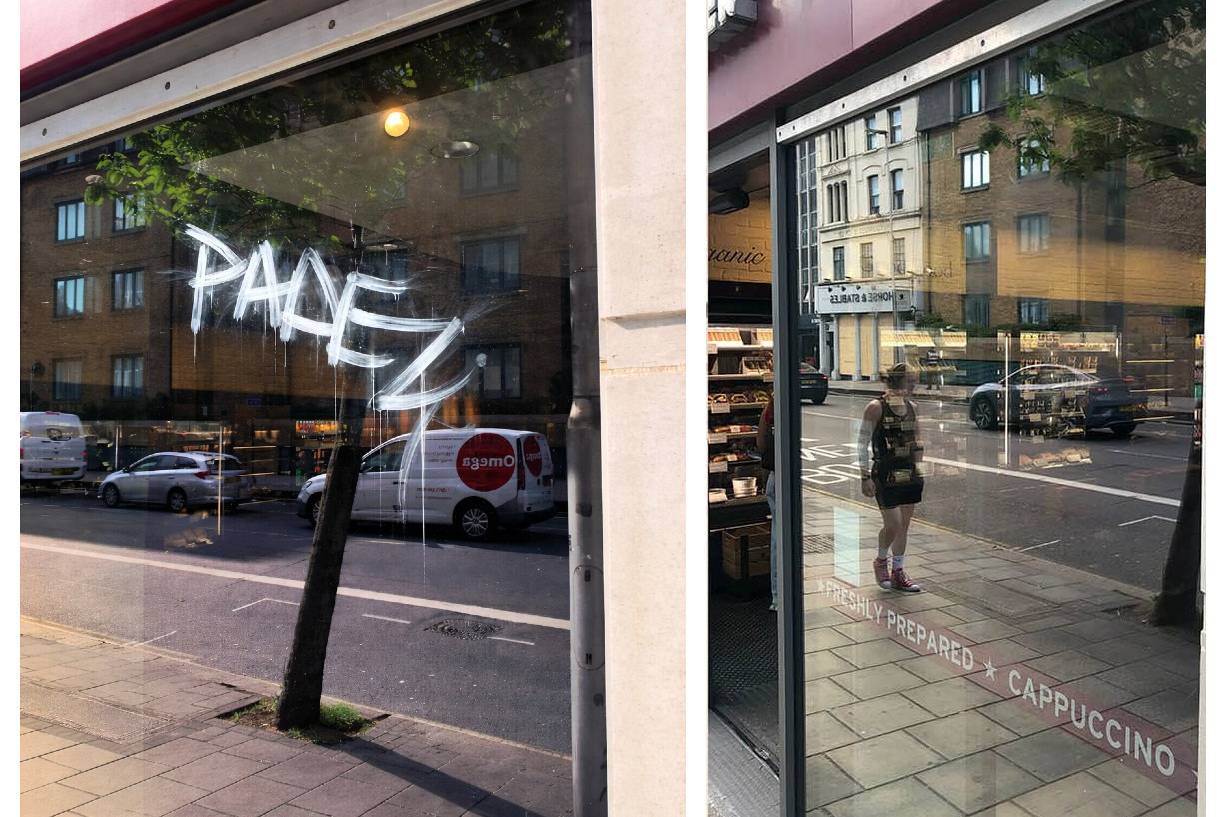
At the moment of discovery, the temptation is to do something. Anything. Standing in front of an etched shopfront on a Tuesday morning, watching customers walk past and clearly notice the damage, the instinct to start cleaning is almost overwhelming. It is also wrong, and acting on it usually makes the situation worse. The first hour after discovery is when the most expensive mistakes get made, not the etching itself, which has already happened, but the misdirected response to it. This guide sets out the correct sequence for the first 24 hours, in order, with no padding.
Table of Contents
- Step 1: Document the Damage Before You Touch It
- Step 2: Report to the Police and Get a Crime Reference Number
- Step 3: Notify Your Insurance Provider
- Step 4: Do Not Attempt Aggressive Cleaning
- Step 5: Get Professional Assessment Within 24 Hours
- Step 6: Choose a Restoration Pathway and Specify Forward Protection
- The First 24 Hours: A Practical Checklist
- The Goal Is Not Just to Recover, It Is to Prevent the Next Event
- Frequently Asked Questions
Do you need acid etched graffiti removed from your property? Get a fast, hassle-free quote today! Click here to get a professional graffiti removal quote or call us today on: 020 8050 5997
It applies to retail managers, hospitality directors, facility managers, council estate teams and anyone responsible for a commercial London property that has just been hit with acid-etch or scratch vandalism. Follow the sequence below, in this order, and you will minimise the damage to your business operations, maximise the chance of insurance recovery where applicable, and put yourself in the best position to remediate and protect forward. For wider context, our pillar resource on anti-acid etched graffiti protection in London covers the full landscape.
Step 1: Document the Damage Before You Touch It
Before any cleaning attempt, before any contact with insurers or contractors, before anything else: photograph the damage. Use a phone in good light, with the affected area clearly framed and a fixed reference for scale where possible (a ruler, an A4 sheet, a known dimension from the frame). Take wide-angle shots showing the whole pane in context, mid-range shots showing the full extent of the damage, and close-up shots showing the texture and depth.
Note the time of discovery. Note the time the property was last known to be undamaged, typically the closing time of the previous trading day. If you have CCTV covering the frontage, secure the relevant footage immediately rather than waiting; many systems overwrite within days. If there is no CCTV on your premises, check whether neighbouring properties or council CCTV may have captured the relevant period.
Photograph any nearby evidence: dropped applicators, residue, drip marks below the main tag, anything else that suggests how the attack was carried out. This evidence helps both insurance assessment and police reporting. If you are uncertain what type of damage you are looking at, our diagnostic guide on identifying white frosty acid-etched graffiti covers the visual fingerprint.
Step 2: Report to the Police and Get a Crime Reference Number
Vandalism of commercial premises is a criminal offence and should be reported to the police, even if you have no expectation of immediate enforcement action. Reporting matters for two practical reasons. First, the crime reference number is required by most commercial property insurers as part of any claim. Without it, the claim cannot proceed. Second, aggregated reporting helps police forces track patterns at borough and corridor level, supporting longer-term enforcement and prevention work.
For non-emergency vandalism reporting in London, the Metropolitan Police 101 service or the online reporting channel at met.police.uk is the standard route. The City of London Police covers the City; the British Transport Police covers rail and Underground assets. Reporting takes 5–10 minutes and produces a crime reference number you should retain alongside your photographs.
If the attack is in progress, or if there is any indication that perpetrators are still at the scene, call 999 rather than 101.
Step 3: Notify Your Insurance Provider
Notify your insurer as soon as practicable after the police report. Most commercial property policies require notification within a defined window, typically 24 to 72 hours of discovery, sometimes longer depending on policy wording, and delayed notification can complicate or invalidate claims. The notification call is separate from the formal claim filing; you are simply alerting the insurer to a potential claim and confirming the policy coverage.
Have your photographs, crime reference number, and policy number ready. The insurer will typically open a case file, assign a reference number, and indicate next steps for formal claim filing. Some insurers will arrange their own loss adjuster site visit; others will require you to obtain repair quotations from approved contractors.
Confirm the excess applicable to vandalism claims (commonly £500–£2,500 for commercial property), the policy limits, and whether your policy covers consequential losses such as trading downtime during boarding and replacement. Different policies treat consequential losses very differently.
Step 4: Do Not Attempt Aggressive Cleaning
This is the single most important rule of the first 24 hours, and the rule most commonly broken. Aggressive cleaning of acid-etched glass, using solvents, abrasives, scouring pads, or aftermarket "miracle" graffiti removers, will not extract the damage and will frequently make the surrounding glass look worse. The damage is microscopic erosion of the substrate; there is nothing to clean. Our detailed analysis of whether acid-etched graffiti can be cleaned off glass covers this in full.
The same applies to mechanical scratching. Attempting to "polish out" deep scratches with consumer-grade products produces hazy patches that look worse than the original gouges and complicate professional remediation later.
If cleaning of any residual material on the surface is genuinely needed (for example, excess paste residue around an etch tag), use only mild non-abrasive cleaning to remove the residue itself, without attempting to address the etching. Document the state before and after any cleaning intervention.
Step 5: Get Professional Assessment Within 24 Hours
Get a specialist on site quickly. The remediation options narrow as time passes, both because polishing depth limits are most generous immediately after the event, and because secondary attacks become more likely once the original tag has been seen. Our Rapid Response Team is dispatched within three hours of a confirmed call, all day, every day, across Greater London. The assessment is no obligation.
The site assessment confirms what you are looking at, scopes the realistic remediation pathway (polish, replace, or accept-and-protect), produces a costed quotation, and identifies the wider vulnerable inventory across your property that should be specified for forward protection. Many insurers will accept our written assessment as part of the claim documentation, simplifying the process for facility managers handling their first vandalism event.
Call 020 8050 5997 for same-day attendance, or request an instant quote through our online form.
Step 6: Choose a Restoration Pathway and Specify Forward Protection
Once you have an assessment, the remediation decision is straightforward. Where polishing is viable, restoration is fast, low-cost and typically achievable within a single visit. Where polishing is not viable, replacement is required, with the lead time and cost picture set out in our analysis of the true cost of glass replacement against proactive window protection.
In both cases, the right next step is to specify sacrificial anti-graffiti film for the wider vulnerable glazing as a forward measure. The first event is a clear signal that the property is on a vandal radar; without forward protection, the second event is statistically more likely than the first was. Our process for installation is set out in our walkthrough of the DUA London anti-acid etched graffiti protection installation process.
The First 24 Hours: A Practical Checklist
If you are reading this in the first hour after discovery, here is the action sequence in summary form:
- Photograph everything. Damage in context, full extent, close-up texture, scale reference, surrounding evidence.
- Note timing. Time of discovery, time of last known undamaged state, secure CCTV.
- Report to police. 101 service or online reporting. Retain crime reference number.
- Notify insurer. Open case file. Confirm excess, limits and consequential loss coverage.
- Do not clean aggressively. No solvents, abrasives or scouring. Mild cleaning of surface residue only if genuinely needed.
- Call DUA London on 020 8050 5997 or request a quote online. Same-day assessment, dispatched within three hours.
- Decide remediation pathway. Polish, replace, or accept-and-protect. Confirm with insurer.
- Specify forward protection. Sacrificial film across vulnerable glazing prevents recurrence.
Done in this order, the first 24 hours give you the best operational outcome, the cleanest insurance claim, and the strongest forward protection against the second event.
The Goal Is Not Just to Recover, It Is to Prevent the Next Event
Recovery from a single vandalism event is a finite project. Preventing the next one is the longer-term win. For any London commercial property that has just been targeted, the most economically rational response is to combine immediate remediation with forward protection across the realistically vulnerable glazing, and to do both as part of the same project, not separately. To begin a no-obligation site assessment for any commercial premises in Greater London, request an instant quote through our online form, or call our team directly on 020 8050 5997.
Frequently Asked Questions
Should I clean the etched glass before reporting to the police?
No. Photograph the damage in its current state first, then report. Cleaning before documentation can compromise insurance claims and removes evidence that may help police investigation. Aggressive cleaning will not extract the damage in any case.
Do I need to call the police if no break-in occurred?
Yes. Vandalism of commercial premises is a reportable criminal offence regardless of whether entry was attempted. Most insurance policies require a crime reference number to process vandalism claims, so reporting is practically necessary as well as appropriate.
How do I get a crime reference number?
Through the Metropolitan Police 101 non-emergency service or the online reporting channel at met.police.uk. The City of London Police handles the City; British Transport Police handles rail and Underground assets. The reporting process produces a crime reference number you should retain.
Will my insurance cover acid-etch vandalism damage?
Most commercial property policies cover malicious damage including acid etching. Specific cover, excess levels, and consequential loss treatment vary considerably between policies. Confirm with your insurer when you notify them; have your policy number, crime reference and photographs ready.
What's the typical excess on a commercial vandalism claim?
Commonly between £500 and £2,500 per event, depending on policy. Higher excesses are typical for premium properties or higher-risk locations. The cumulative excess across multiple events over a few years often exceeds the cost of installing protection in the first place.
How long do I have to file an insurance claim?
Most policies require notification within 24 to 72 hours of discovery and formal claim filing within a longer window (often 30 days). Specific timing is in your policy wording. Notify your insurer as soon as practicable after the police report to preserve all options.
Should I board up the window immediately?
Generally no, unless the pane is structurally compromised (cracked or fractured rather than just etched or scratched). Etched glass is structurally intact and continues to function. Boarding adds cost and is rarely necessary before the assessment confirms the remediation pathway. Temporary frosted vinyl can obscure the damage during trading hours where required.
Can I trade with the etched window in place while waiting for repair?
Yes. Etched glass remains structurally sound and the property can continue trading normally. Brand and conversion impact may be material, depending on location and brand sensitivity, but the operational option to keep trading exists. Many retailers cover the damage with temporary vinyl as a stopgap.
Do I need to inform my landlord?
Almost always yes, particularly in shopping centres, mixed-use buildings and managed estates. Lease wording usually requires notification of damage to the demised premises, even where the tenant is responsible for the repair cost. Notify your landlord or property manager promptly.
What evidence does the insurer typically need?
Photographs of the damage, crime reference number, time of discovery, time of last known undamaged state, any CCTV footage, and quotations for repair from approved contractors. We routinely supply written assessments suitable for insurer documentation.
Can DUA London work with my insurer directly?
Yes. We routinely liaise directly with insurers and loss adjusters where the client prefers, providing assessments, quotations and documentation in formats compatible with standard commercial claims processing. This is included in our standard service for vandalism response.
How quickly can I get repair quotes for a vandalism claim?
Our Rapid Response Team attends same-day, with a written quotation typically issued within 24 hours of the site visit. For premium and central London locations we frequently attend within 60–90 minutes of a confirmed call.
Should I install sacrificial film as part of the repair?
In most cases yes. Combining remediation and forward protection in a single project is operationally efficient, often eligible for partial coverage under insurance, and significantly reduces the risk of a second event. We routinely scope both stages together at the assessment visit.
What if the perpetrator is captured on CCTV?
Provide the footage to the police as part of the report. Prosecution rates for opportunistic vandalism remain low in practice, but evidence supports the case where police action proceeds and helps demonstrate due diligence to insurers.
How do I begin the remediation and protection assessment?
You can request an instant quote through our online form, or call our team directly on 020 8050 5997. We attend across all London boroughs and provide a no-obligation site assessment with a transparent itemised quotation.

Toby Doherty
Toby Doherty is a seasoned graffiti removal expert with over 20 years of experience in the industry. Throughout his career, Toby has helped countless businesses and property owners in London maintain clean, graffiti-free spaces. His extensive knowledge of graffiti removal techniques, from eco-friendly solutions to advanced technologies like laser cleaning, makes him a trusted authority in the field. Passionate about restoring urban environments, Toby combines his hands-on expertise with a commitment to staying up-to-date on the latest industry trends and innovations. When he’s not out in the field, Toby shares his insights through detailed articles, offering practical advice on everything from graffiti prevention to legal considerations.