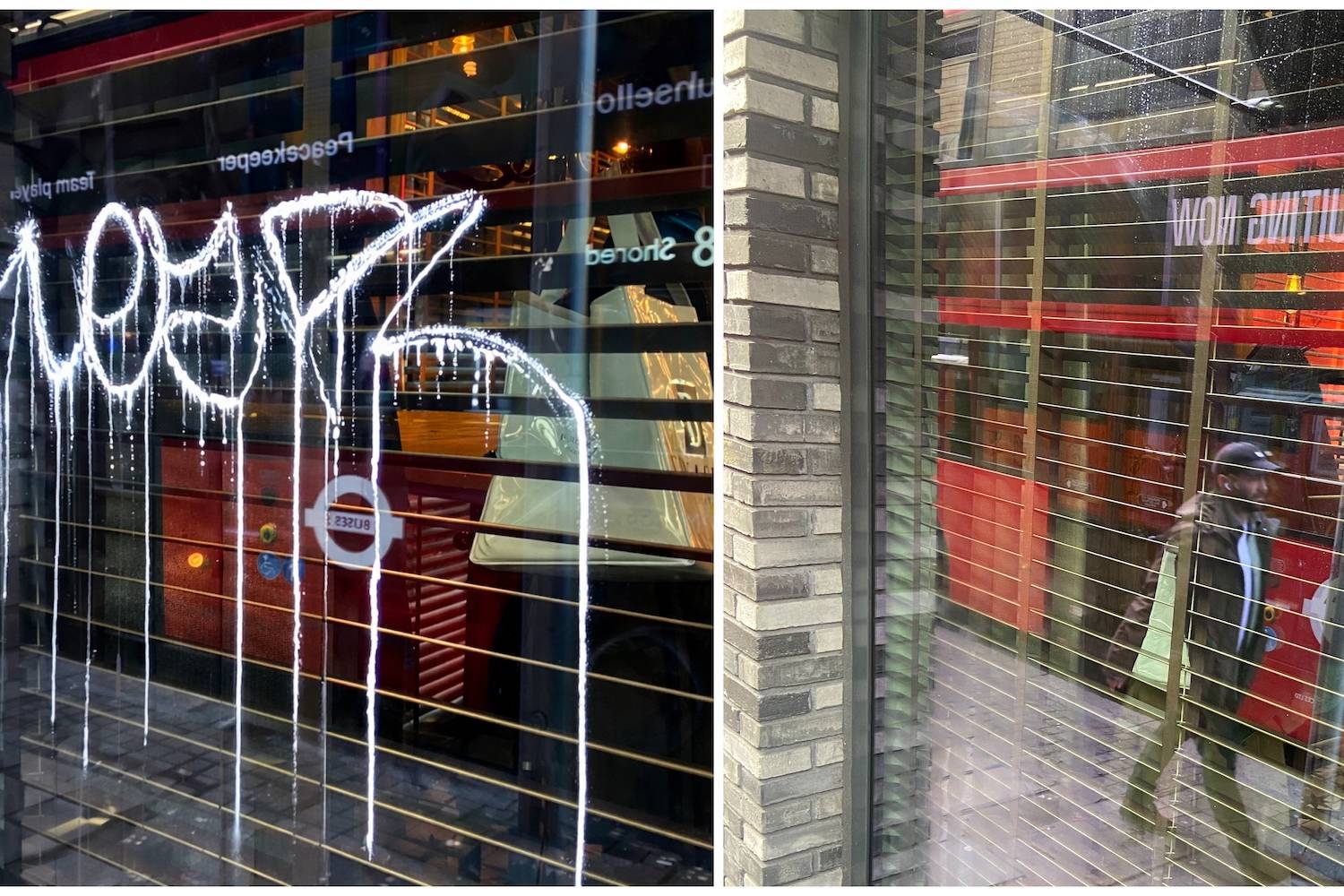
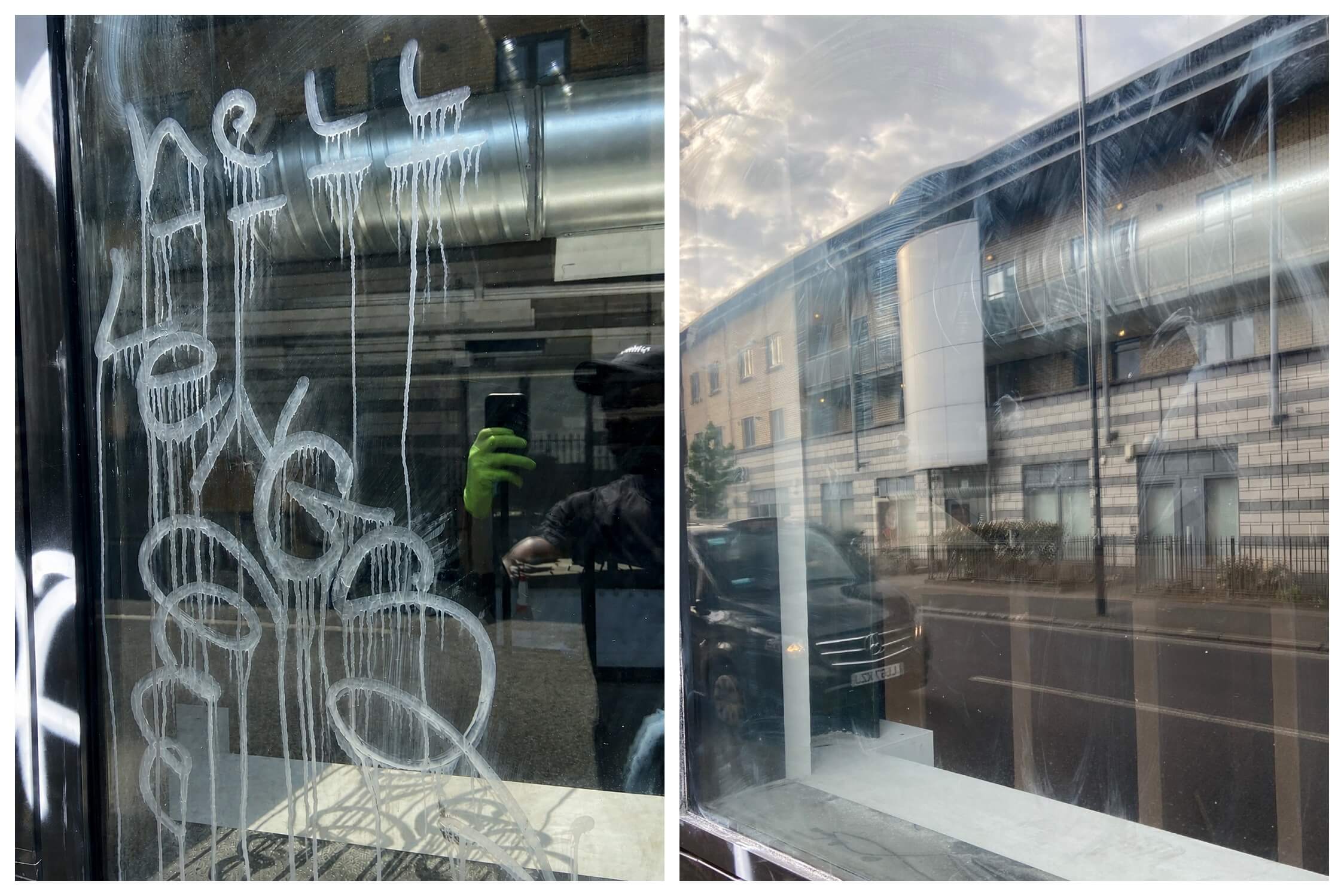
The invoice arrived on a Tuesday. £6,840, before VAT, for the replacement of a single 4m × 2.5m laminated display window at the front of a Mayfair fashion boutique that had been hit with acid-etched vandalism four weeks earlier. Materials accounted for £2,800. Specialist installation labour with suction-lift access added £950. Pavement licence and short-duration access platform came to £580. Temporary boarding during the fourteen-day fabrication lead time was billed separately at £420. The retailer's own internal estimate of lost trading across the boarded period, measured against the same week the previous year, landed somewhere north of £3,000 in foregone conversion. The grand total, all-in, was on the wrong side of £10,000 for one pane on one shopfront.
Table of Contents
- The Visible Costs of Replacement
- The Hidden Costs That Are Rarely on the Invoice
- Trading Downtime
- Brand and Reputational Impact
- Recurrence Risk
- Insurance Excess and Premium Effects
- The Predictable Cost of Sacrificial Film Protection
- A Worked Five-Year Comparison
- The Capex vs Opex Dimension
- What This Means for Your London Premises
- The Conclusion the Numbers Force
- Frequently Asked Questions
Do you need acid etched graffiti removed from your property? Get a fast, hassle-free quote today! Click here to get a professional graffiti removal quote or call us today on: 020 8050 5997
This is the picture that almost every London facility manager arrives at after their first acid-etched vandalism event, and it is the picture this guide exists to put in front of you before you have to learn it the expensive way. The numbers below are drawn from typical central London commercial glazing scenarios. Specifications vary, your premises vary, but the pattern is consistent. For the wider context across all forms of glass-targeted vandalism, our pillar resource on anti-acid etched graffiti protection in London sets out the full landscape.
The Visible Costs of Replacement
When a commercial pane is replaced after vandalism, the line items on the invoice are reasonably standard. The figures vary with size, specification, location and access requirements, but the structure does not.
| Cost component | Typical range (central London) | What drives the variance |
|---|---|---|
| Pane materials | £1,500–£3,500 | Size, lamination spec, toughening, coatings, branded glass treatments |
| Specialist installation labour | £600–£1,200 | Pane size, two-technician requirement, suction-lift gear, complexity of fitting |
| Access equipment | £300–£1,500+ | Ground floor vs. first floor and above, scaffolding vs. mechanical platform, duration |
| Pavement licence / road permit | £150–£600 | Borough, duration, footway impact, traffic management requirements |
| Temporary boarding or vinyl coverage | £200–£500 | Pane size, duration, vinyl quality where used in lieu of plywood |
| Disposal of damaged pane | £80–£200 | Glass type, hazardous coating considerations |
For a typical 3m × 2m laminated pane on a ground-floor shopfront in Westminster, Mayfair or the City of London, the bottom line on the visible costs alone usually lands between £3,500 and £6,500 before any of the less-tangible costs are factored in. For first-floor and above units, common in mixed-use commercial buildings throughout the West End, figures climb materially as access equipment and scaffolding hire dominate the cost stack.
The Hidden Costs That Are Rarely on the Invoice
The line items above are visible. They land on a written quotation. They are budgeted, signed off, paid. The costs that hurt London businesses far more, in our experience, are the ones that never appear on any invoice at all.
Trading Downtime
Bespoke commercial glass is not held in stock. Fabrication runs 7–14 working days for typical specifications and longer for bespoke laminations, branded glass or specialist coatings. During that period, the property frontage typically requires either plywood boarding or temporary vinyl coverage, neither of which projects the impression a Bond Street boutique, Knightsbridge restaurant or Mayfair gallery wishes to convey.
For premium retail and hospitality, the daily revenue impact of a boarded shopfront is real and measurable. Comparable-week year-on-year data from clients regularly shows footfall and conversion drops in the low double digits during boarded periods. Across a two-week fabrication lead time, the cumulative trading impact frequently exceeds the visible replacement invoice itself.
Brand and Reputational Impact
Customers, clients, business partners and journalists read the condition of your frontage as a proxy for the state of the business. A boarded pane signals neglect, financial distress, or a security event, none of which is the impression a successful operator wishes to leave. For high-prestige tenants, the brand cost of a boarded shopfront in their first year on a new lease is difficult to quantify but unambiguously material. Our analysis of protecting high street retail displays from glass vandalism covers this dynamic in detail.
Recurrence Risk
This is the cost most commonly underestimated by first-time victims. A property that has been successfully attacked once, with the tag remaining visible for any meaningful period, is statistically more likely to be revisited. The original tag stands as proof of impunity. Across central London commercial corridors we see the same properties hit repeatedly within twelve-month windows, each event triggering a fresh four-figure replacement cycle. Without protection, the second invoice tends to arrive faster than the first.
Insurance Excess and Premium Effects
Most commercial property policies cover malicious damage, but excess levels frequently sit between £500 and £2,500 per claim for vandalism, meaningful on a single pane and significant in aggregate across multiple events. Repeated claims also tend to influence premium pricing at renewal, in some cases more than the cost of installing protection in the first place would have done. We address this question more fully in our companion piece on whether acid-etched graffiti can be cleaned off glass, where remediation pathways and their cost profiles are compared.
The Predictable Cost of Sacrificial Film Protection
The cost picture for anti-graffiti film is structurally different from the replacement scenario in three important respects: it is predictable, it is amortised across years rather than concentrated in single events, and it is paid before disruption occurs rather than during it.
Optically clear sacrificial film is priced primarily by area, with allowances for installation complexity (internal vs. external application, accessibility, and pane size). For a typical commercial shopfront in central London, say 18 to 25 square metres of vulnerable glass across three to four panes, full installation runs in the low four figures, frequently below the cost of replacing a single damaged pane on the same frontage.
Once installed, the ongoing cost picture depends on whether the property is attacked. If the protected glazing is never targeted, the film is replaced on a scheduled cycle of several years, depending on UV exposure, cleaning regime and pollution load, and the cost of that scheduled replacement is, again, a fraction of a single unprotected pane replacement. If the protected glazing is attacked, our team is dispatched within three hours, strips the damaged film, inspects the substrate, and applies a new layer, typically within a single visit. The substrate is preserved. There is no fabrication lead time. There is no boarding. There is no four-figure invoice. Our explainer of how anti-graffiti window film works covers the technical detail.
A Worked Five-Year Comparison
Indicative figures for a comparable 3m × 2m ground-floor shopfront in a higher-risk central London borough, assuming two vandalism events across a five-year horizon, which is broadly typical for unprotected glass in night-time-economy zones and prominent retail corridors.
| Five-year scenario | Unprotected glass | Film-protected glass |
|---|---|---|
| Initial outlay (Year 0) | £0 | £900–£1,400 film install |
| First vandalism event | £4,500–£7,000 replacement | £300–£500 film replacement |
| Second vandalism event | £4,500–£7,000 replacement | £300–£500 film replacement |
| Trading downtime / brand impact | Substantial across two boarded periods | Negligible, single-visit film swap |
| Five-year total (indicative) | £9,000–£14,000+ | £1,500–£2,400 |
The comparison usually surprises facility managers in two ways. First, by how wide the gap is. Second, by how robust the gap remains across a wide range of assumptions. Even in the relatively benign scenario of one vandalism event in five years, film protection comes out ahead. In the more realistic central London scenario of two or three events, the financial argument for protection becomes overwhelming. For deeper analysis specific to corporate environments, our piece on securing corporate office fronts and glass architecture covers the asset-management view.
The Capex vs Opex Dimension
Beyond the headline numbers, sacrificial film protection produces a meaningful structural improvement in the financial profile of asset protection. Replacement cycles are unpredictable capex events, large, lumpy, and impossible to forecast. Film protection is predictable, scheduled spend that can be planned within an annual maintenance budget. For corporate facility managers and property portfolio managers, this shift from unpredictable capex shocks to predictable opex is itself a material benefit, independent of the headline cost differential.
For multi-property portfolios, the case becomes stronger still. A coordinated film specification across all vulnerable panes in a portfolio produces consistent protection, consistent replacement cycles, consistent reporting, and consistent budget treatment. Replacement-led approaches produce the opposite: random, location-dependent, hard-to-budget events that arrive without warning.
What This Means for Your London Premises
The financial case for sacrificial film protection is not subtle. Across the realistic range of vandalism frequencies seen in central London commercial corridors, the total cost of protection over a five-year horizon is consistently a small fraction of the cost of operating without it. The question worth asking is not whether film protection is economical, the maths answers that clearly, but which panes to specify it on and how soon. For a no-obligation site survey of any commercial premises in Greater London, request an instant quote through our online form or call our team directly on 020 8050 5997. Same-day assessment is the standard.
The Conclusion the Numbers Force
For most London commercial premises in retail, hospitality, corporate and transport sectors, the total cost of unprotected glass over a five-year horizon exceeds the total cost of film protection by a wide margin. The case is strongest where vandalism risk is highest, central London nighttime-economy zones, prominent retail corridors, transport interchange perimeters, but holds across most of the capital's commercial estate. The economics do not need a lengthy procurement debate. They need a site survey. Call 020 8050 5997 or request an instant quote to begin one.
Frequently Asked Questions
What is the typical replacement cost for a single commercial pane in central London?
Materials alone for a 3m by 2m laminated or toughened pane typically run £1,500–£3,500. Once specialist labour, access equipment, pavement permits and temporary boarding are added, total delivered cost frequently lands between £3,500 and £8,000 per pane, with first-floor and above units extending higher.
How is anti-graffiti film priced, by pane, by area, or by job?
Film is priced primarily by area in square metres, with allowances for pane size, installation complexity, internal vs. external application, and access requirements. For a typical commercial shopfront, the all-in figure usually sits in the low four figures and is materially less than a single unprotected pane replacement.
Are there volume discounts for multi-pane or multi-property installations?
Yes. Coordinated installation across an entire shopfront, building or property portfolio reduces per-pane installation cost meaningfully through efficient scheduling and shared access. We provide volume pricing for any installation covering multiple panes in a single visit or across a coordinated programme.
How long does fabrication of a replacement commercial pane usually take?
Bespoke fabrication for typical commercial laminated or toughened panes runs 7–14 working days, with longer lead times for branded glass, specialist coatings or non-standard dimensions. Throughout fabrication, the property usually requires temporary boarding or vinyl coverage.
What is the realistic daily trading impact of a boarded shopfront for a London retailer?
Variable with location, brand, and product category, but typically meaningful. Premium retail and hospitality operators in West End locations report measurable footfall and conversion declines during boarded periods. Across a two-week fabrication window, cumulative trading impact frequently approaches or exceeds the replacement invoice itself.
Does business insurance cover the full cost of glass replacement after vandalism?
Most commercial property policies cover malicious damage, but excess levels for vandalism claims commonly sit between £500 and £2,500 per event, and repeated claims can affect premium pricing at renewal. Many clients find that the cumulative excess across multiple incidents exceeds the cost of installing protection in the first place.
How long does anti-graffiti film last once installed?
Premium-grade hard-coat films installed by trained technicians typically last several years before scheduled replacement, depending on UV exposure, cleaning regime and pollution load at the location. Where film is damaged by vandalism in the meantime, the affected layer is replaced individually.
Can film protection be treated as an operational expense for tax purposes?
Treatment depends on your specific accounting and tax circumstances. We recommend confirming with your accountant. Most clients expense film protection as part of routine asset protection or facilities maintenance, but capitalisation may be appropriate in some cases.
How does film protection compare to glass polishing as a remediation cost?
These are different things rather than direct alternatives. Polishing remediates existing damage where viable; film prevents new damage from reaching the substrate. In practice we typically polish or replace existing damage first, then install film as a forward measure on the restored pane.
Is there a meaningful difference in cost between internal and external film application?
Internal application is generally lower cost, faster, and unaffected by weather. External application is required in some specific scenarios, typically where the inside face is inaccessible, or where the pane specification or access constraints dictate. The choice is confirmed at site assessment.
Are there ongoing maintenance costs associated with installed film?
Routine cleaning is the same as for unfilmed glass, non-abrasive cleaners and microfibre. There are no scheduled maintenance fees beyond eventual replacement at end of life cycle. We provide care guidance with every installation.
What is the realistic break-even point for film protection vs. replacement?
For most central London commercial premises, film protection is cheaper than the cost of even one full pane replacement event over a five-year horizon. In higher-risk locations with two or more expected events across that period, the cost differential becomes substantial.
Does protected glazing affect commercial property insurance premiums?
Some insurers recognise sacrificial film as a risk-reduction measure and adjust pricing accordingly. The effect varies by insurer and policy. We recommend confirming with your broker; many of our clients have negotiated meaningful premium adjustments after installation.
How quickly can DUA London provide a costed quotation?
For most London commercial premises, we attend a site survey within 24 hours of a request and provide a detailed costed quotation shortly afterwards. Same-day surveys are standard during business hours, and we operate seven days a week with rapid response within three hours for urgent cases.
How do I get a costed quote for my premises?
You can request an instant quote through our online form, or call our team directly on 020 8050 5997. We attend across all London boroughs and provide a no-obligation site assessment with a transparent itemised quotation.
Toby Doherty
Toby Doherty is a seasoned graffiti removal expert with over 20 years of experience in the industry. Throughout his career, Toby has helped countless businesses and property owners in London maintain clean, graffiti-free spaces. His extensive knowledge of graffiti removal techniques, from eco-friendly solutions to advanced technologies like laser cleaning, makes him a trusted authority in the field. Passionate about restoring urban environments, Toby combines his hands-on expertise with a commitment to staying up-to-date on the latest industry trends and innovations. When he’s not out in the field, Toby shares his insights through detailed articles, offering practical advice on everything from graffiti prevention to legal considerations.