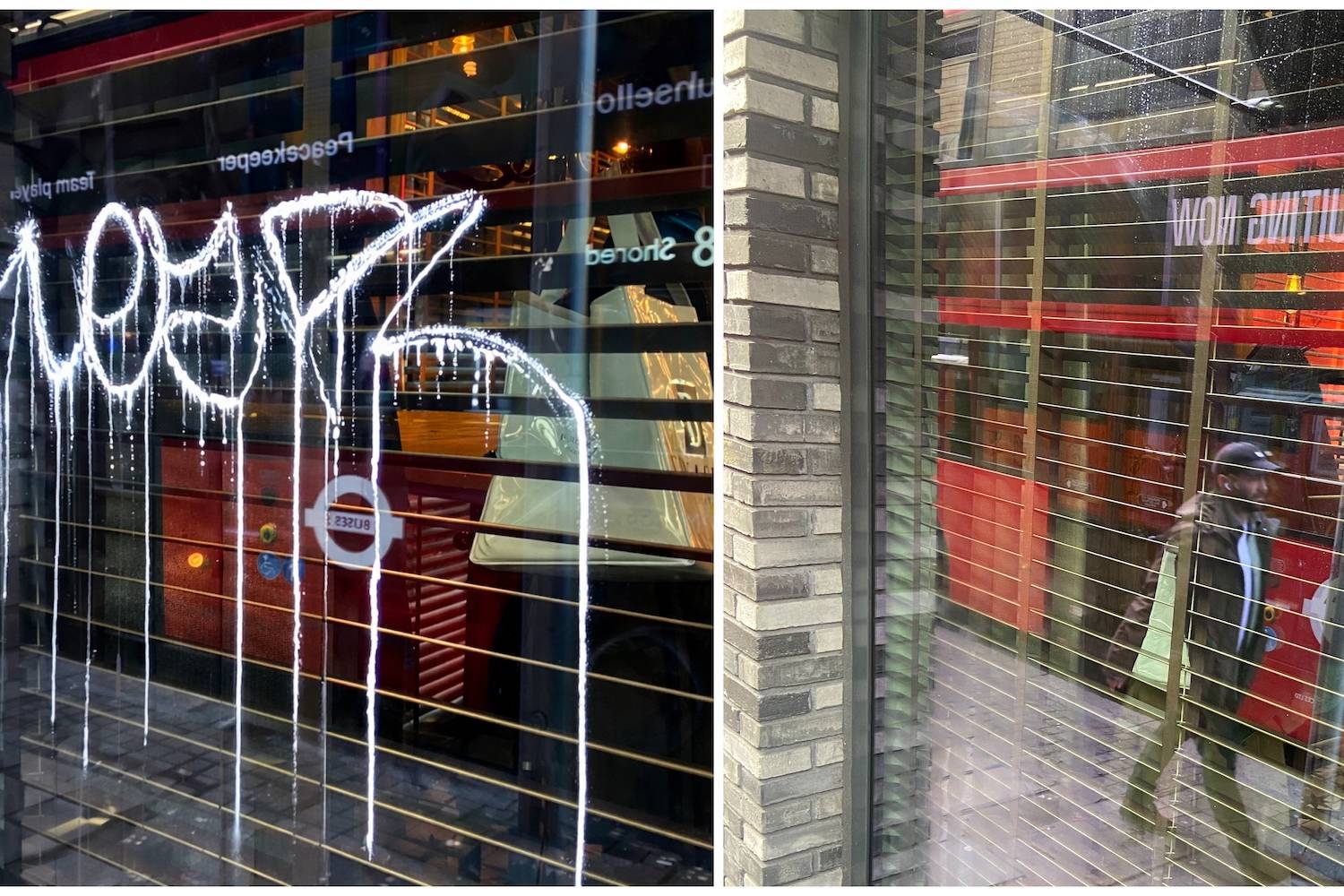
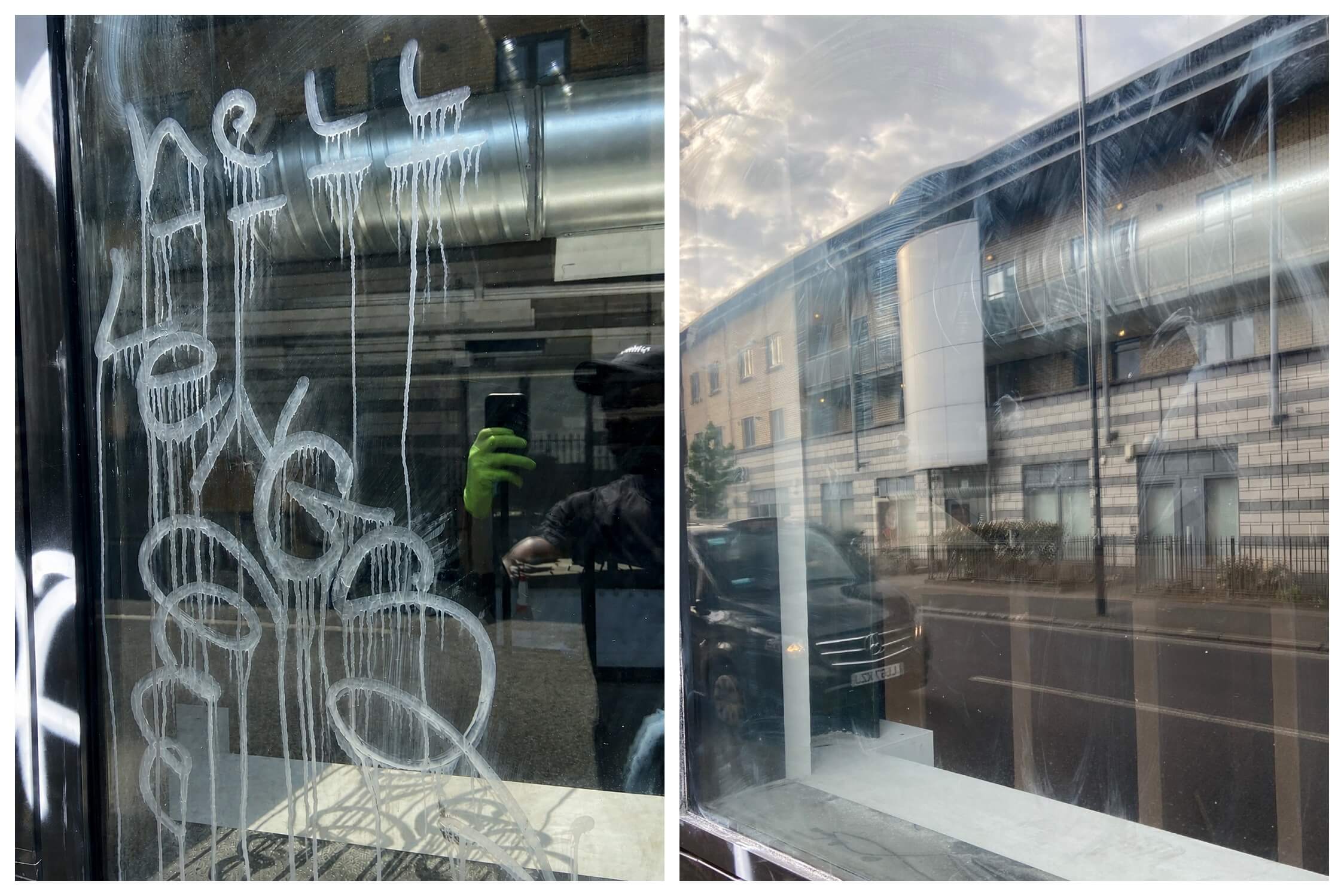
Strip the marketing language away from anti-graffiti window film and what remains is a piece of fairly elegant materials science. A thin, multi-layer, optically clear polyester laminate, bonded to commercial glass with a precision-formulated adhesive, engineered to absorb both chemical and mechanical attack at its outer surface, and engineered, just as carefully, to be cleanly stripped and replaced when it has done so. There is no magic. There is no clever trick. There is just a barrier sitting between your substrate and the world, made of material that is cheap to replace and impossible for vandals to tell apart from bare glass.
Table of Contents
- The "Sacrificial Layer" Concept in Plain Language
- What the Film Is Actually Made Of
- How the Film Defeats Acid Attacks
- How the Film Defeats Mechanical Attacks
- The Installation Process, How the Bond Is Made
- The Removal and Replacement Process
- Why Optical Clarity Holds Up Over Time
- Why Multi-Layer Construction Drives Durability
- The Mechanism in One Sentence
- Frequently Asked Questions
Do you need acid etched graffiti removed from your property? Get a fast, hassle-free quote today! Click here to get a professional graffiti removal quote or call us today on: 020 8050 5997
This guide explains exactly how that works. The layer composition. The adhesive chemistry. What happens when acid hits the film. What happens when a key or scriber drags across it. How the film is installed without bubbles or air entrapment. How it is removed and replaced after damage. And why the optical clarity holds up across a multi-year service life despite UV exposure, atmospheric pollution and repeated cleaning. For wider context across the entire silo, our pillar resource on anti-acid etched graffiti protection in London covers the full landscape; for buyer-oriented procurement guidance, our ultimate guide to glass graffiti protection for businesses covers the specification side.
The "Sacrificial Layer" Concept in Plain Language
The term "sacrificial layer" is borrowed from broader materials engineering, corrosion protection on ships, abrasion barriers on industrial equipment, protective coatings on aerospace components. The principle is identical across every application: a removable, replaceable surface layer takes the damage that would otherwise reach the valuable substrate beneath.
For commercial glass, the "valuable substrate" is the pane itself. Replacing it costs four figures and several days. The "sacrificial layer" is the film. Replacing the film costs a fraction of that and a couple of hours. The economic logic is straightforward: deliberately position something easy to replace in front of something expensive to replace, and let the damage land on the easier-to-replace layer. The film is designed to be damaged. It is supposed to take the hit. That is the entire point.
What the Film Is Actually Made Of
Premium anti-graffiti window film is a multi-layer engineered laminate. The exact composition varies between manufacturers and product grades, but the architecture is consistent across the commercial-grade products we install on London premises. Reading from outside (the world-facing surface) to inside (the glass-facing surface):
- Hard-coat top layer. A thin, scratch-resistant coating that takes the brunt of mechanical contact. This layer is what the world touches and what most vandalism actually meets. Hard-coat formulations dramatically outperform uncoated soft-coat films for both scratch resistance and chemical durability.
- Polyester laminate body. The structural layer of the film, typically multiple thin polyester sheets bonded together. The body provides tear resistance, dimensional stability and the bulk of the chemical barrier between an attack and the substrate.
- Optically clear adhesive. The precision-engineered adhesive that bonds the film to the glass. This is the layer most people overlook and most installation failures originate in. A poor adhesive layer produces curling edges, peel risk and air entrapment; a precise one produces an essentially invisible bond.
- Release liner (removed during installation). A protective layer covering the adhesive prior to application, peeled away during the installation process.
The total film thickness, after installation and removal of the release liner, is typically measured in tens of microns, thin enough to be visually undetectable, robust enough to absorb meaningful damage. Hardness, peel strength and tear resistance are all engineered for the specific demands of commercial-grade vandalism resistance.
How the Film Defeats Acid Attacks
Acid-etched vandalism uses chemistry. Specifically, hydrofluoric acid pastes or fluoride-bearing etching creams react with the silica in soda-lime glass, dissolving microscopic layers of the substrate. On unprotected glass, this is permanent damage with no foreign material left to clean off. On filmed glass, the chemistry hits the polyester laminate first.
The film's outer hard coat is formulated to be substantially more resistant to fluoride attack than uncoated glass. Even when the acid does react with the film material, it reacts with the laminate body, not with the glass. The damage is absorbed into a layer that is designed to be replaced. The substrate beneath remains untouched. This is true even when the attack is sustained, the polyester body is thick enough, in dwell-time terms, to outlast the practical period a vandal will spend applying paste to a single pane.
When the attack ends and we attend to remediate, the situation is the opposite of unprotected glass: there is something to remove. We strip the damaged film. The substrate is inspected, and is invariably found to be undamaged, because the film did its job. A fresh layer is applied. The pane is restored to its pre-attack visual state.
How the Film Defeats Mechanical Attacks
Mechanical scratching uses physics. A vandal drags a tool harder than glass, typically a key tip, scriber, spark plug ceramic shard, or carbide point, across the surface, gouging a permanent linear groove into the substrate. On unprotected glass, the resulting damage is, again, irreversible. On filmed glass, the gouge sits in the laminate, not the substrate.
The hard-coat top layer of premium film is engineered to resist surface scratching from common opportunistic tools. Where a determined attacker manages to score deeper, the gouge typically penetrates into the polyester body but not through it. The adhesive layer holds the damaged film firmly in place against the glass. The substrate is preserved. Our companion piece on distinguishing glass scratching from acid etching covers the diagnostic side, but the protection mechanism is the same in both attack categories: the film takes the hit.
The Installation Process, How the Bond Is Made
A precise installation is what turns a high-grade film into reliable long-term protection. The same film, fitted poorly, fails within months. Fitted properly, it performs for years. Our installation sequence is the result of accumulated experience across thousands of London commercial premises and is designed to produce a near-invisible, peel-resistant, air-free bond every time. The full step-by-step is set out in our walkthrough of the DUA London anti-acid etched graffiti protection installation process; the abbreviated version is below.
Step 1: Substrate preparation. The glass is cleaned to a clinical standard. Atmospheric pollution, fingerprints, oils and any residual cleaner from previous maintenance are all removed using a defined cleaning protocol. Any contamination left at this stage will become a permanent imperfection in the bond, so the cleaning is taken seriously.
Step 2: Film cutting. The film is cut to the precise dimensions of the pane, with allowance for clean edge tucks against the frame. Measurement accuracy at this stage determines the visual quality of the finished bond.
Step 3: Liner removal and adhesive activation. The release liner is removed from the adhesive face, with the adhesive lightly wetted using a controlled application solution. The wetting allows the film to be precisely positioned before the adhesive sets, once dry, the bond is permanent.
Step 4: Application. The film is positioned against the glass and worked into place with precision squeegee technique. The squeegee expels application solution, air and any remaining contamination outward from the centre of the pane to the edges, leaving a uniform, defect-free bond.
Step 5: Edge finishing. The edges are tucked, trimmed and finished against the frame to a tight tolerance. This is where lazy installations announce themselves: a thin visible margin, slight curl, or imprecise edge trim is the most common failure point on poor jobs.
Step 6: Cure and inspection. The bond is allowed to cure for a defined period, after which the install is inspected, signed off, and care guidance is handed over. The film is now operationally protective.
The Removal and Replacement Process
The other side of the sacrificial-layer principle is that damaged film must be removable cleanly, without harming the glass it has been protecting. This too is engineered into the system. The adhesive is formulated to be aggressive enough to hold the film firmly in service, but releasable cleanly using established peel and solvent protocols when the time comes.
When a protected pane has been attacked, our Rapid Response Team is dispatched within three hours, all day, every day. The damaged film is heated lightly to reduce adhesive grip, peeled in a controlled motion from a corner, and any residual adhesive is removed with a non-aggressive solvent that does not interact with the substrate. The exposed glass is inspected, cleaned, and a fresh layer of film is applied, typically within the same visit. Total time on site is often under ninety minutes.
This cycle can be repeated indefinitely across the service life of the underlying glass. The substrate is preserved. The trading window is uninterrupted. The cost per cycle is a fraction of one full pane replacement.
Why Optical Clarity Holds Up Over Time
Aesthetic objections are the single most common procurement concern from retail and hospitality decision-makers. Will the film be visible? Will it dull the display? Will it yellow over time? Will it haze with UV exposure? On premium-grade hard-coat films installed by trained technicians, the answers are no, no, no, and not within the practical service life. We address the aesthetic question more fully in our piece on whether anti-graffiti film blurs shop windows.
Optical clarity is engineered through several converging design choices: precise refractive index matching between the film and the glass (so that light passing through encounters minimal interface reflection), high-quality polyester sheet sourcing (free of haze and inclusions), UV-stable hard-coat formulations (so that the outer layer does not yellow or fog under sun exposure), and aggressive quality control during manufacture. The cumulative result is a film that reduces light transmission by a few percent at most, has no visible colour cast, and remains visually identical to the original pane across years of service.
Why Multi-Layer Construction Drives Durability
The reason premium anti-graffiti film outperforms basic single-layer products has less to do with thickness than with the layer architecture. Each layer in the laminate has a specific job. The hard coat resists mechanical contact and chemical attack. The polyester body provides tear resistance and dimensional stability. The adhesive holds the bond. The release liner protects the adhesive prior to install. Together, the layers produce a system that is greater than the sum of its parts, the failure of any one layer does not catastrophically compromise the whole.
This is also why DIY film products and basic single-layer films fail more frequently in commercial environments. Without the engineered hard coat, scratch and chemical resistance is much lower. Without the multi-layer body, dimensional stability under temperature variation is poor. Without a precision-engineered adhesive, peel and edge failures become common. The cumulative effect is that cheaper film looks acceptable on day one and significantly less acceptable two years later. Our breakdown of how long anti-acid etched graffiti film actually lasts covers the lifespan picture in more detail.
The Mechanism in One Sentence
An optically clear, multi-layer polyester laminate bonded to your commercial glass takes the chemical and mechanical damage that would otherwise reach the substrate, and is replaced cleanly when damaged. That is the entire mechanism. Everything else is engineering detail. To begin a no-obligation site assessment for any commercial premises in Greater London, request an instant quote through our online form, or call our team directly on 020 8050 5997. All day. Every day. Within three hours.
Frequently Asked Questions
What is anti-graffiti film made of, layer by layer?
Premium film is a multi-layer laminate: a hard-coat outer layer for scratch and chemical resistance, a polyester body for tear resistance and dimensional stability, an optically clear adhesive for the bond to glass, and a removable release liner protecting the adhesive prior to installation.
How thick is anti-graffiti film once installed?
Total installed thickness is typically measured in tens of microns, thin enough to be visually undetectable to a customer or passer-by, robust enough to absorb meaningful chemical and mechanical damage. The exact thickness varies by film grade and intended application.
How is the adhesive engineered to bond to glass?
The adhesive is an optically clear pressure-sensitive formulation engineered for high tack on float glass, dimensional stability under temperature variation, weather resistance over multi-year service life, and clean peel performance when the film is replaced. It is the layer that distinguishes premium film from basic products.
Why doesn't acid eat through the film and reach the glass?
The hard-coat outer layer is substantially more resistant to fluoride attack than uncoated glass, and the polyester body is thick enough in dwell-time terms to outlast the practical period a vandal spends applying paste. The chemistry damages the film material rather than reaching the substrate beneath.
How is the film applied without bubbles, wrinkles or air entrapment?
The film is positioned wet, with controlled application solution between the adhesive and the glass. A precision squeegee technique then expels the solution and any trapped air outward from the centre of the pane to the edges, leaving a uniform defect-free bond. Trained technique is essential.
How is damaged film removed without harming the substrate?
Damaged film is heated lightly to reduce adhesive grip, peeled in a controlled motion from a corner, and any residual adhesive is removed with a non-aggressive solvent that does not interact with glass. The substrate is preserved throughout, by design.
Can the removal process damage the underlying glass?
No, when performed correctly using the engineered removal protocol. The adhesive is formulated to release cleanly. We have stripped and replaced film thousands of times across London without substrate damage in normal commercial conditions.
Can a fresh layer of film be applied over damaged film?
No. The damaged film must be fully removed and the substrate cleaned before fresh film is applied. Layering film over damaged film traps the damage permanently and produces an unreliable, visually compromised result. Removal first, then re-application is the only correct sequence.
Does anti-graffiti film yellow or discolour over time?
Premium hard-coat films are engineered with UV-stable formulations specifically to resist yellowing across the service life. Basic films may yellow or haze with sun exposure, which is one reason they are inappropriate for commercial London applications.
What temperature range can the installed film withstand?
Premium films withstand the full range of temperatures encountered in London commercial environments, typical specifications cover from below freezing to well above peak summer surface temperatures. The polyester body and adhesive are engineered for dimensional stability across this range.
Is the film waterproof and weatherproof?
Yes. The bond is sealed by the adhesive layer; water cannot penetrate to the glass interface under any normal weather condition. External applications are specifically engineered for sustained weather exposure.
Does the film affect heat or UV transmission through the glass?
Most premium films block a meaningful portion of UV light, reducing fade on visual merchandising and interior fittings. Heat transmission effects vary by film grade, some products are tuned specifically for solar control, others prioritise optical clarity. We confirm specification at site survey.
How is the bond tested after installation?
Visual inspection confirms freedom from bubbles, wrinkles, edge curl and contamination. The cure period allows the adhesive to develop full bond strength. We sign off the install only when both visual and tactile inspections confirm a defect-free finish.
Can the film be removed cleanly at end of service life?
Yes. End-of-life removal uses the same engineered protocol as damage-driven removal, leaving the substrate clean and ready for fresh film or for return to bare-glass operation if no longer required. The clean-removal property is part of the design.
How is the film disposed of after replacement?
Removed film is collected and disposed of according to standard commercial waste protocols. Polyester laminates are not classified as hazardous waste in normal vandalism scenarios, though we follow specific protocols for film that has absorbed significant chemical attack.
How do I begin an installation enquiry?
You can request an instant quote through our online form, or call our team directly on 020 8050 5997. We attend across all London boroughs and provide a no-obligation site assessment with a detailed itemised quotation.
Toby Doherty
Toby Doherty is a seasoned graffiti removal expert with over 20 years of experience in the industry. Throughout his career, Toby has helped countless businesses and property owners in London maintain clean, graffiti-free spaces. His extensive knowledge of graffiti removal techniques, from eco-friendly solutions to advanced technologies like laser cleaning, makes him a trusted authority in the field. Passionate about restoring urban environments, Toby combines his hands-on expertise with a commitment to staying up-to-date on the latest industry trends and innovations. When he’s not out in the field, Toby shares his insights through detailed articles, offering practical advice on everything from graffiti prevention to legal considerations.