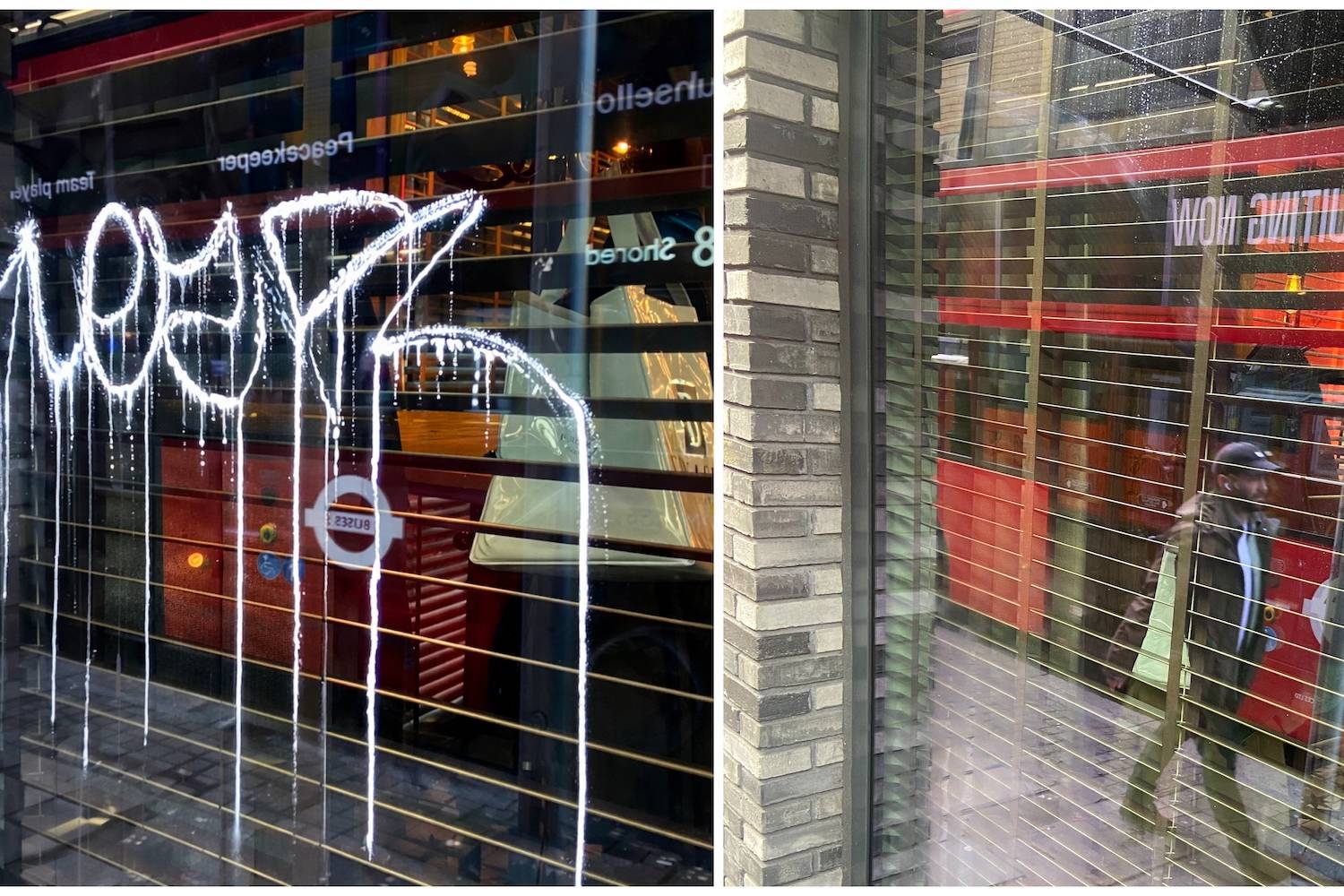
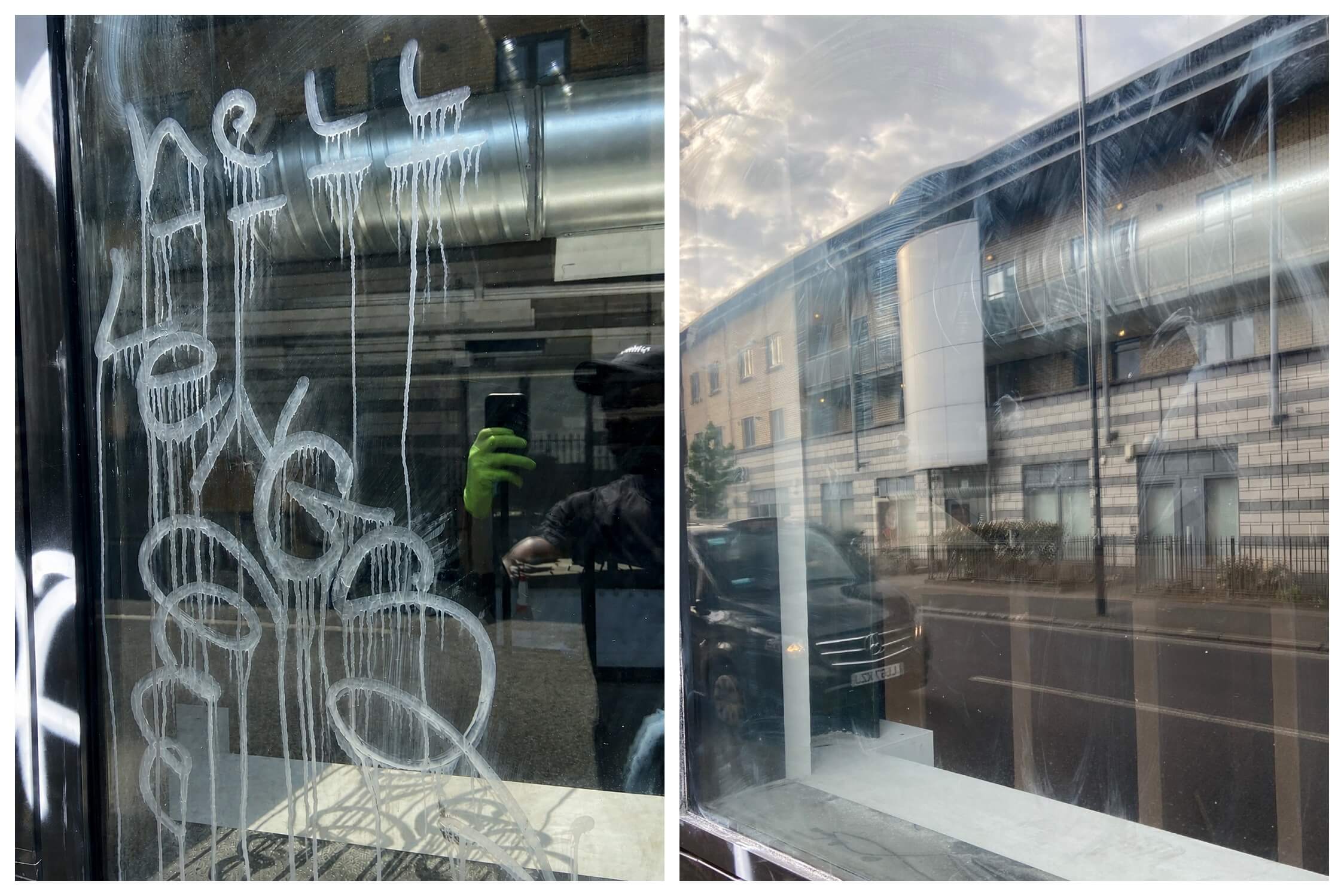
Three quotations arrive on the desk of a Knightsbridge facility manager. All three are for "anti-graffiti window protection." All three are for the same shopfront. The pricing varies by a factor of more than two. The film specifications are written in language that ranges from precise to deliberately vague. The warranty terms differ. The installation timing differs. The replacement service commitments differ. None of the quotes makes it obvious which one represents the right specification for the property, and the difference between a good install and a bad one will reveal itself the first time a vandal takes a brush of acid paste to the front window.
Table of Contents
- What "Glass Graffiti Protection" Actually Means
- How the Protection Works, The Short Version
- The Five Specification Decisions Every Buyer Has to Make
- 1. Film Grade
- 2. Application Surface (Internal vs External)
- 3. Coverage (Which Panes)
- 4. Replacement Cycle
- 5. Contractor Selection
- The Secondary Benefits Worth Knowing About
- Common Specification Mistakes That Cost Real Money
- The Procurement Sequence: What to Expect
- What to Look For in Any Anti-Graffiti Film Contractor
- Get the Specification Right the First Time
- Frequently Asked Questions
Do you need acid etched graffiti removed from your property? Get a fast, hassle-free quote today! Click here to get a professional graffiti removal quote or call us today on: 020 8050 5997
This guide exists to help any London commercial facility manager, retail manager, hospitality director, council procurement lead or property portfolio manager make that decision well. It covers what glass graffiti protection actually is, how it works in practical terms, the five specification choices that determine whether the install will perform, the secondary benefits that often justify the investment on their own, and the common procurement mistakes that cost real money. For the wider context across the entire silo, our pillar resource on anti-acid etched graffiti protection in London sets out the full landscape and links to every related topic.
What "Glass Graffiti Protection" Actually Means
The category name is broad, but the dominant technology in the London commercial market is straightforward: optically clear sacrificial anti-graffiti window film. This is a thin, durable, multi-layer polyester laminate, applied to commercial glass with a precision-formulated adhesive, designed to take the damage from acid pastes, etching creams, scribing tools, key tips and similar mechanical attacks instead of the glass beneath. When the film is damaged, a trained technician strips and replaces it. The substrate is preserved. Trading is not interrupted. The cycle is repeatable.
The reason this technology dominates is partly economic and partly practical. It is dramatically cheaper than reactive replacement of damaged panes. It is faster to install. It does not require fabrication lead times, scaffolding for first-floor and above units, pavement permits or boarded shopfronts. It does not interrupt trading. It is invisible to customers. And it produces predictable, scheduled costs rather than unpredictable capex shocks. Every other category of "protection", security shutters, decorative grilles, planted bollards, security guards, addresses related but different problems and rarely competes with film on cost-per-event-prevented for glass-targeted vandalism.
How the Protection Works, The Short Version
The mechanism is what materials scientists call a sacrificial barrier. The film is bonded tightly to the glass and forms a transparent expendable layer between the world and the substrate. Acid chemistry attacks the polyester laminate, not the silica beneath. Mechanical scratching gouges the film, not the glass. The film is engineered to absorb both forms of damage, and to be cleanly removable for replacement when it has done its job. Our technical explainer of how anti-graffiti window film actually works walks through the layer chemistry, adhesion specification and damage-absorption performance in detail.
The Five Specification Decisions Every Buyer Has to Make
The price differences between competing quotes for "the same job" almost always reflect different answers to these five decisions. Understanding them lets you compare quotes properly rather than choosing on price alone.
1. Film Grade
Anti-graffiti films range from basic single-layer products to premium multi-layer hard-coat laminates with engineered scratch and chemical resistance. For commercial London applications, particularly in higher-risk boroughs and on prominent retail or hospitality frontages, premium hard-coat film is almost always the correct specification. The cost differential against basic films is small relative to the increased lifespan and the improved damage-absorption performance. We typically recommend hard-coat polyester film of an appropriate thickness for the threat profile of the location.
2. Application Surface (Internal vs External)
Film can be applied to the inside or outside face of a pane, with implications for performance, longevity and installation. Internal application is generally lower cost, faster, and unaffected by weather. External application is necessary in some scenarios, typically where the inside face is inaccessible, or where the pane specification or access constraints dictate. External films are exposed to weather and have shorter expected service life as a result, but absorb damage at the outermost surface and make replacement marginally simpler. The right choice depends on the building.
3. Coverage (Which Panes)
Not every pane in a building is equally exposed. Ground-floor and accessible glazing carries the bulk of the risk; upper-floor units that are out of reach typically do not. A pragmatic specification covers the realistically accessible glass and budgets accordingly, rather than blanket-coating every pane regardless of risk. For complex buildings with mixed accessibility, our analysis of window graffiti protection across London commercial properties sets out a sensible framework for prioritisation.
4. Replacement Cycle
Film has a finite life cycle. Premium hard-coat films last several years before scheduled replacement, depending on UV exposure, cleaning regime and pollution load. A good specification builds the planned replacement cycle into the procurement decision rather than treating it as a future surprise. Predictable scheduled spend is part of the value of the technology.
5. Contractor Selection
The single largest variable in long-term film performance is the quality of installation. Poor application produces curling edges, air entrapment, peel risk, visual distortion and premature failure. Good application produces a near-invisible bond that performs reliably for years. Choose a contractor whose technicians are trained, who can show you completed work in similar buildings, and who carries proper insurance for the value of the glass they are working on. The cost of remediating a bad install, strip, clean, re-specify, re-apply, typically exceeds the cost of doing it correctly the first time.
The Secondary Benefits Worth Knowing About
Anti-graffiti film is sometimes specified for vandalism protection alone and turns out to deliver several other benefits as a side effect. These rarely drive the procurement decision but can materially improve the cost-benefit calculation.
- UV protection. Most premium films block a meaningful percentage of ultraviolet light, reducing fade on visual merchandising, fabrics, displays and signage in retail and hospitality contexts.
- Glare reduction. Some film grades provide modest glare reduction for ground-floor offices and reception areas with exposure to direct sun.
- Shatter retention. In the event of accidental impact, film helps hold broken glass together rather than allowing it to shed across the pavement or trading floor. This is a security benefit, though not a primary one.
- Cleaning ease. Filmed glass typically retains less surface contamination from atmospheric particulates and is straightforward to clean with standard non-abrasive products.
For high-end retail and hospitality clients, the UV-protection benefit alone can justify the spec on visual merchandising grounds. We address the aesthetic question more fully in our piece on whether anti-graffiti film blurs shop windows.
Common Specification Mistakes That Cost Real Money
After years of installing film across London commercial premises, the same procurement mistakes appear repeatedly. They are easy to avoid once you know what to look for.
Choosing on price alone. The cheapest quote almost always reflects a thinner, less durable film, faster installation with less attention to edge finishing, and limited rapid-response provision after install. The cost saving evaporates the first time the film fails prematurely or fails to absorb a serious attack.
Skipping high-risk panes to save budget. Partial protection on a frontage is better than no protection, but the unprotected panes become the new soft target. Vandals are practical. They will hit what they can hit. Cover the realistically accessible glass.
Treating film as a one-time install. Film is a planned-replacement asset. Procurement should reflect the full lifecycle, not just Year 0.
Not specifying rapid-response replacement. The whole point of sacrificial film is that the film, not the glass, takes the damage. If your contractor cannot replace damaged film within 3 hours, all day, every day, the protection is partial. The film keeps the glass safe; the rapid replacement keeps the trading window clean.
Ignoring durability and lifespan data. Film grade matters. Hard-coat lasts longer than soft-coat. Premium polyester laminates outperform basic single-layer films. Our breakdown of how long anti-acid etched graffiti film actually lasts covers the lifespan picture in detail.
The Procurement Sequence: What to Expect
For first-time buyers of anti-graffiti film, the typical procurement sequence is short and predictable.
Initial enquiry. A call or online form submission triggers a same-day response from our team. We confirm the scope and book a site survey, typically within 24 hours during business hours, faster for urgent cases.
Site survey and assessment. A senior technician attends the property, surveys all relevant glazing, measures each pane, and identifies any existing damage that will require restoration prior to film application. The survey is no obligation.
Specification and quotation. We produce a detailed itemised quotation covering film grade, application surface, panes covered, installation timing, planned replacement cycle, and rapid-response service terms. Lines are transparent, no hidden costs, no surprises.
Installation scheduling. Once approved, installation is scheduled around your trading hours. For retail and hospitality, this often means overnight or pre-opening visits. For corporate and government clients, scheduled out-of-hours work is standard.
Installation and handover. Trained technicians clean the substrate, apply the film with precision squeegee technique, finish all edges, inspect, and hand over with care guidance. The shopfront looks identical to before, until something tries to damage it.
Ongoing service. If a protected pane is later vandalised, our Rapid Response Team is dispatched within three hours, all day, every day. Damaged film is stripped, the substrate inspected, and a fresh layer applied. We confirm everything in writing, every time.
What to Look For in Any Anti-Graffiti Film Contractor
If you are evaluating multiple quotes, the questions worth asking each contractor are similar: how trained are the installers, what film grade is being specified and why, what is the application surface, what is the warranty, what is the rapid-response commitment, what insurance is in place, and what completed work in similar buildings can they show you? Contractors who answer these questions clearly, with named films, defined warranty terms and documented response commitments, are typically the ones whose installs perform. Contractors who deflect, generalise or quote suspiciously low typically are not. We address our own approach in detail in our walkthrough of DUA London's anti-acid etched graffiti protection installation process.
Get the Specification Right the First Time
The financial case for anti-graffiti film is decisive on its own. The case for getting the specification right the first time is even stronger. Premium hard-coat film, professionally installed, with rapid-response replacement service, on the realistically vulnerable glazing of your London commercial property is the specification that delivers reliable protection for several years and uninterrupted trading even when attacks occur. Anything less starts to chip at the value proposition. To begin a no-obligation site assessment for any commercial premises in Greater London, request an instant quote through our online form, or call our team directly on 020 8050 5997. We attend across all London boroughs, all day, every day, within three hours.
Frequently Asked Questions
What is the typical price range for protecting a London commercial shopfront?
For a typical 18–25 square metre commercial shopfront across three to four panes, premium-grade hard-coat film installation usually sits in the low four figures all-in. The figure varies with film grade, application surface, access and pane size. A site survey produces an itemised quotation.
How do I choose between film grades?
For commercial London applications, premium hard-coat polyester film is almost always the correct specification. Basic films save a small amount on initial cost but typically fail earlier and absorb damage less effectively. The lifecycle economics favour hard-coat in nearly every commercial scenario.
Should the film be applied to the inside or outside face of the glass?
Internal application is the default, lower cost, weather-protected, easier to install, and unaffected by atmospheric exposure. External application is appropriate where the inside face is inaccessible or where specific pane specifications require it. We confirm the right choice at site assessment.
Do I need to protect every pane, or just the ground-floor ones?
A pragmatic specification covers realistically accessible glass, typically ground floor and any first-floor units with platform or balcony access. Upper-floor panes that are out of practical reach do not generally need protection. We will recommend a sensible coverage map at survey.
How long does the procurement process take from enquiry to installation?
For most London commercial premises, enquiry-to-survey is 24 hours during business hours, survey-to-quotation is same-day or next-day, and approval-to-installation is typically within one to two weeks depending on access and scheduling. Urgent cases can be accelerated.
Can installation be phased across multiple visits?
Yes. For larger properties or where scheduling around trading is sensitive, we routinely phase installation across multiple visits. This is confirmed at the planning stage and incorporated into the installation programme.
What warranties do you provide on the installation itself?
We warrant the installation workmanship against curling, peel, edge failure and air entrapment for an agreed period documented in your quotation. The film itself carries the manufacturer's warranty for material defects under normal commercial conditions. Both are confirmed in writing.
What is included in the service, and what is not?
Our standard service covers site survey, specification, supply, installation, handover, care guidance, and rapid-response replacement when damage occurs. Restoration of existing damage prior to film application (polishing or pane replacement) is quoted separately if required. There are no hidden charges.
How should I evaluate competing quotes from different contractors?
Compare like with like: film grade and brand, application surface, panes covered, warranty terms, rapid-response commitments, technician training, and insurance levels. Wide price differences usually indicate different specifications, not different value for the same specification. Ask each contractor to be specific.
What questions should I ask before commissioning protection?
Ask for the named film product and its grade, the application surface and why, the warranty terms, the rapid-response commitment, completed work in similar London buildings, public liability insurance levels, and the planned replacement cycle. A good contractor answers all of these clearly.
Can you provide references from London commercial clients?
Yes. We can provide references and case studies on request, subject to client confidentiality. For sensitive locations we work with summary references that protect commercial detail while confirming the work and outcome.
What insurance does DUA London carry for installation work?
We carry full public liability and professional indemnity cover at levels appropriate for the value of commercial glass we work on. Specific cover details are provided on request and form part of any quotation for sensitive or high-value installations.
How does the Rapid Response Team operate in practice?
Our service operates all day, every day, with dispatch within three hours of a confirmed call across Greater London. For protected premises with active service contracts, response is the same on a Sunday morning as on a Tuesday afternoon. The film keeps the glass safe; rapid response keeps the trading window clean.
Which London boroughs do you cover?
We cover all 32 London boroughs and the City of London, with concentrations of active work across central London commercial districts including Westminster, the City, Camden, Islington, Hackney, Tower Hamlets, Southwark, Lambeth, Kensington and Chelsea.
How do I begin a no-obligation site survey?
You can request an instant quote through our online form, or call our team directly on 020 8050 5997. The site survey itself is no obligation, and we provide a detailed itemised quotation following the assessment.
Toby Doherty
Toby Doherty is a seasoned graffiti removal expert with over 20 years of experience in the industry. Throughout his career, Toby has helped countless businesses and property owners in London maintain clean, graffiti-free spaces. His extensive knowledge of graffiti removal techniques, from eco-friendly solutions to advanced technologies like laser cleaning, makes him a trusted authority in the field. Passionate about restoring urban environments, Toby combines his hands-on expertise with a commitment to staying up-to-date on the latest industry trends and innovations. When he’s not out in the field, Toby shares his insights through detailed articles, offering practical advice on everything from graffiti prevention to legal considerations.