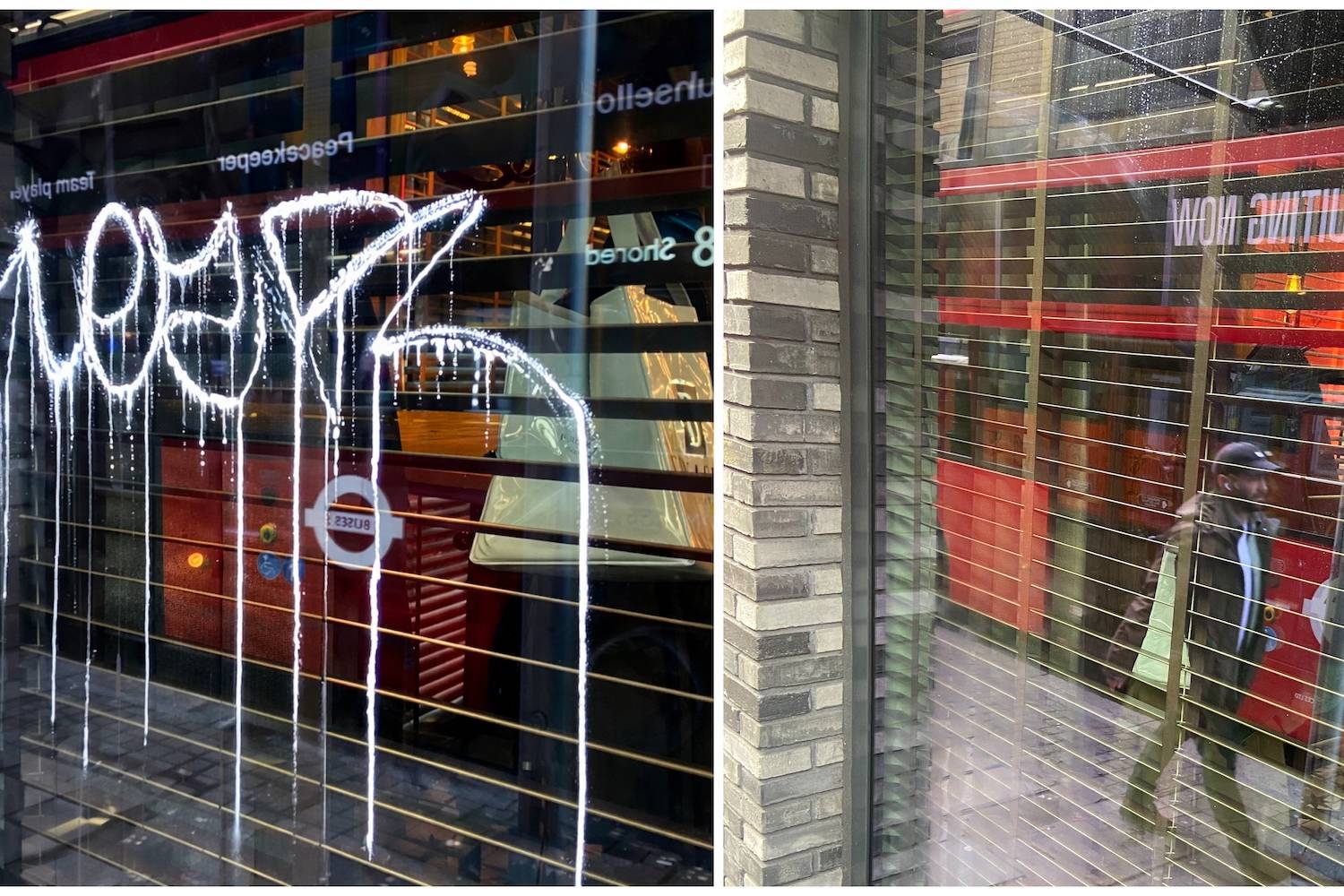
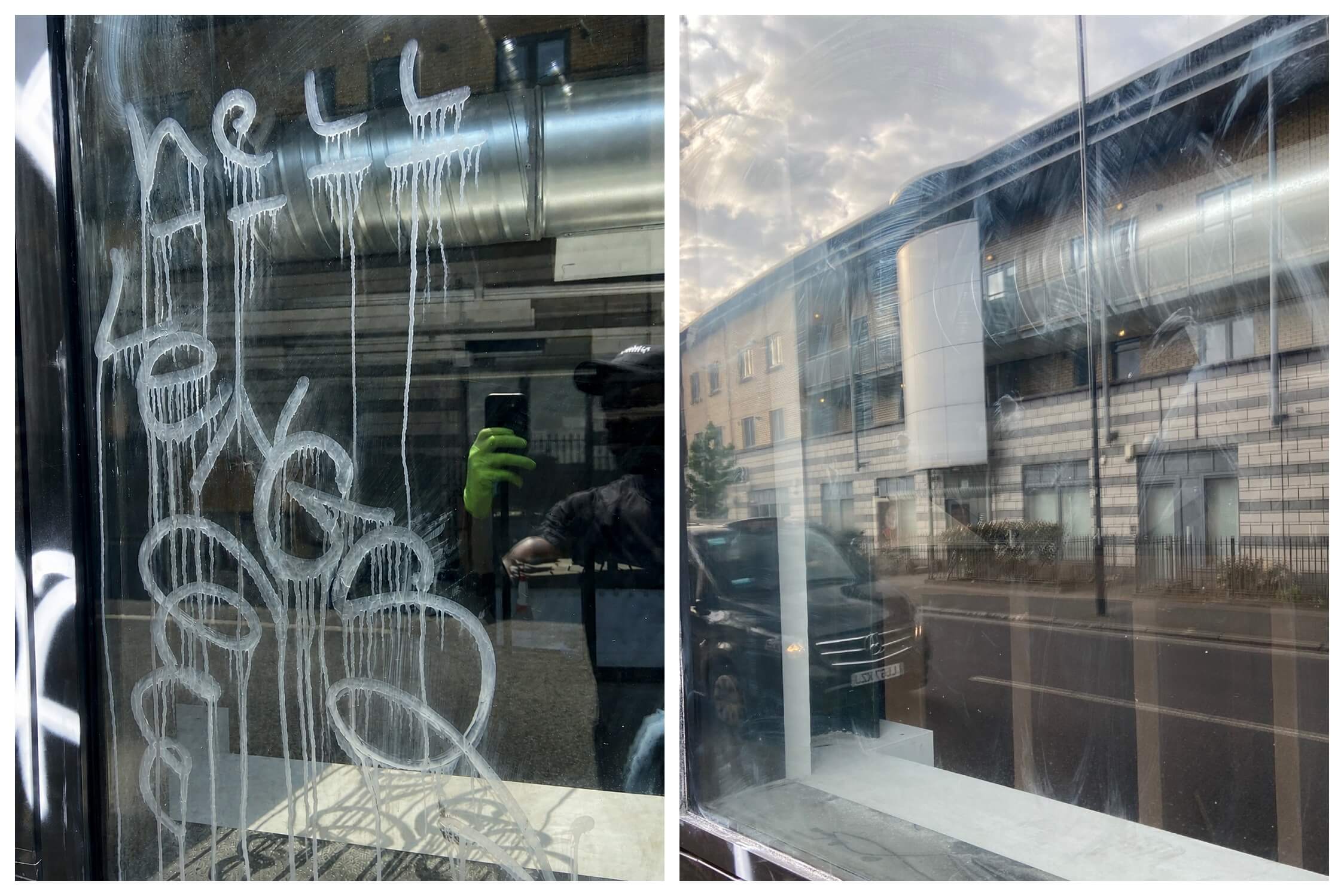
A facility manager who has worked across central London commercial property for the last decade will recognise the trend. Five years ago, acid-etched vandalism on a Bond Street shopfront was unusual enough to be a talking point at the next quarterly review. Three years ago, it had become routine enough to merit a procurement framework conversation. Today, it is the dominant glass-targeted threat across most premium commercial corridors in the capital, and proactive specification of protective film has shifted from optional add-on to default expectation across new shopfit briefs, corporate building specifications and council infrastructure procurement. The pattern is unambiguous, even where the headline crime statistics that would normally support it are difficult to extract from broader vandalism data.
Table of Contents
- The Wider Pattern: Why Acid-Etch Vandalism Has Become Increasingly Common
- Where the Pressure Concentrates Across London
- Why Acid-Etch is Different from Traditional Vandalism
- Why London Commercial Operators Are Now Specifying Protection as Default
- What Local Authorities and the Wider Public Realm Are Doing About It
- The Practical Response for London Commercial Property Owners
- Stay Ahead of the Trend
- Frequently Asked Questions
Do you need acid etched graffiti removed from your property? Get a fast, hassle-free quote today! Click here to get a professional graffiti removal quote or call us today on: 020 8050 5997
This piece sets out what we have observed across our own operational footprint and across the conversations we have with London facility managers, retail directors, council estates teams and corporate property leads on a weekly basis. It is not a statistical study. It is a practitioner's read of a clearly developing pattern across the capital, and an explanation of why proactive protection has become the rational baseline response. For wider context, our pillar resource on anti-acid etched graffiti protection in London covers the full landscape.
The Wider Pattern: Why Acid-Etch Vandalism Has Become Increasingly Common
Several converging factors appear to be driving the increase. Acid pastes and etching creams that were once specialist industrial products are now widely available through online retail channels, often marketed for legitimate craft and DIY use. The active fluoride compounds work as effectively on commercial glass as they do on the small craft pieces the products were originally aimed at. The cost per attack has dropped meaningfully over the same period.
The aesthetic of acid-etched tagging, frosted, permanent, semi-transparent, has also acquired a degree of sub-cultural recognition that makes it more attractive to a particular kind of opportunistic vandal. The damage is harder to reverse than spray paint, more visible than marker pen, and signals a level of impunity that more conventional vandalism does not. The visibility itself becomes part of the appeal. Properties that have been etched once tend to be hit again precisely because the visible damage signals that the property is not effectively defended.
Awareness of the technique has spread through online communities, video platforms and informal networks. Whether the absolute number of perpetrators has increased significantly is harder to say definitively; what is clear is that the per-perpetrator damage capacity has grown, the cost barrier has fallen, and the techniques are more widely understood than they were five years ago. Our diagnostic guide on identifying white frosty acid-etched graffiti covers the visual and chemical fingerprint of the damage type.
Where the Pressure Concentrates Across London
The geographic pattern of acid-etch vandalism has been remarkably consistent across recent years. Five broad zones see the highest sustained pressure.
- Premium retail corridors. Bond Street, Mount Street, Conduit Street, Sloane Street, Brompton Road, Beauchamp Place, Marylebone High Street. Highest-prestige glass, highest visibility, highest impact when damaged. The recurrence rate on unprotected premium retail panes in these corridors is meaningfully above the city average.
- High-volume retail and hospitality. Oxford Street, Regent Street, Carnaby Street, Covent Garden, Camden High Street, the Westfield environs. Mass footfall, mixed brand exposure, opportunistic targeting throughout the trading week and especially after closing.
- Night-time economy zones. Soho, Shoreditch, parts of Camden, Old Compton Street, Brick Lane, parts of Hackney. Late-night foot traffic, alcohol-influenced incidents, and sustained pressure on accessible glass through the early hours.
- Transport interchange perimeters. Stratford, King's Cross, London Bridge, Waterloo, Victoria, Liverpool Street. High through-traffic, accessible glazing on retail and signage units, rapid turnover of unfamiliar pedestrians and a population that does not feel ownership of the local public realm.
- Corporate frontages with retail at street level. Canary Wharf, the City of London, Paddington Square, parts of South Bank. Mixed-use vulnerability, with corporate-managed glass exposed to the same street-level pedestrian risk as the cafes and concession spaces sharing the building.
Outside these corridors, residential-heavy boroughs and quieter commercial zones see meaningfully less pressure. The trend pattern is genuinely concentrated rather than uniformly distributed across Greater London.
Why Acid-Etch is Different from Traditional Vandalism
Spray paint, marker pen and sticker tags have been part of the urban landscape for as long as urban landscapes have existed. Cleaning programmes evolved alongside them, with established remediation pathways for each damage type. Acid etching breaks that established model in three ways that matter for property owners.
First, the damage is permanent at the substrate level. There is no cleaning method that reverses it. No cleaning programme, however well-funded, can remove damage that has already happened to the glass itself rather than to a coating on top of it. Our companion piece on whether acid-etched graffiti can be cleaned off glass covers this in detail.
Second, the cost asymmetry favours the attacker. A small bottle of etching cream costs a fraction of the replacement cost of a single commercial pane. The economics tilt heavily against unprotected glass, a single attacker with a small budget can impose four-figure damage repeatedly across a single corridor in one night.
Third, the visual prominence of the damage compounds with time. Spray paint that is removed within 24 hours leaves no lasting signal. Acid etching that remains visible for weeks while replacement is fabricated signals that the property is undefended, and tends to attract further events.
Why London Commercial Operators Are Now Specifying Protection as Default
The procurement response across the London commercial market over the last few years has been decisive. New retail shopfit briefs increasingly specify anti-graffiti film as part of the standard package. Corporate building specifications include sacrificial film on accessible ground-floor glazing as a default measure. Council and transport authority procurement frameworks now treat film as the standard specification for new bus shelters, signage cabinets and accessible station glazing.
The shift reflects a clear-eyed reading of the cost-benefit picture. For premium retail, the brand impact of a boarded shopfront in any prominent corridor is asymmetric and material, see our deeper analysis of protecting high street retail displays from glass vandalism. For corporate property, the replacement cost on bespoke curtain walling and structural glazing makes proactive protection financially obvious, see our piece on securing corporate office fronts and glass architecture. For councils and transport authorities operating distributed estates, the maths at scale is decisive, see our analysis of anti-graffiti glass protection for London public transport.
Across all three market segments, the conclusion is the same: protection costs less than reactive replacement, and the gap widens with every additional event over the asset's life cycle.
What Local Authorities and the Wider Public Realm Are Doing About It
Most London boroughs operate active graffiti reporting and removal programmes that handle the spray paint, marker and sticker categories effectively. Acid-etch and deep-scratch attacks present a different problem because they are not remediable through cleaning, and the response framework has had to evolve. We see three patterns in how councils are responding.
First, more councils are specifying sacrificial film as standard on new bus shelter installations and infrastructure refurbishment programmes. The procurement specifications have shifted decisively toward proactive protection over recent years. Second, councils are working with public realm partners, TfL, network operators, BIDs (Business Improvement Districts), and individual property owners, to coordinate protection programmes across geographic clusters where pressure is highest. Third, local enforcement and CCTV deployment has been intensified in some corridors, though enforcement has always been challenging given the speed at which an etch attack can be carried out.
For commercial property owners, the practical implication is that local authority response will not, on its own, defend your glass. Coordinated public realm work helps; targeted private specification on your own panes is what actually keeps the substrate intact.
The Practical Response for London Commercial Property Owners
For any commercial property owner in any of the higher-risk corridors, the practical response sequence is straightforward.
Acknowledge the trend. The pattern is real, the geography is concentrated, and the unprotected scenario is no longer the rational baseline for premium and high-traffic London commercial property.
Map your vulnerable inventory. Identify the panes that are realistically accessible to vandals, typically ground floor and any first-floor units with platform or balcony access. Upper-floor units that are out of practical reach do not generally need protection.
Specify proactively rather than reactively. The cost of installing protection before the first event is consistently lower than the cost of installing protection after one or more events have occurred. The proactive approach also avoids the trading impact of boarded periods.
Build rapid response into the specification. The film prevents substrate damage. The rapid replacement service is what keeps the trading window clean even after attacks. Both halves matter.
If your property has already been targeted, our companion guide on what to do immediately after your shop window is vandalised sets out the response sequence in detail.
Stay Ahead of the Trend
The trend pattern across London commercial vandalism is unambiguous, the geography of pressure is well-established, and the protection response has moved from optional to default across most procurement frameworks in the city. For any commercial premises in any of the higher-risk London corridors, the right response is to act before the first event rather than after. Request an instant quote for a no-obligation site assessment, or call our team directly on 020 8050 5997. All day. Every day. Within three hours, across all London boroughs.
Frequently Asked Questions
Is acid-etch vandalism actually rising or just being reported more?
Both, in our practitioner's read of the picture. Reporting awareness has increased as more property owners learn what they are looking at, and the underlying incident rate appears to have grown over recent years across the central London corridors we work in most heavily. Definitive borough-level statistics are difficult to extract from broader vandalism reporting frameworks.
Which London boroughs are most affected by acid-etch attacks?
Westminster (covering Mayfair, Soho, Bond Street and Oxford Street), Camden (covering Camden High Street and parts of Shoreditch border), Hackney (covering Shoreditch and Hoxton), and the City of London consistently see the highest concentration. Kensington and Chelsea (covering Knightsbridge and Sloane Street) also sees sustained pressure on premium retail.
What is driving the trend?
Wider availability of etching products through online retail, lower cost per attack, broader awareness of the technique through online communities, and the visible signalling effect of unrepaired damage which tends to attract repeat attacks on the same property.
Are local authorities effectively addressing the issue?
Council graffiti programmes are well-suited to spray paint, marker and sticker categories but cannot remediate substrate damage. Most councils have moved toward specifying sacrificial film on their own assets and supporting coordinated public realm protection in higher-pressure corridors, rather than attempting to address the problem through cleaning alone.
Is acid-etch vandalism typically reported and prosecuted?
Reporting rates have improved as awareness has grown, but prosecution rates for opportunistic vandalism of any type remain low across London. CCTV evidence is helpful where available, but an etch attack can be completed faster than most response frameworks can react. Prevention through protection is consistently more effective than reactive enforcement.
Are CCTV systems an effective deterrent?
Visible CCTV provides modest deterrent effect against opportunistic attackers, but determined vandals are typically not deterred by recording alone. CCTV is most useful as evidence after an event rather than as primary prevention. Sacrificial film addresses the consequence of attacks regardless of whether deterrence works.
Are insurers raising premiums in response to the trend?
Some commercial property insurers have adjusted vandalism-claim treatment in higher-risk postcodes, with higher excesses or specific exclusions. Many of our clients have negotiated favourable adjustments after installing sacrificial film, with some insurers recognising it as an explicit risk-reduction measure.
Has the cost of acid pastes dropped recently?
Online retail availability has reduced the unit cost of fluoride-containing products meaningfully over the past several years. The cost asymmetry between attacker and victim has widened as a result, which is part of why the trend has accelerated.
Are there technologies that detect attacks in progress?
Some shop-fitted glazing now incorporates accelerometer-based break detection, but real-time detection of acid-etch attacks specifically is technically challenging, the attack itself is silent and chemical. Sacrificial film addresses the consequence directly rather than relying on detection.
Is enforcement during night-time hours actually helping?
Targeted enforcement helps in specific corridors, but the geographic distribution of London's commercial estate makes blanket night-time coverage impractical. Most successful corridor-level reductions have come from coordinated protection rather than enforcement alone.
How does London compare to other major cities for acid-etch vandalism?
The pattern is broadly similar across major European and North American capital cities, though the specific corridors of concentration vary. Paris, New York and Berlin all show comparable trend patterns over recent years, with similar protection responses among premium retail and corporate operators.
Are protection programmes mandated by law for any commercial premises?
No, sacrificial film protection is not legally mandated for commercial property in London. Specification is driven by procurement framework decisions and asset management policies rather than regulation. Some council and transport authority tenders effectively require it through technical specification.
What is the trend pattern for retail versus corporate versus transport sectors?
All three sectors show increasing specification of proactive protection. Public transport has moved fastest, with most London boroughs and TfL now defaulting to film on new infrastructure. Premium retail follows closely. Corporate property is shifting steadily toward inclusion in standard FM specifications.
How can my business contribute to broader vandalism prevention?
Beyond protecting your own glass, engagement with local BIDs, council public realm initiatives and corridor-level protection programmes amplifies the impact. Coordinated protection across an entire commercial street produces more durable results than isolated installations.
How do I get an assessment for my property?
You can request an instant quote through our online form, or call our team directly on 020 8050 5997. We attend across all London boroughs and provide a no-obligation site assessment with a transparent itemised quotation.

Toby Doherty
Toby Doherty is a seasoned graffiti removal expert with over 20 years of experience in the industry. Throughout his career, Toby has helped countless businesses and property owners in London maintain clean, graffiti-free spaces. His extensive knowledge of graffiti removal techniques, from eco-friendly solutions to advanced technologies like laser cleaning, makes him a trusted authority in the field. Passionate about restoring urban environments, Toby combines his hands-on expertise with a commitment to staying up-to-date on the latest industry trends and innovations. When he’s not out in the field, Toby shares his insights through detailed articles, offering practical advice on everything from graffiti prevention to legal considerations.