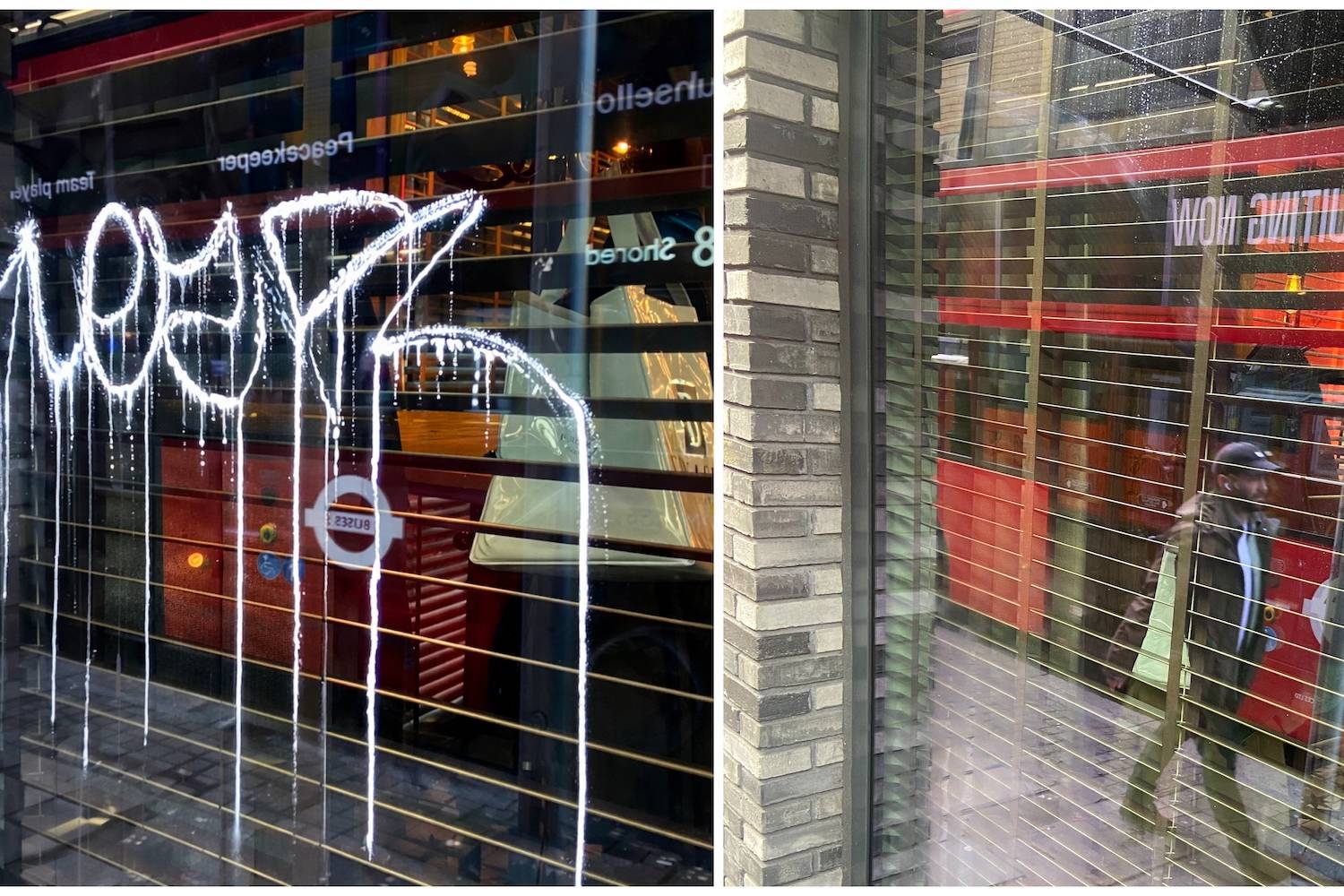
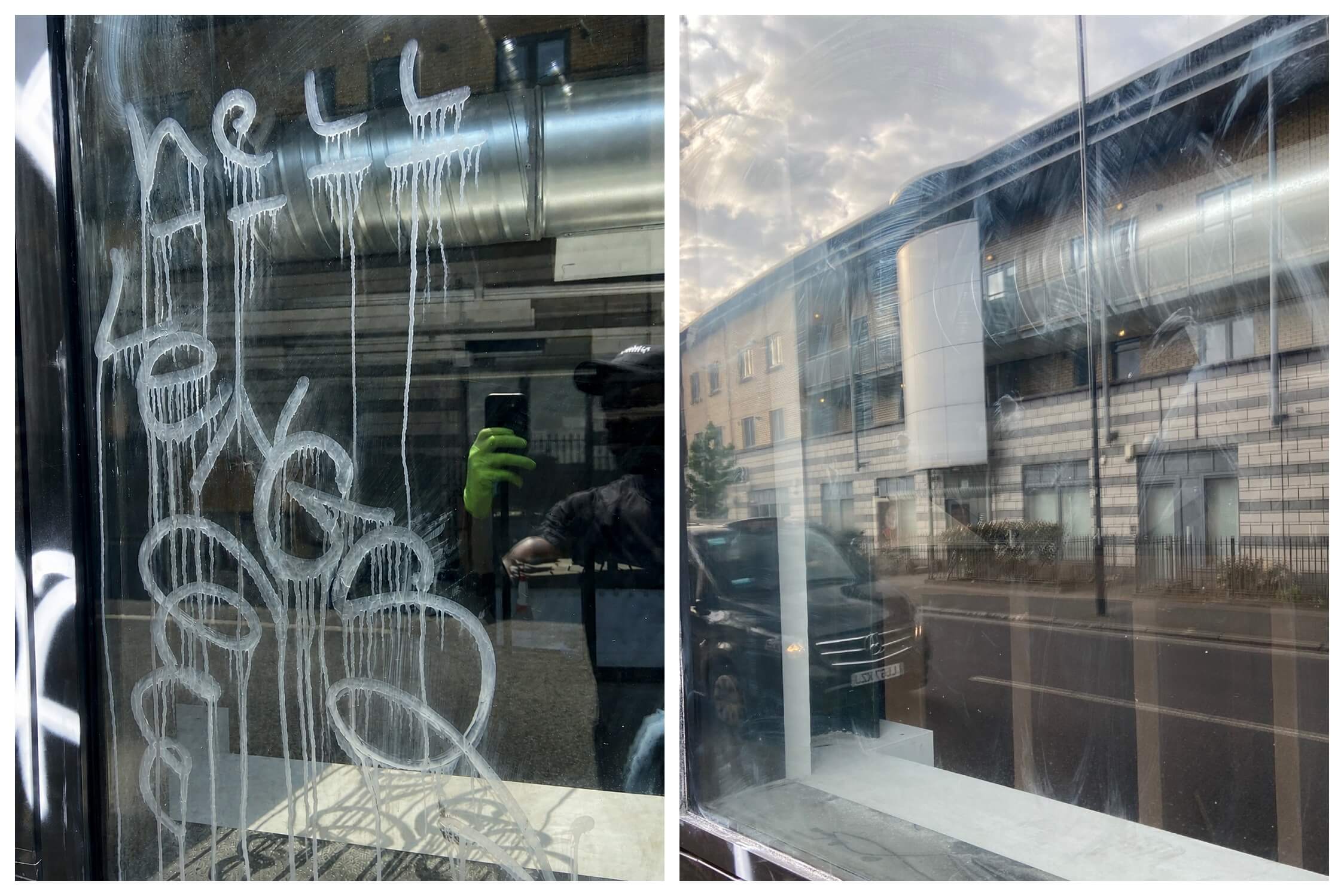
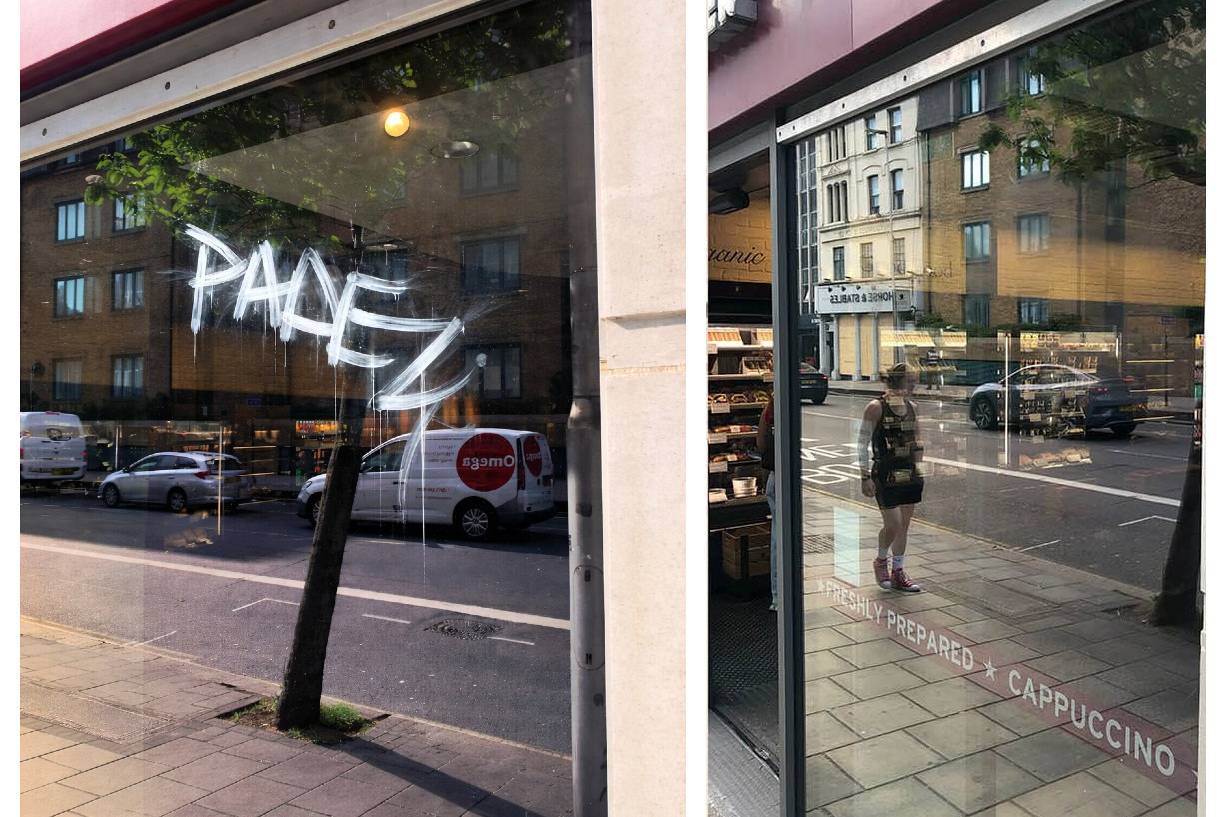
A single London borough's public realm department typically maintains responsibility for several thousand glazed assets distributed across the borough, bus shelters, lit advertising panels, transport station entrances, signage cabinets, council noticeboards, public-realm wayfinding panels and ancillary glass on street furniture. Add Transport for London bus, Overground and Underground glazing, the rail operators across the network, and the privately operated transport interchanges, and the total count of glazed public transport assets across Greater London runs into the tens of thousands. Each one is a soft target for the kind of acid-etch and deep-scratch vandalism that has become increasingly common across the capital. Replacement at fleet scale is uneconomic, slow and operationally disruptive, which is why sacrificial anti-graffiti film has become the default procurement specification across most public transport authorities in the city.
Table of Contents
- The Public Transport Vandalism Picture in London
- Why Standard Replacement Cycles Fail Transport Authorities
- The Categories of Public Transport Glass Affected
- Why Sacrificial Film is the Default for Councils and Transport Authorities
- Public Tendering Considerations for Anti-Graffiti Programmes
- Service Delivery Across Distributed Estates
- The Wider Public Realm Picture
- Protect the Public Realm at Scale
- Frequently Asked Questions
Do you need acid etched graffiti removed from your property? Get a fast, hassle-free quote today! Click here to get a professional graffiti removal quote or call us today on: 020 8050 5997
This guide is for council estates teams, transport authority procurement leads, public realm managers and the contractors who deliver against their frameworks. It sets out the public transport vandalism picture, why standard replacement cycles do not scale to the problem, the categories of glass involved, how protection is typically procured under public tendering, and how service delivery actually works across distributed estates. For wider context, our pillar resource on anti-acid etched graffiti protection in London covers the full landscape.
The Public Transport Vandalism Picture in London
Public transport glass faces a vandalism profile that is structurally different from premium retail or corporate frontages. The volume is much higher. The unit value of any single asset is lower. The cumulative replacement cost across an estate, however, is consistently substantial. Bus shelters in particular operate as a high-frequency target for opportunistic vandalism precisely because they sit on the pavement, are accessible 24 hours a day, and reach pedestrian eye level on every elevation.
The damage categories familiar to facility managers in retail apply here in concentrated form. Acid-etch attacks produce permanent frosted tags that no cleaning programme can remove. Deep-scratch attacks with key tips, scribers or ceramic shards leave linear gouges that survive every wash regime ever specified. Spray paint and marker pen accumulate on accessible surfaces and require dedicated removal cycles. Sticker tags and slap-tags compound on top of all the above. The cumulative load on any one borough's public realm cleaning programme is substantial, and a meaningful percentage of it is, technically, unaddressable through cleaning at all.
Our analysis of the rise of acid-etch vandalism across London covers the trend picture in detail.
Why Standard Replacement Cycles Fail Transport Authorities
For a single retail flagship, replacement of one damaged pane is expensive but operationally manageable. For a public transport estate, replacement at the rate the threat profile produces is genuinely uneconomic. The arithmetic does not work at scale.
Replacement of bus shelter glazing typically runs into mid three-figure costs per panel for materials and labour, plus the operational disruption of taking a shelter out of service. Across a borough with several thousand panels and a steady-state damage rate, the annual replacement budget for unprotected glass quickly enters six-figure territory. Across the wider London transport network, the totals are considerably higher.
The disruption cost compounds the financial cost. A damaged bus shelter that is out of service while replacement is procured, or a station entrance with boarded glass during fabrication, degrades the public realm and the user experience of the network. Procurement frameworks have, over recent years, moved decisively toward proactive protection precisely because the alternative is expensive both financially and operationally. Our detailed comparison of the true cost of glass replacement against proactive window protection covers the financial picture.
The Categories of Public Transport Glass Affected
Different parts of the public transport estate face different threat exposures and different protective specifications. Five categories matter most.
- Bus shelters. The highest-volume asset class and the most consistently targeted. Shelters carry side panels, rear panels and roof panels, all of which sit at or below pedestrian eye level. Acid etching, scratching, sticker accumulation and spray paint all appear regularly. Sacrificial film on side and rear panels is now standard specification across most London boroughs.
- Lit advertising panels. Adshel-style and similar lit advertising units carry premium glass with backlit graphics. Damage degrades both the advertising contract value and the public realm appearance. Specialist film application is well-established.
- Rail and Underground station glazing. Entrance pavilions, ticket hall glazing, accessible-route enclosures and platform-edge glass at certain stations. Higher-value individual panes, lower attack frequency than bus shelters, but each event is operationally more disruptive.
- Council signage cabinets and noticeboards. Public information panels, planning notices, council-information cabinets. Targeted both by opportunistic vandalism and by politically motivated tagging. Film protection extends panel life materially.
- Public-realm wayfinding and information glass. The "Legible London" wayfinding monoliths and similar wayfinding installations across the capital. Premium-spec glass, premium-spec replacement cost, increasingly specified with sacrificial film as part of the procurement.
For each category, the specification is calibrated to the asset's operational role and threat profile. Our explainer of how anti-graffiti window film actually works covers the underlying mechanism that drives all categories.
Why Sacrificial Film is the Default for Councils and Transport Authorities
The procurement logic for public transport protection differs in detail from corporate or retail procurement, but converges on the same conclusion. Three factors drive it.
Total cost of ownership at scale. Across an estate of thousands of panels with a steady damage rate, sacrificial film is dramatically cheaper than reactive replacement over any meaningful budget horizon. The procurement maths is straightforward and well-understood across council estates teams.
Operational continuity. Film replacement after damage is fast, single-visit and uninterruptive. The asset returns to service quickly, and the public realm remains presentable. Replacement of damaged film is dramatically faster than fabrication and installation of replacement glass.
Service framework alignment. Public transport operations require predictable service levels, scheduled maintenance windows, and accountable contractor relationships. Sacrificial film service contracts fit this procurement model naturally, with documented response times, scheduled replacement cycles, and audit-ready reporting.
Most London councils now specify sacrificial film as default on new bus shelter installations and on planned refurbishments. Most rail and Underground operators include similar specifications in station refurbishment programmes. Our piece on how long anti-acid etched graffiti film actually lasts covers the lifespan picture relevant to multi-year procurement planning.
Public Tendering Considerations for Anti-Graffiti Programmes
Public sector procurement adds layers of process to the specification decisions that retail and corporate buyers handle through direct commercial negotiation. The structural elements that matter most to our public sector clients are these.
Documented technical specification. Tenders typically specify film grade, optical performance, durability requirements, installation standards and removal protocols in technical detail. We provide compliant detailed technical submissions including manufacturer documentation, optical data sheets, durability certifications and installation method statements.
Service level commitments. Tender frameworks specify rapid-response timing, scheduled inspection cycles, replacement timeframes after damage, and reporting requirements. Our standard service framework, three-hour response, all day, every day, meets or exceeds the response commitments specified in most council and transport authority tenders we have seen.
Insurance and indemnity levels. Public sector tenders specify minimum public liability and professional indemnity cover, which we carry at appropriate levels and document in submissions.
Compliance with specific authority frameworks. Transport for London, Network Rail, individual borough specifications, and the various accessible transport requirements all drive specific compliance points. We have completed work compliant with each of these frameworks across recent years.
Pricing transparency. Tenders require itemised pricing covering material supply, installation labour, mobilisation, scheduled replacement, post-event replacement, and ancillary services. Our standard quotation format aligns with public sector procurement requirements.
Service Delivery Across Distributed Estates
Single-property protection is operationally straightforward. Distributed-estate protection requires service architecture that scales. For a borough with several thousand bus shelter panels distributed across dozens of routes and hundreds of locations, a service contract has to be deliverable in practice, not just in tender response.
The architecture that works is built on three things: rapid response capability across the whole estate, scheduled inspection and maintenance cycles, and integrated reporting and audit trails. Rapid response handles the post-event replacement cycle, typically several panel events per week across a large London borough estate. Scheduled inspection identifies film approaching scheduled replacement, edge-curl on external applications, and maintenance issues that need addressing before they become public-realm complaints. Integrated reporting documents all of the above, supports public sector audit requirements, and feeds directly into authority asset management systems where required.
For multi-borough or network-scale procurement, for example, where a transport authority specifies a programme covering bus shelters across multiple authorities, or rail station glazing across an operator's entire London estate, the service framework scales accordingly. Single point of contact, consistent specification, consistent reporting, geographic depots positioned to maintain response timing across the estate.
The Wider Public Realm Picture
Anti-graffiti glass protection is one element in a wider public realm protection strategy that London councils and transport authorities have been refining over recent years. Surface-specific protection on heritage stone façades, eco-conscious cleaning regimes, sacrificial coatings on rendered surfaces and integrated graffiti reporting systems all play complementary roles. Sacrificial film for glass is the most cost-effective single specification for the highest-volume vulnerable asset class, but it sits within a wider programme of public realm care that the best-managed boroughs and transport authorities run as a coordinated whole.
For councils and authorities specifying protection programmes for the first time, the right approach is to look at the full glass estate together, bus shelters, signage cabinets, station glazing, wayfinding installations, council buildings, and scope a coordinated programme that addresses all of them under a consistent specification framework. The procurement and service efficiencies are material, and the consistent visual outcome supports the public realm impression that boroughs work hard to maintain. Our buyer-oriented ultimate guide to glass graffiti protection for businesses covers the procurement framework in further detail.
Protect the Public Realm at Scale
For any London council, transport authority or public realm operator managing distributed glass assets across the city, sacrificial film is now the most cost-effective and operationally appropriate specification at scale. The replacement maths does not favour the unprotected approach across any meaningful estate size. To begin a no-obligation site assessment for a council estate, transport authority programme or public realm initiative, request an instant quote through our online form, or call our team directly on 020 8050 5997. All day. Every day. Within three hours, across all London boroughs.
Frequently Asked Questions
Which categories of public transport glass benefit most from sacrificial film protection?
Bus shelter side and rear panels are the highest-volume application and produce the most decisive savings at scale. Lit advertising panels, station entrance glazing, signage cabinets and wayfinding installations all benefit materially. Bus shelter side panels in particular are now default-specified with film across most London boroughs.
Are bus shelter panels easier to protect than rail station glazing?
Mechanically the protection is similar; operationally the contexts differ. Bus shelters are higher-volume and more accessible, so installation and replacement are faster per panel. Rail station glazing involves more access planning and out-of-hours scheduling but uses the same underlying film specification.
How does protection work for digital advertising panels in public transport?
Lit advertising panels including digital screens benefit from film protection on the protective glass layer in front of the display. The film is optically clear, does not affect screen visibility, and protects both the advertising glass and the underlying display from acid-etch and scratch damage.
Can film be retrofitted on existing transport infrastructure?
Yes, in most cases. Where the existing glazing is in good condition, film is applied directly during a scheduled visit. Where existing damage is present, restoration or panel replacement is sequenced before film application. Retrofitting across an estate is a routine programme type for our team.
What is the procurement framework for council-funded protection programmes?
Most councils procure under standard public sector tendering frameworks with documented technical specifications, service level commitments and pricing transparency. We provide compliant technical submissions and align quotation format with standard procurement requirements. Multi-year service contracts are typical.
How does film protection compare to ongoing cleaning programmes for graffiti?
Cleaning programmes are necessary for paint and marker removal but cannot address acid etching or deep scratching, which are substrate damage. Film protection complements cleaning programmes by eliminating the categories of damage that cleaning cannot fix, reducing both replacement cost and the visual burden on the cleaning regime.
Does the film work with anti-shatter requirements for transport glass?
Yes. Sacrificial anti-graffiti film is compatible with anti-shatter and laminated glass specifications. Where additional impact-resistance specification is required, multi-purpose films combining anti-graffiti and shatter retention are available. Compatibility with specific authority requirements is confirmed at survey.
How does response time work across a distributed transport estate?
Rapid-response service across distributed estates uses geographic depot positioning to maintain three-hour response across all London boroughs. For multi-authority programmes, the service framework is scaled accordingly with consistent response timing across the entire covered estate.
Are there volume-based pricing arrangements for council estates?
Yes. Coordinated installation across an estate produces meaningful per-panel savings through bulk procurement, efficient mobilisation and shared scheduling. Volume pricing is standard for any installation covering multiple panels in a single visit or across a coordinated programme.
Can film be installed on curved bus shelter glazing?
Yes. Curved glazing is a regular installation type for our team. The installation requires more careful technique to maintain a uniform bond around the curve, but the visual outcome and protective performance match flat-glass installations.
What about protection for ticket machines and transport signage?
Ticket machine display glass and transport signage panels benefit from film protection in the same way as larger glazing. The specification is calibrated to the unit dimensions and access requirements, and forms part of the wider transport authority programme where specified.
How is film procurement structured under public tendering?
Tenders typically specify film grade, durability, installation standards, response timing, replacement schedules and reporting requirements. We provide detailed technical submissions including manufacturer documentation, method statements, insurance evidence and pricing transparency aligned with standard procurement requirements.
Does film protection meet TfL or Network Rail specifications?
The premium hard-coat film grades we install are compatible with current TfL and Network Rail technical specifications for anti-graffiti protection. Specific compliance points are confirmed against the relevant tender documentation at the start of each programme.
How does ongoing maintenance work for council-owned protected glass?
Standard cleaning regimes apply to filmed glass with no modification, the same products and frequency as before. We provide care guidance to council cleaning contractors at handover. Scheduled replacement of film at end of service life is built into the service contract framework.
How do I get a quote for a council or transport authority protection programme?
You can request an instant quote through our online form, or call our team directly on 020 8050 5997. We provide tender-compliant submissions for public sector procurement and conduct estate surveys to scope coordinated programmes across distributed assets.
Toby Doherty
Toby Doherty is a seasoned graffiti removal expert with over 20 years of experience in the industry. Throughout his career, Toby has helped countless businesses and property owners in London maintain clean, graffiti-free spaces. His extensive knowledge of graffiti removal techniques, from eco-friendly solutions to advanced technologies like laser cleaning, makes him a trusted authority in the field. Passionate about restoring urban environments, Toby combines his hands-on expertise with a commitment to staying up-to-date on the latest industry trends and innovations. When he’s not out in the field, Toby shares his insights through detailed articles, offering practical advice on everything from graffiti prevention to legal considerations.