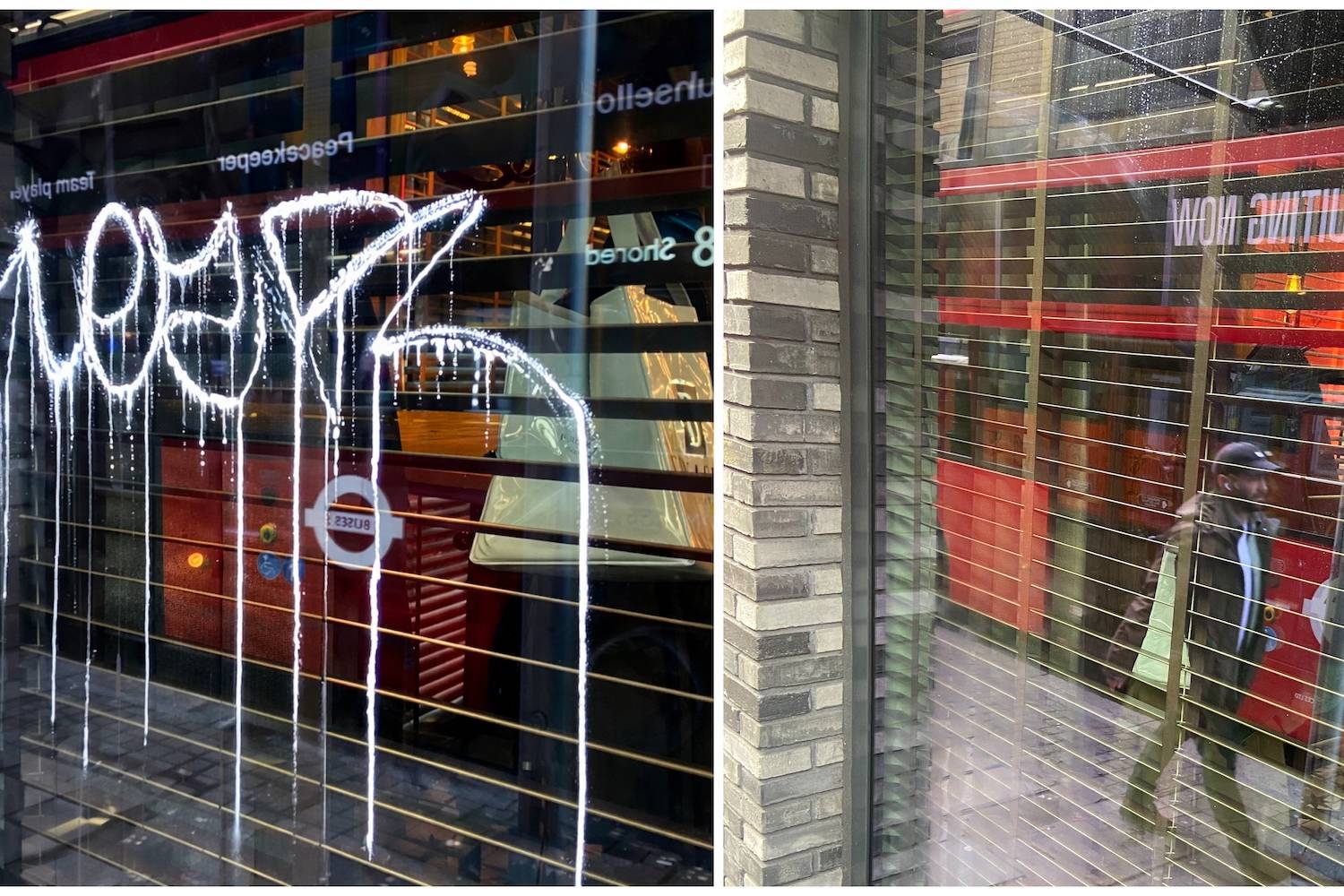
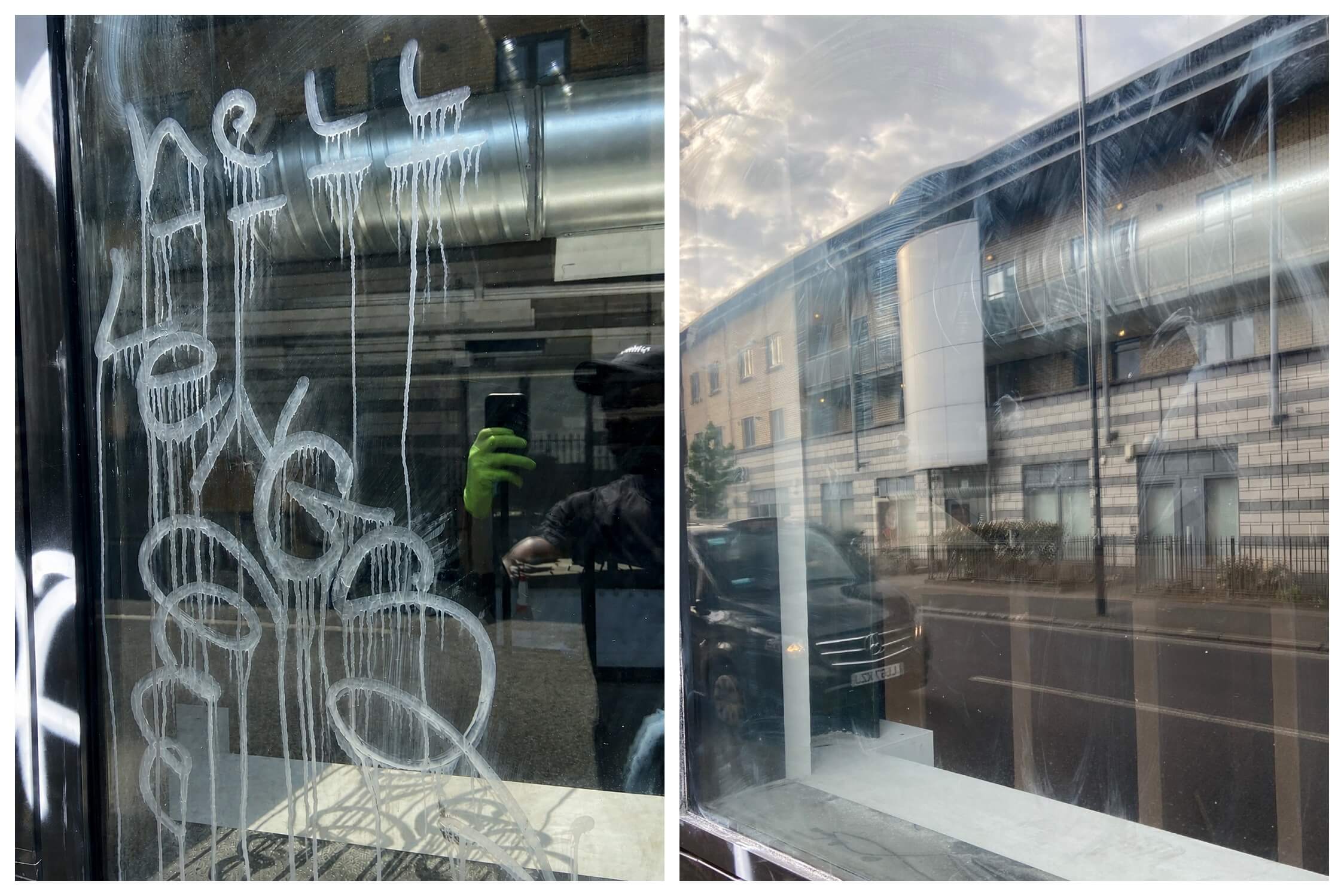
Window dressing is one of retail's oldest disciplines. A display moves a customer's intention from "I might buy something" to "I am going inside." For a London high street retailer, that single piece of glass is doing perhaps half of the marketing function, and when it is damaged, the marketing function does not simply stop. It inverts. Where the window used to draw customers in, a frosted acid scrawl across the centre actively pushes them past. Where the brand used to project confidence and care, a boarded shopfront projects neglect. Where the location used to be a destination, it becomes a place customers walk past slightly faster. None of this is recoverable through marketing spend. It is recoverable only by getting the glass back to where it should be, which is to say, by preventing the damage from reaching the glass in the first place.
Table of Contents
- Why Retail Display Vandalism Hits Differently
- The Window-Shopping Dynamic and Why It Matters
- Retail Formats and Their Specific Vulnerabilities
- High Street Flagship Stores
- High Street Multiples and Chain Retail
- Independent Boutiques
- Department Store Concessions and In-Store Brand Spaces
- Pop-Up Retail and Short-Term Activations
- Brand-Image Damage Is the Real Cost
- The Operational Reality of Retail Protection
- Trading-Hours Sensitivity
- Visual Merchandising Workflow
- Peak Trading Period Awareness
- Beyond Vandalism: Other Glazing Threats Worth Considering
- Specifying Protection That Fits Retail Operations
- Protect the Display, Protect the Brand
- Frequently Asked Questions
Do you need acid etched graffiti removed from your property? Get a fast, hassle-free quote today! Click here to get a professional graffiti removal quote or call us today on: 020 8050 5997
This guide is written specifically for the people whose job it is to keep retail frontages pristine: store managers, visual merchandising leads, retail facility managers, brand managers, and the heads of estate at multi-store operators. It covers why retail display vandalism is qualitatively different from other commercial vandalism, how the window-shopping dynamic interacts with damage, the specific vulnerabilities of different retail formats across London, and how to specify protection that fits retail operational reality. For wider context across the entire silo, our pillar resource on anti-acid etched graffiti protection in London covers the full landscape, and for the broader London retail picture, our companion piece on window graffiti protection for London storefronts sets the geographical context.
Why Retail Display Vandalism Hits Differently
Vandalism on a corporate office façade, a bus shelter, or a council signage cabinet is real damage with real cost, but it is largely a maintenance issue. The asset is restored; the function is restored; the owner moves on. Vandalism on a retail display window is something else. It is damage to an asset whose entire purpose is visual presentation, in a context where visual presentation is directly tied to revenue, in front of an audience that has been trained to read the condition of the window as a signal about the brand.
The asymmetry matters. A two-week boarding window on an unbranded warehouse façade barely registers. A two-week boarding window on a Bond Street boutique during peak spring trading registers across the brand's entire customer base, on social media, in the trade press, and in the lease conversation with the landlord. Retail display vandalism is not just costly, it is amplified by every dynamic that makes retail visibility valuable in the first place.
The Window-Shopping Dynamic and Why It Matters
Window shopping is not browsing. It is the deliberate, often unconscious, evaluation of a brand's offering through its display before any decision to enter the store has been made. For premium retail in particular, the window often does more conversion work than every other touchpoint combined. A great display turns passers-by into customers. A damaged display does the opposite, and not just for the duration of the damage, but for the period of brand association that follows.
The mechanism is psychological as much as practical. Customers do not separate "the window has graffiti" from "this brand has problems" cleanly. The two impressions blur. The brand is associated, in the customer's mind, with a frontage that does not project care. Even after the damage is repaired, the impression lingers, particularly for customers who only walk past the location occasionally. For premium retail, where brand impression is the primary driver of price tolerance, the cost of degraded impression is substantial and difficult to model precisely. It is also the cost most often underestimated by procurement when evaluating protection.
Retail Formats and Their Specific Vulnerabilities
Retail is not one thing. The vulnerabilities and protection priorities differ meaningfully by format.
High Street Flagship Stores
Bond Street, Sloane Street, Mount Street, Marylebone High Street, Brompton Road. Large bespoke glazing, premium brand positioning, high-prestige merchandising, significant brand-impression sensitivity. The vulnerability profile is concentrated: a single attack on a flagship's main display window has outsized brand and trading impact relative to the actual asset cost. Protection priorities are invisible visual integration, rapid response, and consistent specification across the entire frontage. Our companion piece on whether anti-graffiti film blurs shop windows addresses the visual concern directly.
High Street Multiples and Chain Retail
Oxford Street, Regent Street, Carnaby Street, Camden, Westfield, the larger neighbourhood high streets. Medium-format glazing, established brand positioning, varied merchandising sophistication, moderate brand-impression sensitivity. The vulnerability profile is broader: more locations, more glazing per location, more frequent low-grade damage events. Protection priorities are durability under sustained pressure, consistent specification across the estate, and coordinated rapid response across multiple sites.
Independent Boutiques
Independents in Marylebone, Mayfair, Notting Hill, Hampstead, Dulwich Village, Stoke Newington, Chelsea backstreets. Smaller-format glazing, distinctive brand positioning, often signature window displays designed in-house. Vulnerability profile is concentrated and asymmetric: a single attack on a boutique's only window can be financially material to a small business in a way that a corresponding attack on a flagship is not. Protection priorities are cost-effectiveness, single-visit installation, and the same rapid-response standard as larger operators.
Department Store Concessions and In-Store Brand Spaces
Large department stores in Knightsbridge, Oxford Street, the City, concession spaces inside larger retail environments, often with their own external-facing glazing. The vulnerability profile depends on whether the concession has direct street-facing display windows or is positioned internally. Where street-facing, the priorities mirror flagship retail. Where internal, vandalism risk is much lower but accidental damage and impact retention may be the more relevant specification driver.
Pop-Up Retail and Short-Term Activations
Brand pop-ups in Soho, Shoreditch, Covent Garden, the Old Truman Brewery, Coal Drops Yard, occasionally in temporary high street units. Short lease durations, distinctive activation aesthetics, often higher-than-average traffic from buzz-driven footfall. Vulnerability profile is sharp: a successful attack during a short activation has no time to be recovered before the activation ends. Protection priorities are very fast install, removal at end of lease, and rapid response during the activation window.
Brand-Image Damage Is the Real Cost
For most retail premises, the headline replacement invoice on a damaged pane is the smallest part of the overall cost. The trading impact during a boarded period is larger. The brand-impression cost is larger still, and is the cost most often underestimated by procurement when evaluating protection.
Three brand dynamics make retail particularly exposed.
Photo-driven amplification. A damaged retail frontage gets photographed and shared. A boarded Bond Street boutique with the brand name visible on the fascia ends up on the social media feeds of thousands of customers within hours, on trade press websites within a day, on competitor decks within a week. The marketing function of the frontage was always two-way; damage broadcasts as effectively as a successful display.
Lease-conversation impact. Landlords notice. So do letting agents. Repeated damage events on a leased premises affect the conversation about lease renewals, rent reviews, and property valuations. For multi-store retailers operating across a portfolio, consistent protection across the estate is also part of how the estate is read by landlords.
Our detailed comparison of the true cost of glass replacement against proactive window protection covers the cost picture in full, but for retail specifically, the brand and lease dimensions usually drive the case for protection further than the headline numbers do.
The Operational Reality of Retail Protection
Retail operations have specific characteristics that shape what good protection looks like in practice. Three dimensions matter most.
Trading-Hours Sensitivity
Retail cannot afford trading-hour disruption. Installation must be completed outside opening hours, overnight, pre-opening, weekend morning. Bond cure times need to allow the shop to be fully operational at next opening. Rapid-response replacement after attacks must also fit retail operational rhythms, with single-visit completion and minimal disruption to staff and customers. We address the operational logistics in detail in our walkthrough of the DUA London installation process.
Visual Merchandising Workflow
Retail display teams change windows frequently. Seasonal swaps, campaign refreshes, new collection launches, sale-period changeovers, holiday displays. The protection specification must accommodate this rhythm without interfering. Premium-grade film does, fully, display teams report no operational difference between filmed and unfilmed glass. The film tolerates window-cleaning between display changes, supports vinyl signage applied over it, and is replaced in single panes when damaged without requiring display dismantling on adjacent units.
Peak Trading Period Awareness
Retail has trading peaks that protection has to respect. Christmas. January sales. Pre-spring. Easter. Summer collections. Autumn back-to-school. Black Friday. A protection specification that requires installation during a peak period is the wrong specification; one that allows installation in quieter trading windows is the right one. Good protection planning treats install timing as a strategic decision, not just a logistical one.
Beyond Vandalism: Other Glazing Threats Worth Considering
The case for retail display protection is usually framed around acid etching and mechanical scratching, which is correct as far as it goes. Premium-grade anti-graffiti film also handles several adjacent threats that retail managers occasionally encounter:
- Sticker and slap-tag accumulation. Repeated sticker tagging on retail glass is annoying rather than damaging in itself, but films make removal cleaner and faster, and reduce the visual signal that the location is a tolerated tagging spot.
- Aerosol paint. Less common on glass than on stonework, but where it occurs, film makes professional pigment removal more straightforward without surface contamination of the substrate.
- Accidental impact damage. Trolley collisions, customer handbags, delivery dollies, occasional carelessness. Film provides modest shatter-retention benefit and helps absorb small impacts that might otherwise produce visible micro-damage to the glass.
- UV fade on visual merchandising. Premium film blocks a meaningful portion of UV light, reducing fade on fabrics, packaging, and printed POS in window displays, particularly relevant for south-facing frontages with sustained sun exposure.
None of these justifies the protection investment on its own; collectively, they form part of the value picture beyond the primary anti-vandalism case.
Specifying Protection That Fits Retail Operations
For retail managers commissioning protection for the first time, four specification choices typically matter most.
Film grade. Premium hard-coat polyester is essentially mandatory for retail. Optical clarity is non-negotiable, durability under repeated cleaning matters, and longevity across multi-year periods between scheduled replacements protects the lifecycle ROI. Our piece on how long anti-acid etched graffiti film actually lasts covers the longevity picture in detail.
Application surface. Internal application for almost all retail scenarios. Lower cost, longer service life, weather-protected, faster installation, simpler replacement. External application only where access constraints require it.
Coverage map. All accessible street-facing glazing. Display windows are obvious; do not forget the door panel, side glazing flanking the main display, and any first-floor glass with platform or balcony access. Comprehensive coverage prevents the unprotected pane from becoming the new soft target.
Service contract terms. Rapid-response replacement within three hours is the operational standard worth specifying. The film does its job by absorbing damage; the service contract does its job by replacing damaged film fast enough that the trading window is never visibly compromised.
Protect the Display, Protect the Brand
Retail glazing is the most operationally and brand-sensitive category of commercial glass in London. The protection investment is one of the more economically straightforward cases anywhere in retail asset management, small cost relative to the alternative, no operational disruption, no aesthetic compromise, predictable replacement cycles, rapid response when attacks occur. To begin a no-obligation site assessment for any London retail premises, flagship, high street, boutique, concession, or pop-up, request an instant quote through our online form, or call our team directly on 020 8050 5997. All day. Every day. Within three hours.
Frequently Asked Questions
How does anti-graffiti film affect window-shopping experience?
It does not, in any practical sense. Premium-grade film is optically clear and visually invisible to passers-by. Window displays look identical to bare glass; the customer's evaluation of the merchandise and the brand is unaffected by the film's presence.
Can installation be completed during a store refit period?
Yes, refit periods are an excellent installation window. Glazing is typically empty of merchandise, lighting may be adjusted for the work, and timing constraints are relaxed. Coordinating film installation with a planned refit is one of the most efficient procurement approaches available.
What about concession spaces inside department stores?
For street-facing concession glazing, protection specification mirrors flagship retail. For internal concession spaces, vandalism risk is lower but accidental impact and UV exposure may still justify film. We assess case by case at site survey.
Is film viable for pop-up retail with a short lease?
Yes. Installation is fast (typically a single visit), and the film is cleanly removable at end of lease. We have completed pop-up installations across central London ranging from one-month activations to longer multi-month campaigns. Cost-effectiveness depends on activation duration and brand sensitivity.
How does the film affect store window photography for marketing?
It does not. Premium-grade film is optically clear and produces no visible artefact on photography of the display, whether shot from inside or outside. Marketing photography of filmed frontages is identical to that of unfilmed frontages.
Will the visual merchandising team need to adjust their workflow?
No. Display changeovers, prop placement, lighting adjustment, vinyl signage application all proceed exactly as before. Filmed glass tolerates standard window-cleaning between display changes and supports new vinyls applied over the film without difficulty.
Can the film survive frequent display changeovers?
Yes. Premium hard-coat film is engineered to withstand repeated commercial cleaning cycles across the multi-year service life. Frequent display changes do not meaningfully accelerate film wear.
What about high-traffic kids' clothing or homeware retail?
Higher-traffic retail benefits more from protection, not less. The increased customer contact, more frequent display changeovers, and higher footfall all increase the value of the protective layer. Premium hard-coat film handles high-traffic conditions reliably.
How does film integrate with existing visual identity and signage?
Seamlessly. The film is invisible to customers, supports new branded vinyl applied over it, and does not affect existing branded glass treatments. Visual identity continuity is preserved throughout installation and across the service life.
Is film protection appropriate for boutique and independent retail?
Yes, and often economically more compelling than for larger retailers. A single attack on a boutique's only display window has greater proportional impact on a small business; the protection investment is correspondingly more valuable. Single-pane installation is fast and cost-effective.
What if I'm leasing the unit rather than owning it?
The vast majority of our retail clients lease their units. Film installation is internal in most cases and produces no permanent alteration to the landlord's substrate. Specific lease terms may require landlord notification or consent; we are familiar with the typical provisions and can support the conversation.
Will the landlord need to approve the installation?
It depends on the lease. Some commercial leases require landlord consent for any alteration to the demised premises; others permit non-permanent enhancements without consent. We are happy to provide technical documentation supporting consent applications, and to work with landlords directly where helpful.
How does protection affect tenant insurance for retail premises?
Some retail-focused insurers recognise sacrificial film as a risk-reduction measure and adjust premium pricing accordingly. The effect varies by insurer and policy. Several of our retail clients have negotiated meaningful adjustments after installation; we recommend confirming with your broker.
What about flagship stores with very large bespoke glazing units?
Large-format glazing is a regular installation type for our team. The technique scales, larger panes require more technicians, more time on site, and more careful surface preparation, but the visual outcome and protection performance are equivalent to smaller installations. We have completed installations on flagship units up to and beyond 6 metres tall.
How do I begin a retail site survey?
You can request an instant quote through our online form, or call our team directly on 020 8050 5997. We attend across all London boroughs and provide a no-obligation site assessment with a transparent itemised quotation.
Toby Doherty
Toby Doherty is a seasoned graffiti removal expert with over 20 years of experience in the industry. Throughout his career, Toby has helped countless businesses and property owners in London maintain clean, graffiti-free spaces. His extensive knowledge of graffiti removal techniques, from eco-friendly solutions to advanced technologies like laser cleaning, makes him a trusted authority in the field. Passionate about restoring urban environments, Toby combines his hands-on expertise with a commitment to staying up-to-date on the latest industry trends and innovations. When he’s not out in the field, Toby shares his insights through detailed articles, offering practical advice on everything from graffiti prevention to legal considerations.