


Table of Contents
- TLDR
- What Is the DOFF Brick Cleaning System?
- How the DOFF System Works on Brick
- What the DOFF Brick Cleaning System Removes
- DOFF vs TORC vs ThermaTech vs Pressure Washing
- DOFF vs TORC (Both by Stonehealth)
- DOFF vs ThermaTech
- DOFF vs Pressure Washing
- Conservation Guidance: Why Method Choice Matters
- Risks and Limitations
- Moisture and Freeze-Thaw Damage
- What DOFF Will Not Do
- DIY Risks
- How to Choose the Right DOFF Cleaning Contractor
- Contractor Checklist
- Frequently Asked Questions
TLDR
The DOFF brick cleaning system is a superheated steam cleaning method manufactured by Stonehealth that delivers up to 150°C at the nozzle with very low water volume (3 to 5 litres per minute), making it safe for heritage brickwork where saturation and abrasion would cause harm. It removes biological growth, soot, traffic film, oils, and many paints or graffiti without stripping the fired face of the brick. For brittle coatings or heavy carbon staining, it is often paired with TORC (a micro-abrasive vortex system) or chemical pre-treatments. Always insist on a test patch before full-scale work.
What Is the DOFF Brick Cleaning System?
The DOFF brick cleaning system is a branded superheated water and steam cleaning unit made by Stonehealth, a UK manufacturer that is also behind the TORC vortex cleaning system. It works by heating water to a genuine 150°C at the nozzle tip while keeping both pressure and flow rate low, typically 3 to 5 litres per minute with a maximum operating pressure of around 100 bar that operators dial down for delicate substrates. Source
That combination of extreme heat, minimal water, and controllable pressure is the whole point. The heat does the cleaning work (killing biological growth at the root, softening oils, loosening paint films), while the low volume means the brick surface dries within minutes rather than staying saturated for hours or days. This matters enormously on older brickwork with lime mortar joints, where water ingress causes real structural problems over time.
The system is specified for brick, stone, concrete, glazed and encaustic tiles, faience, terracotta, and wood. Source
Quick specs at a glance:
Nozzle temperature: Up to 150°C
Water flow: 3 to 5 L/min
Max system pressure: ~100 bar (tuned down for heritage work)
Drying time: Minutes, not hours
Manufacturer: Stonehealth (sole manufacturer of DOFF and TORC)
How the DOFF System Works on Brick
Most cleaning methods rely on one of two forces: mechanical impact (pressure) or chemical reaction. The DOFF brick cleaning system takes a third path, using thermal energy as the primary cleaning mechanism.
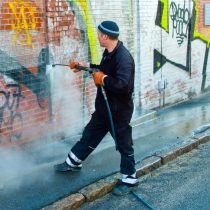
When superheated steam hits a soiled brick surface, it does several things at once. It kills algae, moss, and lichen down to the spore level, not just wiping them off the surface. It softens and lifts oil-based deposits and traffic film. It loosens flexible paint coatings without the abrasion that would erode soft, handmade brick faces. And because the water volume is so low, the substrate absorbs very little moisture.
That quick drying characteristic is not just a convenience feature. Conservation guidance from the U.S. General Services Administration and National Park Service emphasizes the “gentlest means possible” for cleaning historic masonry, and low-saturation methods rank high on that list. The Brick Development Association’s 2023 cleaning guide goes further, warning that high-pressure jetting on older brickwork is “never recommended without a detailed survey” because of the risk to fired faces and lime mortar.
The DOFF system sidesteps those risks by design. Operators work at low, controlled pressure and let the heat do the heavy lifting.
What the DOFF Brick Cleaning System Removes
The system handles a wide range of soiling types commonly found on brick facades in urban environments:
Algae, moss, and lichen (killed at the root, not just surface-wiped)
General soot and traffic film
Bird fouling
Oils and grease
Flexible paints and surface-level graffiti
Some coatings and sealants
There are limits. Brittle paints, heavy carbon sulphation crusts, and deeply bonded limescale may not respond well to heat alone. In those cases, the TORC system (also from Stonehealth) or a chemical pre-treatment is usually needed to finish the job. Practitioners on LinkedIn who specialize in stone restoration consistently describe this approach: DOFF for heat-responsive organic soiling, TORC for brittle and mineral deposits, chemicals only as needed, and always applied by trained operatives.
For graffiti on brick specifically, the results depend on the paint type and how porous the substrate is. Surface-level spray paint on a dense engineering brick often cleans up well with DOFF alone. Aerosol on a soft stock brick may need a combination of techniques for full removal. Practitioners on Reddit’s bricklaying forums recommend a chemical pre-treatment with the right solvent, followed by DOFF or TORC to clear residue, noting that these systems are tools in a sequence, not silver bullets.
After cleaning, applying an anti-graffiti coating is a smart preventive step, especially on properties in graffiti hotspots. It makes future removal faster and cheaper. Where graffiti also extends onto adjacent glass, specialist restoration (not just cleaning) is often needed, particularly for acid-etched damage on windows and shopfronts.
DOFF vs TORC vs ThermaTech vs Pressure Washing
This is where most online guides fall short. They describe what DOFF does but never explain when you should pick something else. Here are clear decision rules.
DOFF vs TORC (Both by Stonehealth)
TORC is a low-pressure vortex system that combines air, a small amount of water, and fine inert granulate (calcium carbonate or similar) swirled together at around 8 bar of air pressure. Think of it as an extremely gentle micro-abrasive cleaning method. Source
Pick DOFF when: The soiling is biological (algae, moss, lichen), oil-based, or involves flexible paints. Heat is the right tool.
Pick TORC when: You are dealing with brittle paint layers, carbon sulphation crusts, or limescale that heat alone will not shift. The fine abrasive action peels these away without damaging the substrate underneath.
Combine both when: Multiple soiling types exist on the same facade. Many conservation method statements for listed buildings specify DOFF followed by TORC, or vice versa, depending on the soiling layers present. This sequential approach appears regularly in UK planning applications for heritage projects.
DOFF vs ThermaTech
ThermaTech, made by Restorative Techniques, operates on the same principle: superheated water up to 150°C with adjustable pressure and flow. It is functionally similar to the DOFF system for conservation cleaning. The difference is the manufacturer and hardware configuration, not the underlying science. Which one gets specified on a project often comes down to contractor equipment, training, and the results of site cleaning trials.
DOFF vs Pressure Washing
This comparison matters most because pressure washing is what many property owners default to, and it is where the most damage happens.
A standard pressure washer relies on high-velocity water impact. On older brick, that force can erode the hard-fired outer face (the part that protects against water ingress), gouge out lime mortar joints, and drive large volumes of water deep into the wall. The BDA’s cleaning guide explicitly warns against pressure washers on lime mortar and sand-faced or soft bricks. Source
Practitioners on Reddit’s HomeImprovementUK forum echo this repeatedly. The consistent advice from tradespeople is to use DOFF, ThermaTech, or TORC on older brick and to pressure wash only by rare exception after professional assessment. Understanding the risks and proper use of high-pressure washing helps explain why the DOFF approach exists in the first place.
DOFF | TORC | ThermaTech | Pressure Washer | |
|---|---|---|---|---|
Primary mechanism | Heat (steam) | Micro-abrasive vortex | Heat (steam) | Water velocity/impact |
Temperature | Up to 150°C | Ambient | Up to 150°C | Cold or warm |
Saturation risk | Very low | Very low | Very low | High |
Best for | Biologicals, oils, flexible paints | Brittle paints, carbon, limescale | Same as DOFF | Hard, non-heritage surfaces only |
Heritage suitable? | Yes | Yes | Yes | Rarely |
Conservation Guidance: Why Method Choice Matters
The principle behind every reputable conservation standard is the same: use the gentlest effective method. The GSA’s technical procedures for cleaning historic masonry stress low-pressure water cleaning, mandatory test panels before full-scale work, and formal approvals. The BDA’s 2023 guidance adds that any cleaning of clay brickwork should account for the brick type, mortar composition, and age of the building before selecting a method.
The DOFF brick cleaning system aligns with these standards because it operates on the right side of every variable: low pressure, low water volume, no abrasives, and a thermal mechanism that preserves the substrate. It is widely used on listed buildings and in conservation areas across the UK.
But “conservation-grade” does not mean “use without thinking.” Every project should start with a test patch on an inconspicuous area. Conservation specifications typically call for mock-ups to confirm the method and settings before the main works proceed. Some UK method statements note cleaning rates in the single-digit square metres per hour on heritage brick, depending on the condition and soiling type. Source Set realistic expectations for time on site.
Risks and Limitations
No cleaning method is risk-free. The DOFF system mitigates the major dangers, but understanding them helps with proper specification.
Moisture and Freeze-Thaw Damage
When water enters porous brick and temperatures drop below freezing, the water expands as it turns to ice. This freeze-thaw cycle spalls faces and edges, causing irreversible damage over repeated seasons. Research published in the International Journal of Architectural Heritage documents this mechanism in detail.
The DOFF system’s low water volume and quick drying reduce this risk significantly. Still, operators and practitioners on UK forums consistently recommend scheduling DOFF cleaning during spring or summer, giving the building a proper drying window before cold weather arrives.
What DOFF Will Not Do
It will not remove every type of contamination. Thick, brittle paint layers, heavy carbon crusts, and some mineral deposits need the TORC system’s abrasive action. Deeply penetrated staining on very porous brick may require a chemical poultice as part of the treatment sequence. The DOFF brick cleaning system is powerful, but it works best as one tool in a well-planned approach, not as the only answer for every scenario.
DIY Risks
The BDA’s guidance cautions against using acids, harsh chemical cleaners, or high-pressure wands without proper training and testing. Brick damage from inappropriate DIY methods is common and often irreversible. For historic or sensitive masonry, calling a professional with the right equipment is the safer path. Understanding the tradeoffs between DIY and professional approaches can save both money and brickwork in the long run.
How to Choose the Right DOFF Cleaning Contractor
Not every company offering “steam cleaning” is using a genuine DOFF system or operating it correctly. Here is what to ask for when getting quotes.
Contractor Checklist
Site survey before quoting. A reputable contractor will want to see the brickwork in person (or at minimum, receive clear photos) before pricing.
Test patch with photographs. This is non-negotiable for heritage work and good practice on any brick facade.
RAMS (Risk Assessment and Method Statement). This should specify the equipment, pressures, temperatures, access plan, and runoff containment.
Stonehealth training or approved status. The contractor should be able to demonstrate competence with the DOFF system specifically.
Runoff and waste management plan. Especially important in London, where pavement traffic, drains, and environmental regulations all apply.
Before-and-after documentation. Professional operators photograph every stage. This protects both parties and provides evidence for insurers, landlords, or conservation officers.
Access plan. If the facade is above ground level, the quote should include MEWP (cherry picker) or scaffold provision with appropriate safety measures.
DUA London Graffiti Removal operates across Greater London with a target arrival within 3 hours and provides RAMS, test cleaning, and before-and-after documentation as standard. The team uses both DOFF and TORC systems for heritage and conservation projects and can apply anti-graffiti coatings after cleaning. For buildings where graffiti or soiling affects multiple surfaces, DUA handles brick, stone, glass, and metal facades with access-at-height capability.
Explore the full range of professional graffiti removal services available across London, or browse the latest tools and technologies used in modern graffiti removal to understand where DOFF fits in the wider picture.
Frequently Asked Questions
Is the DOFF brick cleaning system safe for listed buildings?
Yes, when correctly specified and operated by trained personnel. The system’s low pressure, low saturation, and heat-led approach aligns with conservation guidance from bodies like the NPS and GSA, which favor the “gentlest effective means” for historic masonry. Source It is widely used on Grade I and Grade II listed buildings across the UK. A test patch should always be completed and approved before full works begin.
Can DOFF remove graffiti and paint from brick?
Often, yes. It handles flexible paints and surface-level spray graffiti well. However, brittle paints, heavy carbon staining, and deeply absorbed spray on very porous brick may require TORC or a chemical pre-treatment before or after the DOFF pass. Source The right approach depends on the paint type, the brick, and the results of a cleaning trial.
How is DOFF different from pressure washing?
The DOFF system relies on heat with minimal mechanical force and very low water volume. A pressure washer relies on water velocity and impact, which can erode the fired face of older brick, gouge mortar joints, and saturate the wall. Source The BDA explicitly warns against high-pressure jetting on heritage brickwork without a detailed survey.
What is the difference between DOFF and ThermaTech?
Both are superheated water systems reaching up to 150°C, built on the same conservation principle. DOFF is made by Stonehealth; ThermaTech is made by Restorative Techniques. Selection usually depends on contractor equipment and the outcomes of on-site cleaning trials rather than a fundamental performance difference.
When should TORC be used instead of DOFF?
TORC is the better choice for brittle paint layers, carbon sulphation crusts, and limescale, soiling types where heat alone stalls. Many heritage projects combine both systems: DOFF first to clear biological growth and oils, then TORC to address paint or mineral deposits. Source
How long does the DOFF brick cleaning process take?
It varies with the soiling type, brick condition, and access requirements. Some UK method statements note cleaning rates in the single-digit square metres per hour on heritage brick. A small residential facade might take half a day; a large commercial building could require several days. The test patch stage helps estimate the full programme.
Can DOFF be used on interior brick walls?
Yes, and the low water volume is a particular advantage indoors because the surface dries quickly and produces minimal runoff. Proper containment and ventilation should still be arranged. Interior exposed brick in restaurants, offices, and residential conversions is a common application.
What time of year is best for DOFF cleaning?
Spring and summer are preferred. The warmer, drier conditions give brickwork the best chance to dry back fully after cleaning, reducing any residual moisture risk before winter. Practitioners consistently recommend avoiding DOFF work on brick heading into freezing weather unless drying conditions are confirmed.
Toby Doherty
Toby Doherty is a seasoned graffiti removal expert with over 20 years of experience in the industry. Throughout his career, Toby has helped countless businesses and property owners in London maintain clean, graffiti-free spaces. His extensive knowledge of graffiti removal techniques, from eco-friendly solutions to advanced technologies like laser cleaning, makes him a trusted authority in the field. Passionate about restoring urban environments, Toby combines his hands-on expertise with a commitment to staying up-to-date on the latest industry trends and innovations. When he’s not out in the field, Toby shares his insights through detailed articles, offering practical advice on everything from graffiti prevention to legal considerations.
Related Posts

How to Remove Graffiti From a Concrete Wall in London (2026)
Learn how to remove graffiti from concrete wall London: safe methods…


How to Do Graffiti Removal on Painted Automotive Metal—2026
Graffiti removal on painted automotive metal, explained: a 2026 step-by-step…

Graffiti Removal Red Brick Unpainted: 2026 Pro Guide
Learn safe Graffiti Removal Red Brick Unpainted methods: gels, low-pressure…