


TL;DR
Spray paint removal cost in the UK typically ranges from around £80 for a small professional job to £1,000 or more for large commercial walls, with per-square-metre rates quoted anywhere from £15 to £135 depending on the source. The price is driven far more by surface type, access, paint age, and urgency than by the size of the tag itself. If the damage is on glass and solvents do nothing, it may be acid etching rather than paint, which shifts the job from cleaning to restoration or replacement.
Table of Contents
- TL;DR
- What Does Spray Paint Removal Cost Mean?
- Typical Spray Paint Removal Cost in the UK
- Why Spray Paint Removal Prices Vary So Much
- Minimum Call-Out and Labour
- Surface Type
- Size and Number of Tags
- Paint Age
- Access and Working Height
- Removal Method
- Runoff and Waste Handling
- Urgency and Out-of-Hours Work
- Cost by Surface Type
- Metal Shutters
- Glass
- Brick and Concrete
- Natural Stone
- Painted Walls and Fences
- Wood and Render
- Heritage and Listed Buildings
- DIY vs Professional Spray Paint Removal
- Spray Paint on Glass vs Acid-Etched Glass
- Will the Council Remove Spray Paint Graffiti?
- How to Reduce Future Spray Paint Removal Costs
- What to Send for an Accurate Quote
- Frequently Asked Questions
What Does Spray Paint Removal Cost Mean?
Spray paint removal cost is the price charged to remove unwanted aerosol paint from a surface. In practice, the term almost always refers to graffiti removal rather than stripping old decorative paint.
The cost depends on the surface and the risk of damaging it as much as the size of the paint mark. A small tag on a smooth metal shutter might take thirty minutes. The same tag on old limestone could require chemical testing, dwell time, multiple passes, and careful low-pressure rinsing to avoid permanent scarring. These are different jobs with very different prices.
It is worth understanding early that spray paint removal is not the same as acid-etched glass repair, scratch removal, full paint stripping, or listed-building cleaning. Each of those needs different methods and different pricing. For a broader look at what graffiti removal involves, the distinction between surface cleaning and surface restoration is the first thing to get right.
Typical Spray Paint Removal Cost in the UK
Online cost guides disagree significantly, and that disagreement itself is useful information. Here are the benchmark ranges from the most-cited UK sources:
| Job type | Typical benchmark | Notes |
|---|---|---|
| Small professional removal (residential wall) | Around £80 to £250+ | Minimum call-out often applies |
| Shopfront or shutter | Around £150 to £400+ | May rise for urgent or out-of-hours work |
| Large commercial wall | Around £300 to £1,000+ | Access, surface, and area drive cost |
| Large mural or commercial façade | £1,000+ possible | MEWP hire, containment, or multi-day work |
| Per m² cleaning (marketplace estimates) | £15 to £25 per m² | Airtasker UK |
| Per m² cleaning (trade cost guides) | £42 to £135 per m² | Checkatrade |
| Sandblasting/abrasive methods | Around £99 to £150 per m² | Not suitable for many delicate surfaces |
| Anti-graffiti coating | Around £87 to £180 per m² | Prevention investment, not removal |
| Restoration or replacement after damage | £400 to £3,000+ possible | Etched glass, cladding, masonry repair |
Sources: PureSeal, Checkatrade, Airtasker UK, LBC Exterior Cleaning.
These are industry benchmarks, not quotes from any single contractor. The actual price for any job depends on a site assessment.
Why Spray Paint Removal Prices Vary So Much
The gap between £15 per m² and £135 per m² is not random. These guides are pricing entirely different things.
A marketplace quote for a simple ground-level task is not the same as an insured commercial call-out with surface testing, safe access, wastewater control, out-of-hours attendance, and photographic evidence. Protech Property Solutions breaks a typical quote into roughly 60% labour, 20% materials, and 20% equipment, which shows how little of the total is just “the chemicals” source.
Here is a more honest way to think about how spray paint removal cost is built:
Minimum Call-Out and Labour
For small jobs, the call-out fee and minimum labour time often dominate the invoice. A single small tag might take 20 minutes to clean, but the technician still needs to travel, park, set up, mix chemicals, test the surface, clean, rinse, inspect for ghosting, and pack down. In London, parking and congestion alone can add time.
Surface Type
This is the biggest cost driver, covered in detail below. Porous or sensitive surfaces cost more because they take longer and carry damage risk.
Size and Number of Tags
Larger areas cost more, but not proportionally. Doubling the tagged area does not double the price because the fixed costs (travel, set-up, access) stay the same.
Paint Age
Historic England states that painted graffiti is best tackled as soon as possible because it is easier to shift before binders harden and cross-link. Fresh spray paint often needs less chemical dwell time and fewer repeat passes. Delays increase the chance of ghosting or needing restoration. This connection between speed and cost is one reason rapid-response services exist for commercial properties.
Access and Working Height
If the graffiti is above reach height, the quote may include a cherry picker (MEWP), pavement licence, traffic management, or rope access. For some urban London sites, the access equipment costs more than the cleaning itself.
Removal Method
Chemical gels, steam, hot water, high-pressure washing, controlled abrasion, and repainting are all options. The right method depends on the surface. Practitioners on pressure-washing forums note that most graffiti jobs take hours because chemicals need dwell time and repeat applications. Brute force with water alone can damage surfaces.
Runoff and Waste Handling
Graffiti removal often uses solvents and hot water. Paint residue and chemical runoff can enter drains if not controlled. GOV.UK pollution prevention guidance says contaminated water should be collected in a sealed system for reuse, treatment, or removal by a registered waste carrier. A cheap quote may be cheap because it ignores these responsibilities.
Urgency and Out-of-Hours Work
For London commercial properties, emergency shopfront jobs are often priced by urgency and trading disruption as much as surface area. One practitioner shared in a walkthrough that they charge a high minimum for graffiti call-outs because the work is specialised, urgent, and reputation-sensitive source.
Cost by Surface Type
The surface matters more than the size of the tag. Here is a practical breakdown:
Metal Shutters
Often the fastest to clean because the surface is smooth and non-porous. The risk is damaging a powder-coated or painted finish. Chemical selection matters.
Glass
If it is truly spray paint on sealed glass, a solvent and scraper process can work well. But if solvents, alcohol, and scraping do nothing, it may not be paint. See the acid-etched glass section below.
Brick and Concrete
Porous surfaces absorb pigment. Historic England warns that dissolving or mobilising graffiti media on porous substrates can spread staining deeper into or across the surface. Brick jobs often need chemical dwell time plus hot water or steam, and the risk of ghosting (a visible shadow left after the paint lifts) adds complexity. For more on this, see techniques for removing graffiti from brick.
A practical example from Reddit’s DIYUK community: a homeowner used graffiti remover on black spray paint on a porous patio and found that the product removed the paint but left a visible impression in the stone source. That shadow is ghosting, and it often requires professional treatment to resolve.
Natural Stone
Limestone, sandstone, and other soft stones are at the expensive end. Incorrect pressure or abrasive cleaning can scar the surface permanently. Specialist low-pressure methods and testing patches are standard practice.
Painted Walls and Fences
Sometimes repainting is genuinely cheaper than removal, especially on surfaces already painted in a standard colour. But patch painting can look obvious if the surrounding paint has weathered.
Wood and Render
High absorption and damage risk. Aggressive cleaning can strip the surface finish or push pigment deeper.
Heritage and Listed Buildings
This is a separate pricing category. Historic England identifies common problems from inappropriate cleaning: ghosting, pigment bleeding, high-pressure damage, and scratches from stiff metal brushes. It recommends specialists who can provide named operatives, case studies, and detailed methodologies. On listed buildings, the cost may include surveys, test patches, conservation advice, method statements, consent from the relevant authority, and wider cleaning to avoid a visible “clean patch” against the surrounding aged surface. For more context, read about graffiti on historic buildings in London.
A small tag on soft limestone can cost more than a larger tag on a metal shutter because the expensive part is not paint removal. It is avoiding permanent damage.
DIY vs Professional Spray Paint Removal
DIY spray paint removal can save money in specific situations. It can also triple the final bill when it goes wrong.
DIY may be reasonable when:
- The area is small
- The surface is smooth, sealed, and replaceable
- The graffiti is fresh
- You can test a hidden patch first
- You are not using aggressive pressure, wire brushes, or unknown solvents
Call a professional when:
- The surface is brick, stone, render, wood, a painted shopfront, heritage fabric, or glass
- The graffiti is old, thick, layered, obscene, at height, or customer-facing
- You see ghosting after a first attempt
- You need insurance, landlord, or facilities documentation
- There is any chance the mark is acid etching or scratching rather than paint
Wipeout warns that DIY attempts can worsen the situation by rubbing graffiti further into the surface source. Airtasker notes that harsh cleaning chemicals can create white shadow stains or salt-deposit-like marks that may need another cleaning service source.
For those who do want to try a first response on a low-risk surface, best products for DIY graffiti removal covers what to look for. And for anyone working with solvents or at height, DIY graffiti clean-up safety tips are worth reading first.
The key point: a failed DIY attempt on a porous or sensitive surface does not reset the problem. It makes professional removal harder and more expensive.
Spray Paint on Glass vs Acid-Etched Glass
This is one of the most common and most expensive misunderstandings in spray paint removal cost.
Spray paint sitting on glass can usually be removed with the right solvent and scraping technique. But acid-etched or scratched graffiti is not paint on the surface. It is damage in the surface. No solvent will fix it because there is nothing to dissolve.
Practitioners on Reddit’s WindowCleaning community are clear on this. One thread warns that vinegar and ordinary approaches will not solve acid etching, and that inexperienced polishing attempts can distort the glass, leaving a “fun house mirror” effect source. Another notes that deep acid pen damage may simply require replacement source.
If the mark is acid-etched rather than paint, the quote moves from spray paint removal to glass restoration. DUA London Graffiti Removal positions specialist mechanical resurfacing and polishing as a way to restore many etched shopfront panes without replacement, but feasibility depends on depth, glass type, and severity. For more detail, see graffiti removal from glass and windows.
The practical test: if solvents, rubbing alcohol, and careful scraping do absolutely nothing, suspect acid etching. Get a professional assessment before spending more on products that cannot help.
Will the Council Remove Spray Paint Graffiti?
In London, “call the council” is common advice, but the reality varies by borough.
Lambeth aims to remove offensive graffiti within 24 hours and other graffiti within seven working days. It needs an indemnity form from the landowner and does not remove graffiti more than two metres high source.
Richmond removes graffiti from council, private, and commercial property where it is visible from the street and below three metres. Free removal is available for households and independent businesses with nine or fewer employees nationally. Larger businesses can subscribe for unlimited removal at £188 per year (VAT inclusive) source.
Newham removes small, ground-accessible graffiti for residents and businesses free of charge, prioritising offensive graffiti within 24 hours. A signed permission form is required source.
Harrow removes graffiti from council-maintained areas within three weeks (offensive graffiti within one working day) but does not remove private or business-property graffiti unless it is offensive source.
The pattern is clear: council help exists but comes with height limits, permission requirements, access restrictions, and response times that may not work for a customer-facing business. For urgent, specialist, or glass-related work, private removal is usually the faster and more controlled option. Understanding legal responsibilities for property owners regarding graffiti helps clarify what the council expects from you, and what you can expect from them.
How to Reduce Future Spray Paint Removal Costs
A useful decision rule: if graffiti happens once, pay for removal. If it happens twice in the same location, price prevention. If it happens three or more times, invest in coatings, films, lighting, CCTV, or a surface redesign.
Quick removal discourages repeat tagging. Richmond Council specifically states that quick removal is one of the best ways to stop future graffiti source. The risks of not removing graffiti immediately go beyond appearance, including deeper staining and copycat tags.
Anti-graffiti coatings do not stop someone from spraying, but they make future removal faster and cheaper. Sacrificial coatings wash away with the paint and need reapplication. Permanent coatings allow repeated cleaning without recoating. Checkatrade and LBC both note that coatings are worth considering for repeat hotspots source. For a fuller explanation, see anti-graffiti coatings: what they are and how they work.
Protective films on glass can absorb paint or light etching and be replaced cheaply, avoiding the cost of resurfacing or replacing panes.
Lighting, CCTV, and environmental design (planting, texture, muted wall colours) all reduce the likelihood of tagging.
Maintenance contracts spread costs and guarantee response times for properties that are hit repeatedly.
For repeat hotspots, the real question is not single removal cost but lifetime cost: removal plus repainting plus admin plus repeated call-outs plus damage risk. Prevention becomes logical quickly.
What to Send for an Accurate Quote
Contractors cannot give a reliable spray paint removal cost from a blurry photo and a postcode. Here is what helps:
- Clear photos from close up and from a wider angle showing context
- Surface type if known (brick, render, glass, metal, stone, painted wall, wood)
- Approximate size in centimetres or square metres
- Height from ground level
- Location and postcode
- How long the graffiti has been there
- Whether it is paint, marker, acid etching, scratching, sticker, or unknown
- Whether the content is offensive or customer-facing
- Access restrictions, opening hours, parking, loading, and water supply if known
- Whether before/after photos, risk assessments, or method statements are needed
Historic England recommends photographic recording and keeping cost records for insurance and police purposes. This applies to any property, not just heritage buildings.
DUA London Graffiti Removal offers free quotes and an instant quotation form for London properties, covering retail, commercial, and residential graffiti with same-day response positioning. For urgent, complex, or glass-related spray paint removal, contact DUA for a professional assessment.
Frequently Asked Questions
How much does spray paint removal cost in the UK?
As a broad benchmark, simple professional removal may start around £80 to £250 for a small job. Shopfronts and shutters typically range from £150 to £400 or more. Large commercial walls can run from £300 to well over £1,000. Per-square-metre guides range from about £15 to £135 depending on source and methodology source.
Is spray paint removal priced per square metre?
Sometimes, but small jobs almost always carry a minimum charge. Call-out, travel, set-up, and access costs are not proportional to the size of the tag. A quote based only on square metres can be misleading for anything under a few square metres.
Why is brick graffiti removal more expensive?
Brick is porous. Pigment enters the pores, making removal slower and increasing the risk of ghosting (a visible shadow remaining after the paint is removed). Chemical dwell time, repeat passes, and careful rinsing all add time and cost.
Can I just pressure wash spray paint off?
On robust, non-porous surfaces, sometimes yes. On masonry, stone, wood, render, or painted surfaces, uncontrolled pressure can drive pigment deeper, damage the substrate, or spread staining. Controlled chemical application with appropriate rinse pressure is usually the professional approach.
Will the council remove graffiti from my property?
It depends on the London borough, whether you grant permission, height and access, whether the graffiti is offensive, and whether the property is private or commercial. Council removal is available in many boroughs but is not always fast enough or comprehensive enough for business-facing properties. Details on vandalism and property insurance in London can also help with cost recovery.
Is painting over graffiti cheaper than removing it?
Sometimes, especially on surfaces already painted in a standard colour. But bleed-through from dark spray paint is common, and patch painting often looks obvious against a weathered wall. For customer-facing surfaces, professional removal or full repainting usually gives a better result.
What if the graffiti is on glass but solvents don’t work?
If solvents and scraping have no effect, the damage is likely acid etching or scratching rather than paint. This requires mechanical resurfacing, polishing, or in severe cases, glass replacement. The cost is significantly higher than paint removal.
How quickly should graffiti be removed?
As soon as possible. Fresh paint is generally easier and cheaper to remove. Quick removal also signals that the property is maintained, which discourages repeat tagging. For London businesses, same-day removal before trading hours is often the goal.
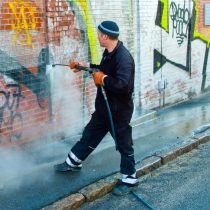
Toby Doherty
Toby Doherty is a seasoned graffiti removal expert with over 20 years of experience in the industry. Throughout his career, Toby has helped countless businesses and property owners in London maintain clean, graffiti-free spaces. His extensive knowledge of graffiti removal techniques, from eco-friendly solutions to advanced technologies like laser cleaning, makes him a trusted authority in the field. Passionate about restoring urban environments, Toby combines his hands-on expertise with a commitment to staying up-to-date on the latest industry trends and innovations. When he’s not out in the field, Toby shares his insights through detailed articles, offering practical advice on everything from graffiti prevention to legal considerations.
Related Posts
Should I Replace or Restore Etched Graffiti Glass? 2026
Should I Replace Glass or Try Restoration for Etched Graffiti? See 60–80%…

How to Remove Stone Graffiti: No Ghosting or Discoloration
Learn how to remove graffiti from stone without ghosting or discoloration using…

Choosing Maintenance Contracts for Commercial Properties
Choosing maintenance contracts for commercial properties? Compare types, costs,…