


TLDR
Graffiti removal from unpainted red brick is the controlled removal of spray paint, marker, or ink from bare brickwork without repainting the wall or damaging the masonry. Because red brick is porous, pigment soaks into surface pores and mortar joints, making removal far harder than cleaning glass or metal. The safest approach starts with identifying the brick type, testing a small area, and using the gentlest effective method (usually chemical gels, controlled dwell time, and low-pressure hot water or steam) rather than blasting the wall with a pressure washer.
Table of Contents
- TLDR
- Quick Definition
- Why Unpainted Red Brick Is Hard to Clean
- Porosity varies enormously
- Paint soaks below the surface
- Mortar is often weaker than the brick
- The wrong method creates new problems
- Ghosting: The Most Common Disappointment
- How Graffiti Is Removed From Bare Red Brick
- Inspection and Test Patch
- Solvent Gels and Poultices
- Low-Pressure Hot Water or Steam
- DOFF and TORC Cleaning
- Secondary Ghosting Treatment
- What Not to Use on Unpainted Red Brick
- Can You Remove Graffiti From Red Brick Yourself?
- When to Call a Professional
- What a Good Contractor Should Do
- How to Prevent Repeat Graffiti on Red Brick
- Speed matters
- Anti-graffiti coatings
- Other prevention measures
- A Note for London Property Owners
- Wastewater and Environmental Containment
- Weather Considerations
- Related Terms
- Frequently Asked Questions
Quick Definition
Graffiti removal from unpainted red brick means removing graffiti from bare brickwork while keeping the brick bare. It differs from cleaning painted walls because the remover contacts the brick directly, not a sacrificial paint layer. Because red brick is porous, pigment can soak into pores and mortar joints, leaving a visible stain or shadow (called ghosting) even after the top layer of paint is gone.
A safe result depends on four variables: the brick type, the graffiti medium, how long the paint has been on the surface, and the cleaning method chosen. A fresh marker on dense brick may come off with a controlled solvent test. A six-month-old black aerosol tag on soft handmade brick may need professional gel application, extended dwell time, steam cleaning, and secondary ghosting treatment.
The key idea is simple. This is not “washing.” It is controlled removal from a porous masonry surface, and the wrong approach can leave the wall looking worse than the tag did.
Why Unpainted Red Brick Is Hard to Clean
Most people expect graffiti removal to work the way it does on a shop window or a painted metal shutter: spray a product, wipe it off, done. Unpainted red brick does not work that way.
Porosity varies enormously
Historic bricks range from soft, porous handmade bricks to denser machine-made bricks, and that variation changes how deeply paint, solvents, water, and dissolved pigment penetrate the surface. Historic England’s guidance on graffiti removal stresses that masonry varies widely in porosity and absorbency, meaning no single method works on every wall.
“Red brick” can mean several things:
- Modern dense machine-made brick with lower absorption, easier to test-clean.
- Older handmade brick (including London stock with red-orange tones) that is softer, more absorbent, and more easily damaged.
- Red engineering brick that is quite dense and may respond better.
- Weathered brick with a thin or deteriorating fired face, highly vulnerable to pressure and brushing.
Before doing anything, check whether the surface is truly unpainted red brick or brick-coloured paint. If someone previously painted the wall red to imitate bare brick, the removal plan changes completely because solvents may strip the underlying coating.
Paint soaks below the surface
The National Park Service explains that painted metal or wood is usually easier to treat than soft brick or stone because the latter is porous and graffiti can soak into the material. On a non-porous surface, paint sits on top. On bare red brick, it bonds into the pore structure and mortar joints.
Mortar is often weaker than the brick
Lime mortar (common in older buildings) is more vulnerable to water pressure, abrasion, and chemical saturation than the brick itself. Cleaning that is safe for the brick face can still erode or wash out mortar joints.
The wrong method creates new problems
The risk is not only failing to remove the graffiti. Users on MoneySavingExpert forums warn that using brick cleaner or acid can leave the treated area looking much cleaner than the surrounding wall. DIYnot users describe the same effect: blasting a graffiti spot can leave that area “sparkling clean” while the rest of the wall remains weathered, creating a bright rectangle that still advertises where the tag was.
Over-cleaning strips the brick’s natural patina. Under-cleaning leaves ghosting. Either outcome can draw more attention than the original graffiti.
Ghosting: The Most Common Disappointment
Ghosting is the faint outline or shadow of graffiti that remains after the visible paint film has been removed. It happens because pigment soaks below the brick surface and stays trapped in pores that cleaning cannot reach.
The NPS notes that ghosting is common after graffiti is removed from porous material because pigments remain below the surface. Historic England shows examples of ghosting on brickwork and warns that incorrect removal can spread residues or drive them further into porous surfaces, making them very difficult or impossible to remove completely.
Practitioners on Reddit confirm this is a real and frequent problem. In one DIYUK thread, a user described trying paint stripper, brick acid, and a branded graffiti remover on old graffiti, but a ghost image remained. Replies mentioned industrial steam machines and the frank possibility that the mark may never fully disappear without more aggressive treatment that could damage the brick.
The practical takeaway: “removed” and “invisible” are not always the same outcome. A good result means removing the graffiti while preserving the brick. Sometimes a faint shadow is safer than over-cleaning and permanently scarring the masonry.
How Graffiti Is Removed From Bare Red Brick
The methods below are listed from most controlled to most aggressive. For a deeper breakdown of brick-specific techniques, see our guide to removing graffiti from brick.
Inspection and Test Patch
Every removal should start here. Identify the brick type, mortar condition, age, previous coatings, and graffiti medium. Photograph the wall before any work.
The NPS recommends that test patches be carried out in inconspicuous areas of six inches by six inches or less, with observers ranking both removal performance and possible visual damage before selecting a method for full cleaning.
On unpainted red brick, the safest method is the one that works on the test patch with the least change to the brick, not the one that removes paint fastest.
Solvent Gels and Poultices
A gel or poultice is used to soften paint or ink while controlling how much liquid spreads into the porous brick. The NPS says solvent removal systems should be applied as a poultice or gel rather than as a free-flowing liquid. A poultice is an absorbent paste mixed with cleaner and applied as a slurry; commercial gel cleaners cling to vertical surfaces and reduce uncontrolled spreading.
That said, poultices have limits. Historic England notes that a poultice remover may only extract colourant from superficial pores, and it can be difficult to make the paste contact paint lodged in tiny pores while holding enough solvent to loosen the bond. They help control the process, but old or deeply absorbed pigments often need secondary treatment.
If you are considering eco-friendly products, remember that “eco-friendly” does not automatically mean safe for porous brick. Every product still needs a test patch.
Low-Pressure Hot Water or Steam
After a gel or poultice has softened the paint, controlled rinsing removes loosened residue. The principle is straightforward: heat and chemistry should do most of the work so pressure and abrasion can do less.
Historic England describes key variables including working distance, temperature, and pressure. The NPS recommends low-pressure spray of 100 to 400 psi, with the wand held at least 12 inches from the surface, and warns that many hardware-store power washers operate at 1,600 to 3,200 psi, which can be damaging.
Pressure washing discussions on Reddit reinforce this. Experienced operators describe graffiti removal as chemistry-first, rinse-second work. They talk about chemical dwell time, the advantage of hot water for reducing shadowing, and wastewater containment as factors that make graffiti removal specialist work rather than a basic jet-wash job.
DOFF and TORC Cleaning
DOFF is a specialist system that delivers superheated water (effectively steam) at low pressure and low water volume. Stonehealth, the manufacturer, recommends it for materials including brick, stone, concrete, wood, faience, and terracotta. LinkedIn posts from cleaning practitioners consistently describe DOFF as high-temperature, low-pressure cleaning for delicate surfaces.
TORC uses a different approach: a gentle swirling vortex of low air pressure, minimal water, and fine inert granulate for controlled masonry cleaning. It is more specialist and relevant for stubborn residues, carbon staining, or cases where gentle abrasion is needed after chemical treatment.
Both systems are commonly used for graffiti removal on unpainted red brick in conservation contexts, particularly on historic buildings in London where aggressive cleaning methods are inappropriate.
Secondary Ghosting Treatment
When the paint film is gone but a pigment shadow remains, a specialist ghost remover or repeated controlled treatment may reduce the stain further. The decision at this stage is whether additional treatment improves the appearance enough to justify the risk of further substrate contact. Sometimes the answer is to stop.
What Not to Use on Unpainted Red Brick
These methods are common first instincts. They are also the most likely to cause permanent damage.
| Method | Why It Is Risky |
|---|---|
| Brick acid | Acid is not a paint remover. It can alter masonry and leave harmful residues. Practitioners on r/masonry warn that acid does not remove paint from brick and r/HomeImprovement users report muriatic acid etching off a layer of brick rather than removing paint. |
| Wire brush | Can scratch and permanently mark handmade brick. Historic England warns against stiff metal bristle brushes on softer limestones and handmade bricks. |
| Grinder or power tools | The NPS states that power tools such as grinders should never be used on historic masonry features. |
| High-pressure washer or turbo nozzle | Domestic washers can exceed conservation-safe pressures. The same NPS source warns that standard hardware-store models operate well above the 100 to 400 psi range considered safe for brick. |
| Sandblasting | Can permanently erode historic brick or stone and accelerate deterioration. |
| Painting over bare brick | NPS rehabilitation guidance lists applying paint to historically unpainted masonry as not recommended. It changes the building fabric, can trap moisture, and often creates a patchy result that draws attention. |
| Random solvent wiping | Spreading liquid solvent across porous brick can dissolve pigment and push it deeper into pores. Gels and poultices offer better control. |
For more on why high-pressure washing requires caution, especially on masonry, we cover the technical details separately.
Can You Remove Graffiti From Red Brick Yourself?
Sometimes. But the safe zone for DIY graffiti removal on unpainted red brick is narrow.
| Situation | DIY Possible? | Why |
|---|---|---|
| Fresh chalk on hard brick | Usually yes | Gentle brushing and water may be enough. |
| Fresh marker on dense or glazed brick | Maybe | An alcohol-based cleaner may work after a small test. Practitioners on DIYUK suggest isopropyl alcohol or hand sanitiser gel for marker on smoother brick, noting that brick texture and porosity change the result. |
| Small fresh spray paint on modern dense brick | Maybe, with caution | Test a masonry-safe gel. Avoid high pressure and wire brushes. |
| Old spray paint on porous red brick | Usually no | Pigment has likely absorbed. Ghosting is probable. |
| Black or red spray paint on soft or weathered brick | No | High contrast pigment and vulnerable brick create maximum risk. |
| Listed building, conservation area, or handmade brick | No | Method and consent risks require conservation-led cleaning. |
| Large shopfront, offensive tag, or high-footfall business | No | Speed, safety, access, containment, and documentation all matter. |
| Repeated tagging hotspot | Professional recommended | Removal plus anti-graffiti coating may be cheaper long-term. |
If DIY feels right for your situation, review these safety tips for DIY graffiti clean-up before starting. And if you are weighing the trade-offs between DIY and hiring a professional, that decision guide breaks down costs, risks, and outcomes in more detail.
When to Call a Professional
Call a professional for graffiti removal on unpainted red brick when:
- The brick is old, soft, handmade, spalling, or lime-mortared.
- The graffiti is spray paint (especially black, red, or dark colours), large, old, layered, or offensive.
- The building is listed, in a conservation area, or commercially visible.
- A domestic pressure washer has already failed or made things worse.
- There is risk to pedestrians, drains, shopfront access, or business trading.
- You need documentation, risk assessments, before/after photos, or landlord/insurer evidence.
- You want an anti-graffiti coating applied after removal.
Users on r/centuryhomes reinforce this point in discussions about removing paint from old brick. Multiple contributors warn against abrasive blasting on historic brick, noting that if the paint bond is as strong as the brick surface, blasting can remove brick along with paint. One user described using a softening and peel-away process specifically so gentler pressure could follow.
The underlying principle for heritage red brick: the goal is not maximum removal at any cost. The goal is the least harmful improvement.
What a Good Contractor Should Do
Use this checklist to evaluate anyone you are considering hiring for graffiti removal from unpainted red brick:
- Inspect the substrate and graffiti medium before quoting a method.
- Check if the brick is soft, handmade, previously treated, or historic.
- Identify adjacent surfaces (stone, glass, metal, signage, timber, painted areas) and protect them.
- Protect pedestrians, doors, drains, plants, and nearby finishes.
- Carry out a test patch and show you the result before proceeding.
- Use the gentlest method that works.
- Use gels, poultices, or controlled chemistry where needed.
- Rinse with controlled low-pressure hot water or steam where appropriate.
- Treat ghosting only if it can be done without damaging the brick.
- Stop if further cleaning would harm the substrate.
- Provide before/after photos and aftercare advice.
- Discuss anti-graffiti coating if the area is repeatedly tagged.
DUA London Graffiti Removal works across Greater London with a target response time within 3 hours for same-day service. The team uses DOFF and TORC systems suitable for heritage and conservation projects, works on brick, stone, glass, concrete, wood, and metal, and provides full documentation including risk assessments, method statements, and before/after photography. For urgent situations, find out when calling a professional makes sense.
How to Prevent Repeat Graffiti on Red Brick
Removing graffiti from unpainted red brick once is hard enough. Repeated cleaning of the same wall, especially if the brick is soft or old, can cause cumulative damage that no amount of careful chemistry can reverse.
Speed matters
The U.S. Department of Justice’s problem-oriented policing research found that rapid removal of graffiti reduces occurrence by reducing the visibility and notoriety that many offenders seek. New York transit cleaned graffiti-marked trains within two hours or took them out of service. The logic applies to London shopfronts and residential walls too: a tag that stays up for weeks invites more tags. For more on the risks of delay, see what happens when graffiti is not removed promptly.
Anti-graffiti coatings
Historic England describes anti-graffiti coatings as clear barriers designed to stop paint, inks, and dyes from penetrating pores and make later cleaning easier. There are two main types:
- Sacrificial coatings are removed along with the graffiti and must be reapplied after each cleaning. Aqueous wax sacrificial coatings are generally more appropriate for historic structures because they allow the brick to breathe.
- Permanent coatings last through multiple cleanings but can be less suitable for breathable or historic masonry depending on the substrate.
For repeat hotspots, an anti-graffiti coating applied after professional removal is often more cost-effective than paying for multiple full removals. DUA London Graffiti Removal offers coating application and maintenance contracts for properties that face ongoing tagging.
Other prevention measures
Lighting, CCTV, access restriction, defensive planting, and neighbourhood reporting processes all reduce repeat incidents. No single measure eliminates risk, but the combination of fast removal, surface protection, and environmental design makes a measurable difference.
A Note for London Property Owners
London councils generally prioritise offensive graffiti. Islington removes offensive graffiti within 24 hours and most other graffiti within five working days. Camden targets 24 hours for racist or offensive graffiti and five working days for other graffiti after a signed disclaimer from the property owner. Tower Hamlets says private-property graffiti is generally the owner’s responsibility, though the council may help private dwellings if the graffiti is accessible and the owner signs a disclaimer.
The practical reality is that council help may not cover high or inaccessible walls, commercially urgent situations, sensitive brickwork, or graffiti on private commercial property. Businesses that need same-day removal to protect frontage and customer perception often need private specialist help. For more on navigating council processes and property owner responsibilities regarding graffiti, we cover the legal side separately.
Wastewater and Environmental Containment
One detail that many property owners overlook: if solvents, softened paint, or chemical residues are involved, the runoff is not just dirty water. GOV.UK guidance on solvent pollution explains that surface water drains usually discharge untreated to local rivers, streams, or soakaways. Work should be contained so residues do not enter surface drains. This matters especially near London pavements, gullies, and public areas.
Weather Considerations
Historic England notes that chemical cleaning should not be carried out below 6°C or above 25°C. Cold weather slows chemistry and increases freeze risk. Hot weather shortens dwell time and can dry chemicals too fast. Wet brick can dilute gels and change results. Freshly cleaned brick must dry before most coatings can be applied.
Related Terms
| Term | Definition |
|---|---|
| Substrate | The material underneath the graffiti: brick, mortar, stone, render, metal, or glass. |
| Porosity | How much a material absorbs liquid. Porous brick absorbs paint, ink, solvent, and rinse water. |
| Ghosting | A faint shadow or outline left after graffiti removal because pigment remains in surface pores. |
| Dwell time | The time a remover, gel, or poultice stays on the graffiti before it is rinsed or lifted. |
| Poultice | An absorbent paste that holds a cleaner against the surface and helps draw residues out of pores. |
| Solvent gel | A thickened chemical remover that clings to vertical masonry and reduces uncontrolled spreading. |
| DOFF cleaning | A specialist superheated water/steam cleaning system used at low pressure on masonry and other surfaces. |
| TORC cleaning | A specialist vortex cleaning system using air, low water, and fine inert granulate for controlled masonry cleaning. |
| Fired face | The outer face of a brick formed during firing. Once eroded, it cannot be restored by cleaning. |
| Sacrificial coating | A clear protective coating removed along with future graffiti, then reapplied. |
| Permanent coating | A longer-term barrier coating that can be less suitable for breathable or historic masonry. |
Frequently Asked Questions
Can graffiti be removed from unpainted red brick without painting over it?
Yes, but the result depends on the brick type, the graffiti medium, and how long the paint has been there. Dense modern brick is usually easier to clean than soft, old, porous brick. Some ghosting may remain if pigment has soaked into the pores. The goal is the best possible outcome without damaging the masonry, and that sometimes means accepting a faint shadow rather than over-cleaning.
Will pressure washing remove graffiti from red brick?
Pressure can remove loosened paint, but pressure alone often damages brick and mortar. The NPS recommends controlled low-pressure methods at 100 to 400 psi and warns that standard domestic pressure washers operate well above this range. Chemistry and heat should do most of the work before any rinsing.
Does brick acid remove spray paint?
No. Brick acid is designed for certain mineral and cement staining tasks. It is not a safe or effective default for spray paint removal from red brick. Historic England warns that acidic cleaners can damage masonry and leave harmful residues in pores. Users in masonry forums consistently report that acid does not remove paint reliably and can make things worse.
What is the safest professional method for graffiti removal on unpainted red brick?
There is no single safest method for every wall. A safe process starts with inspection and a test patch, then uses the gentlest effective combination of gel or poultice, controlled dwell time, low-pressure hot water or steam, and specialist systems such as DOFF or TORC where appropriate. The method is selected based on what the test patch reveals, not what works fastest.
Is it better to just paint over graffiti on red brick?
Usually not if the brick has always been bare. Painting over unpainted brick changes the wall’s appearance, can trap moisture (leading to damp and salt damage), creates a patchy repair that often peels, and is listed as “not recommended” by the NPS for historically unpainted masonry. It also creates a smooth surface that is easier to tag again.
How quickly should graffiti on brick be removed?
As quickly as possible. Rapid removal reduces the notoriety that taggers seek, which research shows lowers recurrence rates. Fresh graffiti is also easier to remove because pigment has had less time to absorb into the brick. Every day a tag remains on porous red brick, removal becomes harder and the risk of permanent ghosting increases.
Should anti-graffiti coating be applied after removal?
For repeat hotspots, yes. A coating creates a barrier that stops paint from penetrating the brick pores and makes future cleaning faster and less damaging. For historic or breathable masonry, sacrificial coatings (which are removed with the graffiti and reapplied) are generally more appropriate than permanent coatings. The choice depends on the brick type, heritage status, and maintenance plan.
When is graffiti removal from unpainted red brick a DIY job?
Only when the mark is small and fresh, the brick is modern and dense, and the area is not listed or commercially critical. A tiny test with an appropriate product in a hidden spot should always come first. Old spray paint on porous or heritage brick, large tags, offensive content, and repeat tagging all warrant professional assessment. The cost of getting it wrong on unpainted red brick (permanent scarring, ghosting, or a conspicuous clean patch) usually exceeds the cost of hiring a specialist.
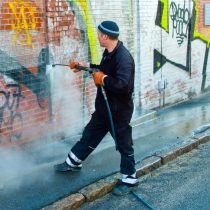
Toby Doherty
Toby Doherty is a seasoned graffiti removal expert with over 20 years of experience in the industry. Throughout his career, Toby has helped countless businesses and property owners in London maintain clean, graffiti-free spaces. His extensive knowledge of graffiti removal techniques, from eco-friendly solutions to advanced technologies like laser cleaning, makes him a trusted authority in the field. Passionate about restoring urban environments, Toby combines his hands-on expertise with a commitment to staying up-to-date on the latest industry trends and innovations. When he’s not out in the field, Toby shares his insights through detailed articles, offering practical advice on everything from graffiti prevention to legal considerations.
Related Posts
Should I Replace or Restore Etched Graffiti Glass? 2026
Should I Replace Glass or Try Restoration for Etched Graffiti? See 60–80%…

How to Remove Stone Graffiti: No Ghosting or Discoloration
Learn how to remove graffiti from stone without ghosting or discoloration using…

Choosing Maintenance Contracts for Commercial Properties
Choosing maintenance contracts for commercial properties? Compare types, costs,…