Graffiti Removal Project | London Borough of Camden
Table of Contents
Project Overview
A commercial property manager responsible for a listed historic building in Hatton Garden contacted us after graffiti was applied to the stone walls of the property. Located within a designated heritage conservation area, the building forms part of one of London’s most historically significant commercial districts.
The client required a specialist, conservation led approach that would remove the graffiti without compromising the age, character, or integrity of the original stonework.
Location
- Area: Hatton Garden, Farringdon, London
- Borough: London Borough of Camden
- Property Type: Commercial Building in a Heritage Conservation Area
- Client: Commercial Property Manager
- Date Completed: September 2025
The Challenge
The graffiti had been applied directly to historic stone masonry, a surface that is particularly vulnerable to damage from aggressive cleaning methods. High pressure washing, abrasive techniques, or inappropriate chemicals could have resulted in permanent surface loss or discolouration.
As the building is listed and situated within a conservation area, all works needed to adhere to heritage best practice, with minimal intervention and careful control at every stage of the process.
Initial Assessment
Our specialists carried out a detailed assessment of the stone type, condition, and age, along with the nature of the graffiti materials used. Discreet test patches were undertaken to establish how deeply the pigments had penetrated and to confirm the safest removal method.
Consideration was also given to moisture control, dwell times, and neutralisation to ensure the stone remained stable throughout the process.
Our Approach
A conservation grade stone graffiti removal system was selected, designed specifically for historic masonry. The method focused on gently drawing the graffiti pigments out of the stone pores rather than abrading or eroding the surface.
The approach prioritised preservation over speed, ensuring the building’s character and architectural detail were fully protected while achieving a visually clean result.
The Removal Process
Step 1: Careful preparation of the stone surface and protection of surrounding architectural features
Step 2: Controlled application of specialist stone safe graffiti removal materials
Step 3: Monitored dwell time to allow pigments to migrate out of the stone
Step 4: Gentle removal and neutralisation to stabilise the stone surface
Step 5: Final inspection to confirm no surface damage or residue remained
Results
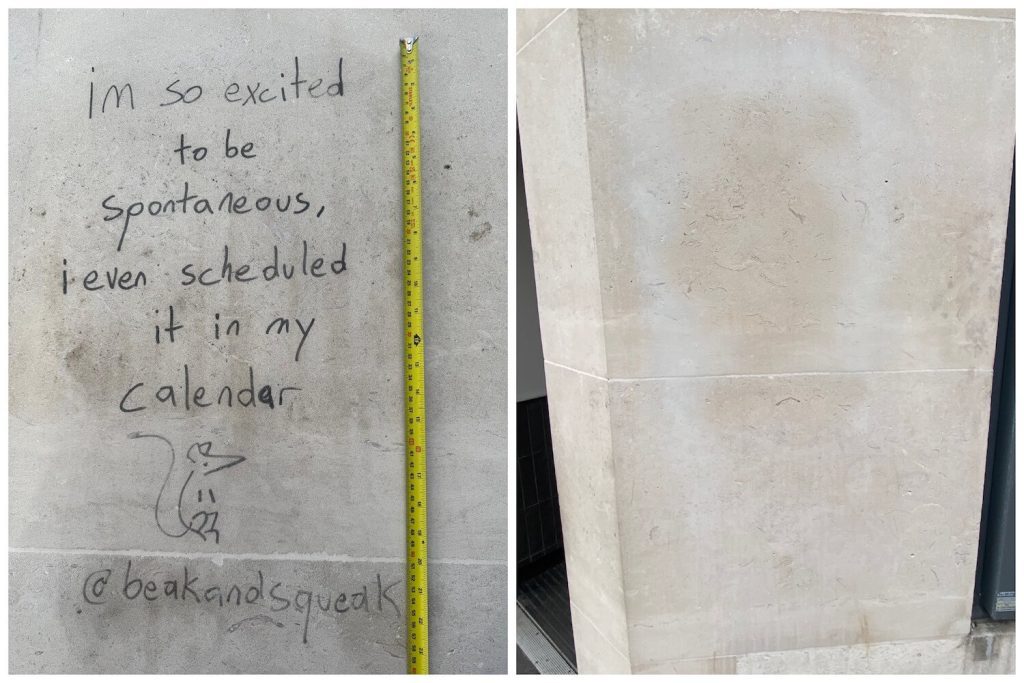
The graffiti was successfully removed from the historic stone walls without causing surface loss, bleaching, or alteration of the original texture. The stone retained its natural patina and aged appearance.
The finished result met both the expectations of the property manager and the requirements associated with maintaining a listed building within a conservation area.
Before and After
Before: Graffiti affecting historic stonework on a listed commercial building
After: Stonework restored with original character and finish preserved
Client Outcome
The commercial property manager was able to resolve the vandalism while remaining fully compliant with conservation guidelines. The specialist approach avoided the need for costly repairs or further remedial works and preserved the long term condition of the building.
Why This Project Matters
This case study demonstrates the importance of using conservation led techniques when removing graffiti from historic stone buildings. Incorrect methods can cause irreversible damage, whereas a controlled approach protects both appearance and fabric.
Related Services
- Heritage and Listed Building Graffiti Removal
- Stone and Masonry Graffiti Removal
- Conservation Grade Surface Cleaning
- Anti Graffiti Protective Treatments for Stone
Speak to a Specialist
If your listed or historic commercial building has been affected by graffiti, our team can provide a conservation focused assessment and restoration plan.